Lilies, butterflies, and hummingbirds in the forest
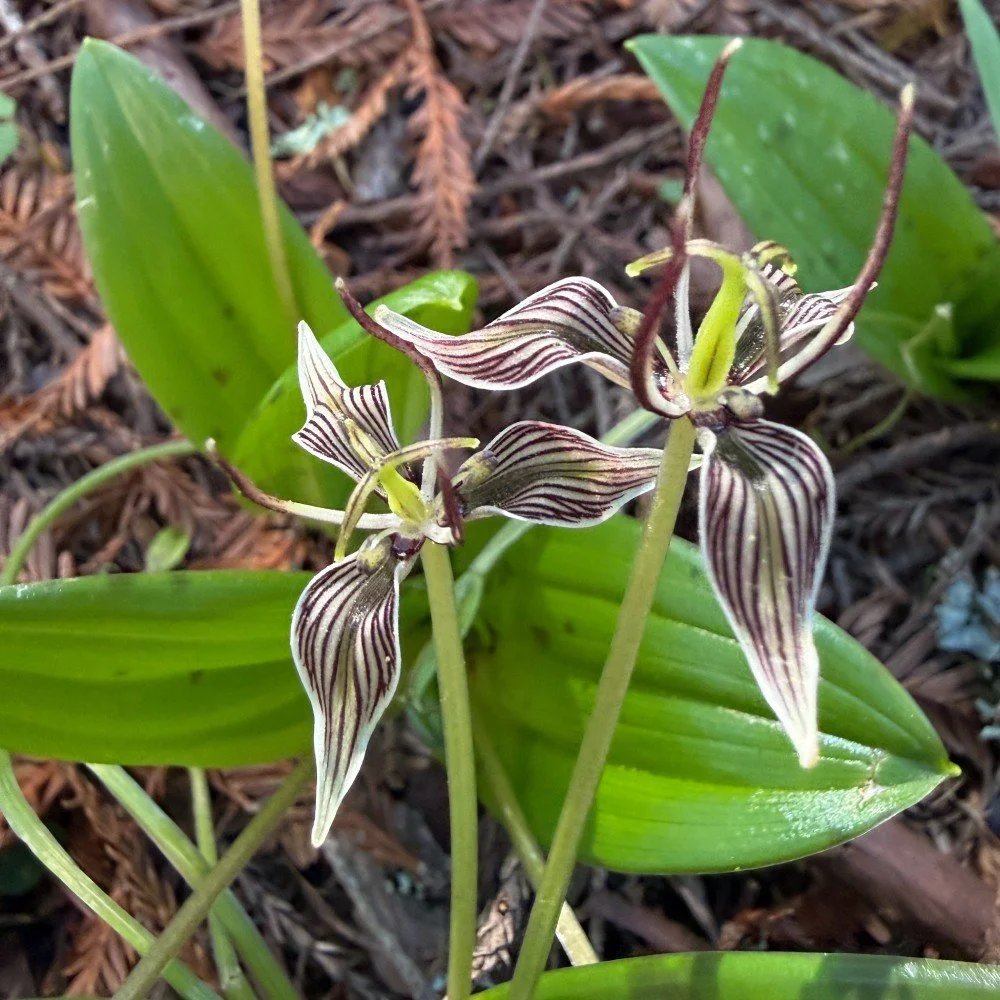
Late winter is the time to visit my favorite lily California Fetid Adderstongue lilies at the south end of the Bolinas Ridge Trail redwood forest. February is peak bloom, and by the time I visited at the end of the month, most of the lilies had already flowered and their long stems were bending to the ground to reseed the next generation. This year I finally observed gnats, the lily’s pollinator, near the blooms. My hike was off to an excellent start!
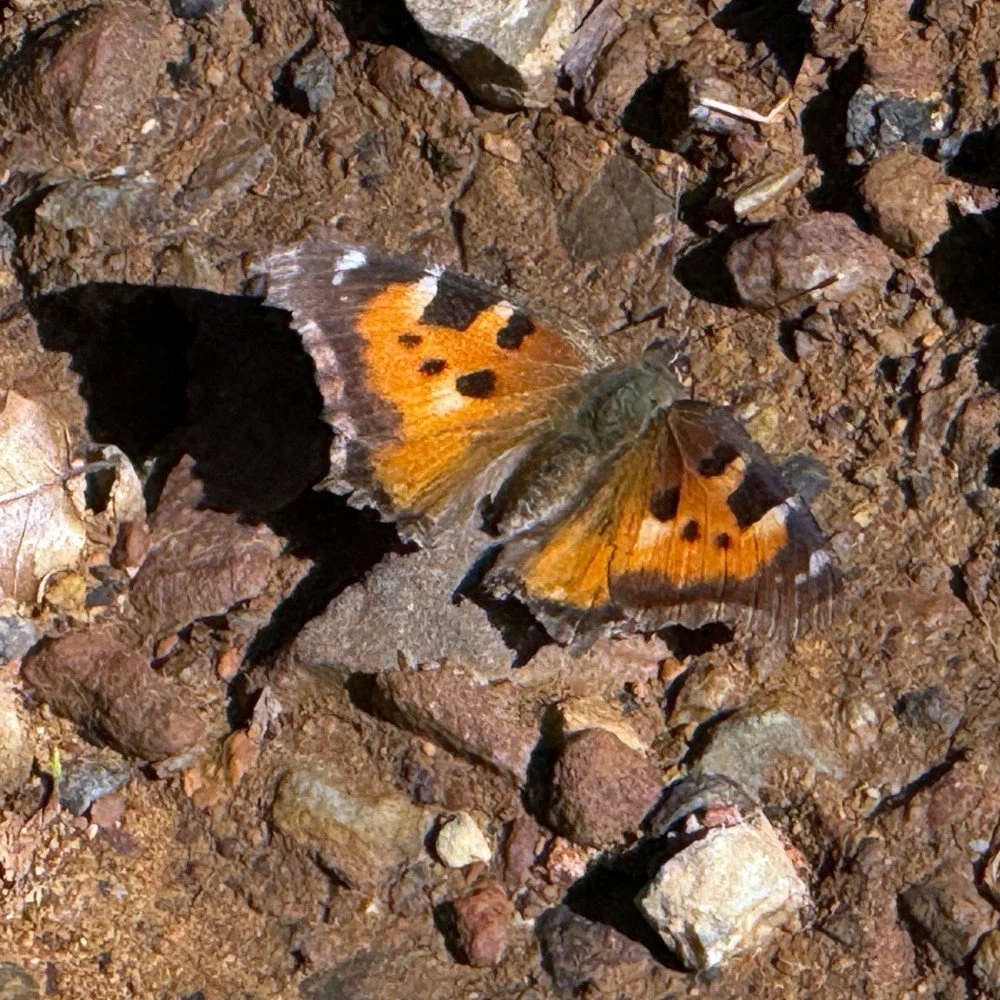
With sunshine, mild temperatures, and only an occasional light breeze, it was a perfect day for butterflies! Indeed, California Tortoiseshell butterflies were flying everywhere, pausing to feed on the early-blooming huckleberry, manzanita, and ceanothus. They were moving quickly and camera shy so it was a challenge to photograph them with my phone. I also spotted many white butterflies, likely Margined Whites, but they were even more elusive and seemed to favor plants farther from the trail. Tortoiseshell larvae eat various species of Ceanothus which could explain why these butterflies are prevalent in the chaparral areas of Bolinas Ridge. This butterfly is known for having irregular population explosions. Ravens commonly prey on California tortoiseshells in population explosions during outbreak years. I saw many ravens in the area but I didn’t observe any feasting on the butterfly (thankfully).
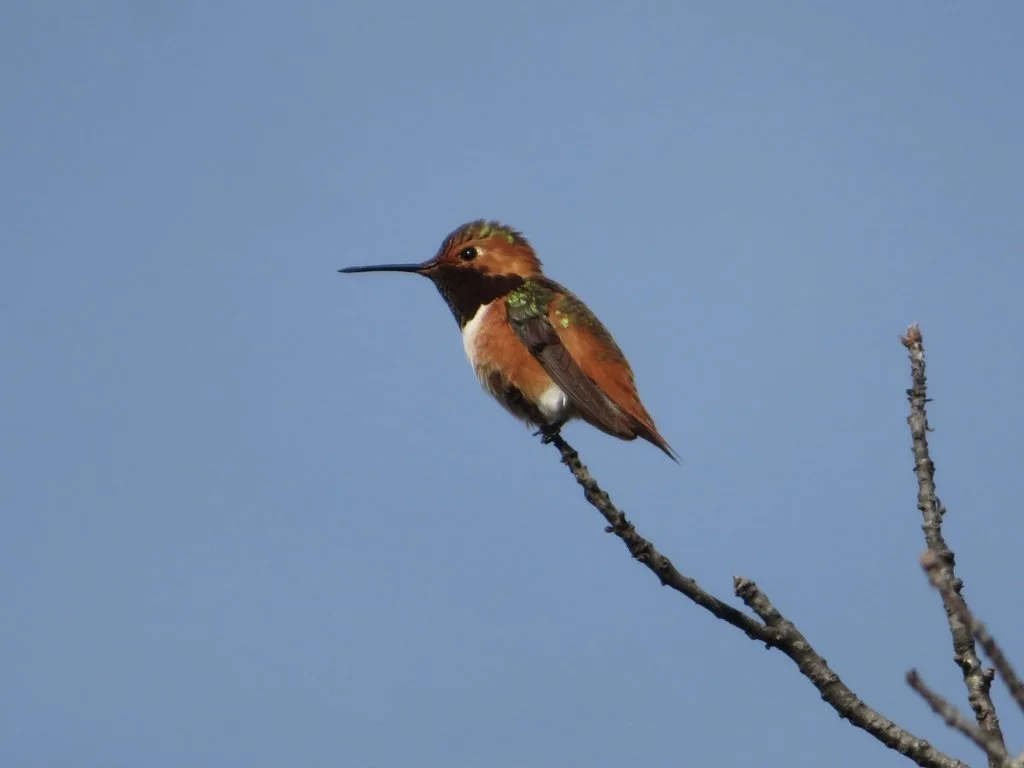
Rounding out the day’s marvels were a trio of hummingbird species: Anna’s, Allen’s, and Rufous (at least according to the Merlin app). Throughout my hike they buzzed and swooped near me, often perching on top of small trees and shrubs — easy to spot. One buzzed me, sounding like a tiny jet engine roaring by, it startled me — small but mighty!
While looking for a photo on iNaturalist, I noticed Rufous is very rarely photographed in Point Reyes, and never in winter. Hmm, was it really Rufous? Merlin differentiated between the breeds and called out Rufous at least three times. Even if I had examined the tiny birds closely in my binoculars, my skills are not good enough to tell the difference between the hummingbirds. Allen’s hummingbirds are more common here in February so that’s the bird I’ll feature in the photo below, taken on the nearby McCurdy Trail in late winter.
Using the Merlin app to identify birds by sound, this is the full list of birds encountered in the order of my hike: Red-breasted Nuthatch, Golden-crowned Kinglet, Cooper’s Hawk, Purple Finch, Bushtit, Brown Creeper, Pine Siskin, Steller’s Jay, California Scrub Jay, Spotted Towhee, Bewick’s Wren, Chestnut-backed Chickadee, Wrentit, House Finch, American Robin, Northern Flicker, Hutton’s Vireo, Dark-eyed Junco, Common Raven, American Crow, Blue Jay (unlikely since it’s an East coast bird), Band-tailed Pigeon, and Red-tailed Hawk.
Of all these birds, I only spotted the jays, ravens, crows, and Northern Flicker. The rest were well hidden in the forest. Starting at the south end of the Bolinas Ridge Trail, I traveled through redwood forest, mixed oak and fir, and maritime chaparral. The birds reflect the changes in habitat.
The Hutton’s Vireo had a plaintive call that repeated for more than two minutes. The Purple Finch and Bewick’s Wren had the most uplifting songs joined by the squeak-toy sound of the Chestnut-backed Chickadee which always puts a smile on my face.
Among the many other marvels encountered along the trail were a patch of checkerliies ready to bloom, a startled newt in a puddle, a diverse array of mosses and lichens, and the rare Point Reyes Ceanothus with its blue-lavender blossoms.
This is an outstanding time to hike the Bolinas Ridge Trail South. Go on a sunny day and wear waterproof hiking boots. You’ll encounter at least half a dozen puddles that cover the width of the trail. Be sure to look in the puddles for newts.