
Winter birding at Five Brooks
I was expecting mushrooms and instead was delighted by the sheer number of birds on my winter hike at Five Brooks on January 17, 2026. I’m more interested in birds after spending months creating the 2026 Point Reyes Hiking Calendar which celebrates birding. I agonized over which hikes and birds to feature each month and during my recent hike at Five Brooks, I had a bit of regret that I didn’t choose a forest hike for January. Therefore, I’d like to propose the Five Brooks Loop as a winter birding hike in addition to my original choice for January — Chimney Rock and the Point Reyes outer point.
I wasn’t able to photograph any of the birds on this hike. In fact, I could only spot a few of them. I am thankful for the many patient birders with good cameras! To see photos of the birds I mention, go to the Ebird hotspot for the Five Brooks Mill Pond and click on any of the bird names to see photos and learn about them.
How do you choose your hike? As I often do, I decided on my hiking spot while on my way to Point Reyes — it’s often a gut feeling that determines which trail to hike, coupled with factors such as the temperature and trail conditions. I love a winter hike in the forest! It had not rained all week so trail conditions would be dry and the temperature was forecast in the balmy 60’s by mid-day. As a popular horse-riding spot, these trails can be a minefield of smelly poop but in winter the air is crisper and the flies fewer — another reason to hike this loop in winter.
Arriving around 11:30, I set off along the Mill Pond peeking through the bare willow and alder branches to see what was floating on the pond. I spotted one duck with a cinnamon colored head. A group of mushroom foragers were headed for the horse camp. Birders may start early but fungi foragers can go any time of day. A large flock of pine siskins chattered loudly from tree tops on the edge of the mill pond - such a ruckus. This was a sign it was going to be a good day!
Unsure how muddy the Olema Valley trail might be, I decided to hike the loop starting with the Olema Valley trail. I find it easier to hike slick muddy trails going uphill. The trail was not too muddy — except for a few patches. The trail parallels Olema Creek and attracts riparian birds such as the varied thrush, ruby-crowned kinglet, and golden-crowned kinglet. Using the Merlin app, I also identified these birds by sound: chestnut-backed chickadee, Pacific wren, pileated woodpecker, Steller’s jay, spotted towhee, pine siskin, common raven, pygmy nuthatch, red-shouldered hawk, song sparrow, and acorn woodpecker. I know Merlin isn’t always accurate so I recorded long enough for Merlin to hear each bird multiple times.
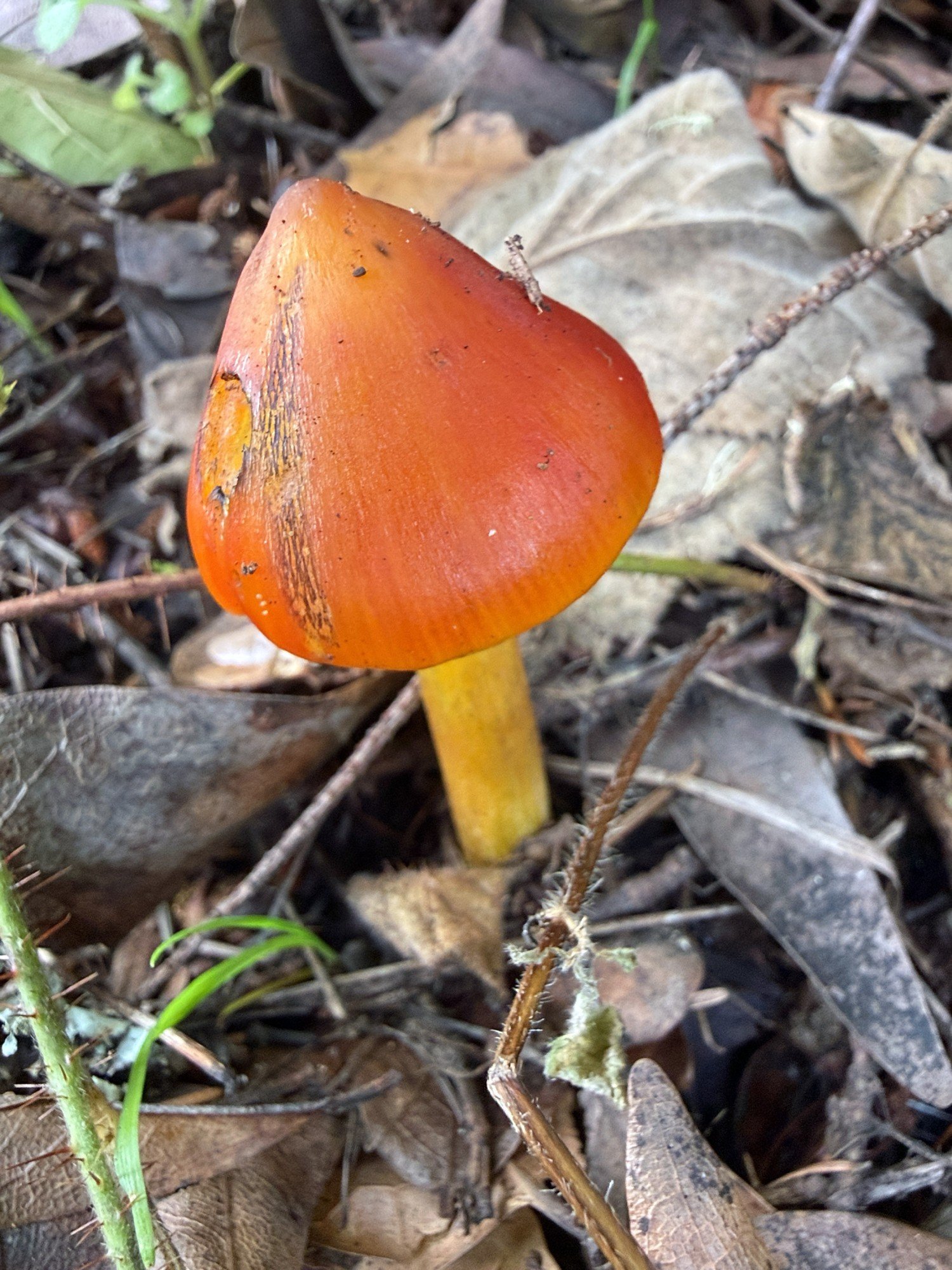
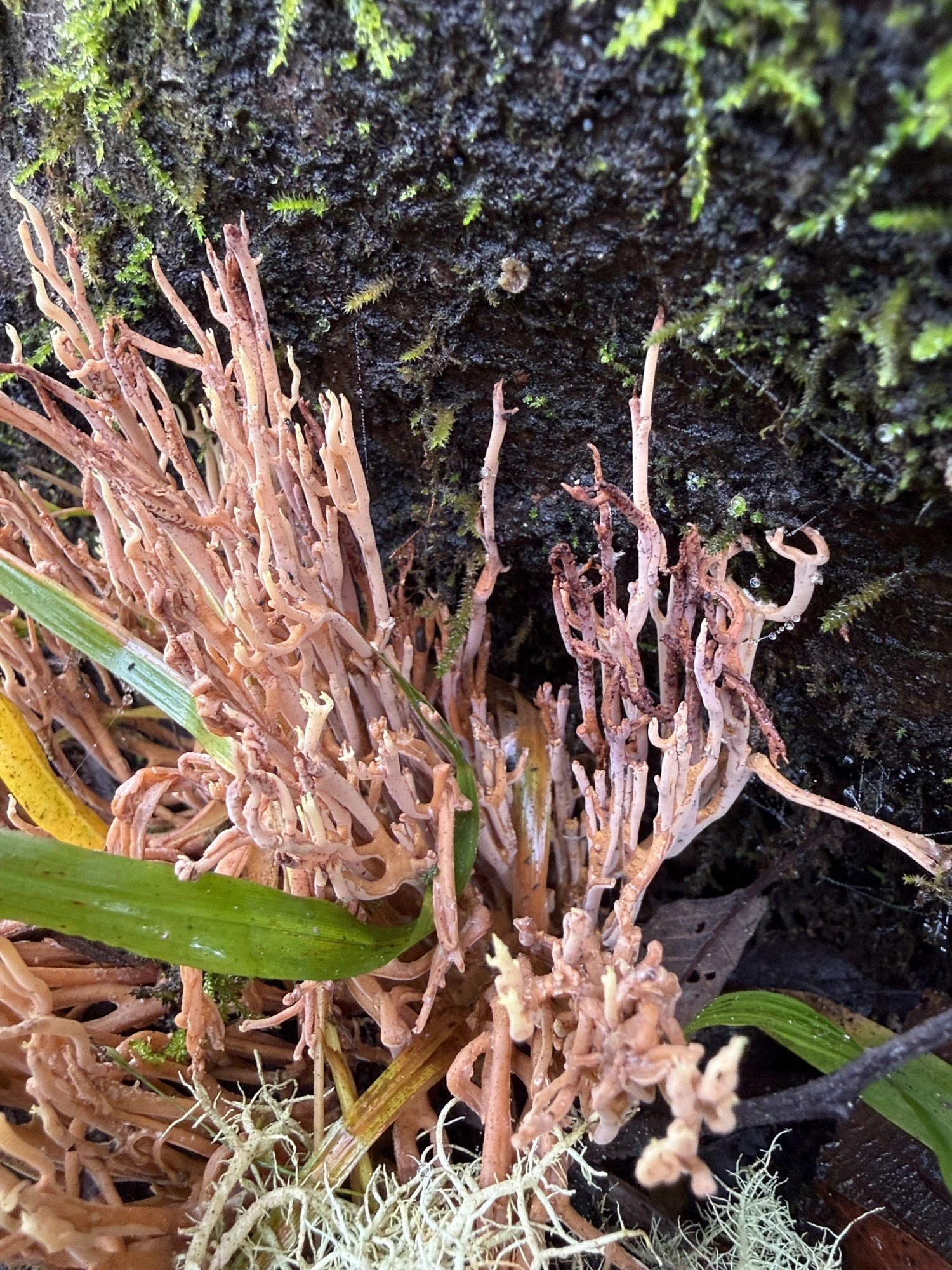
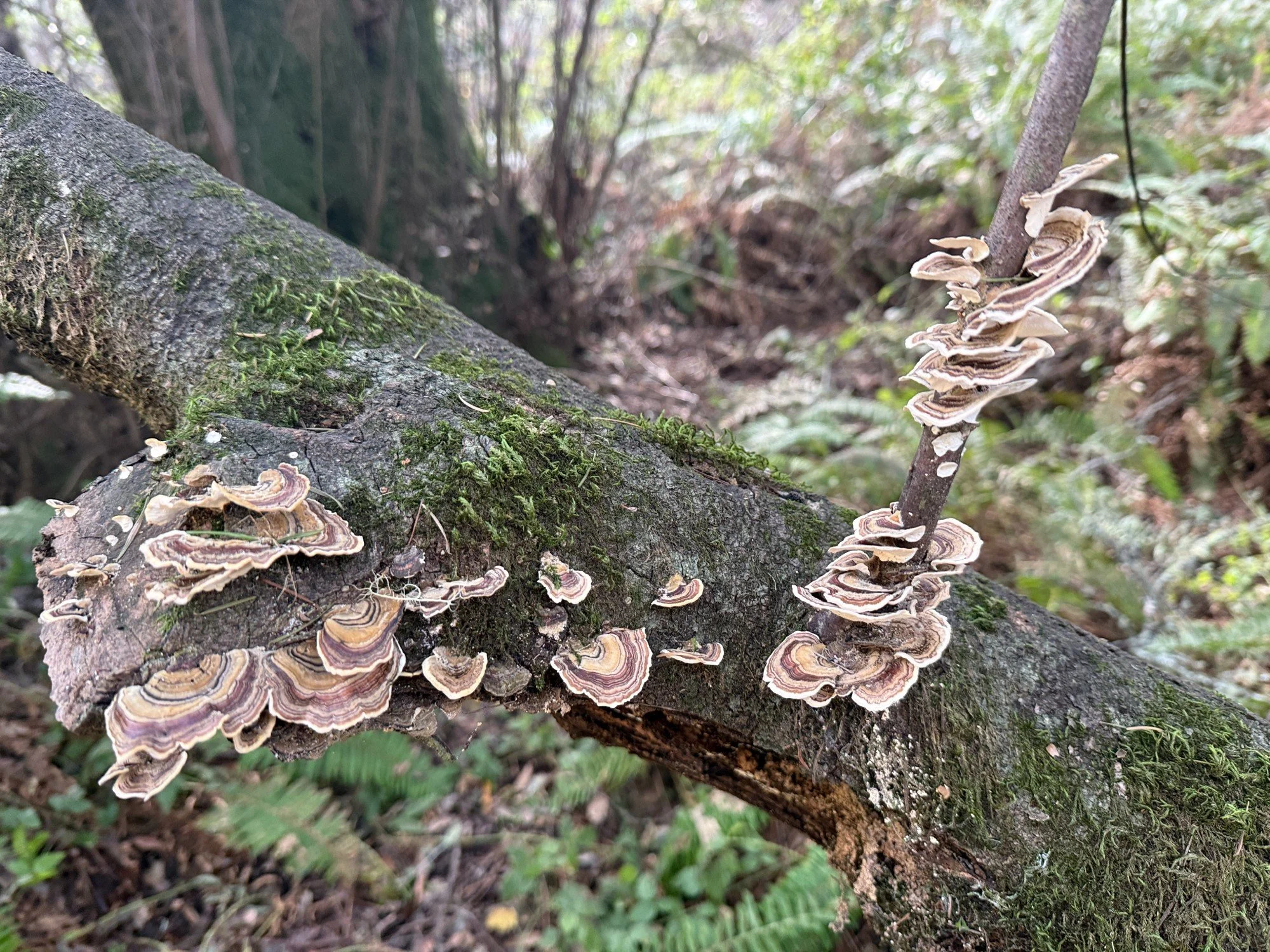
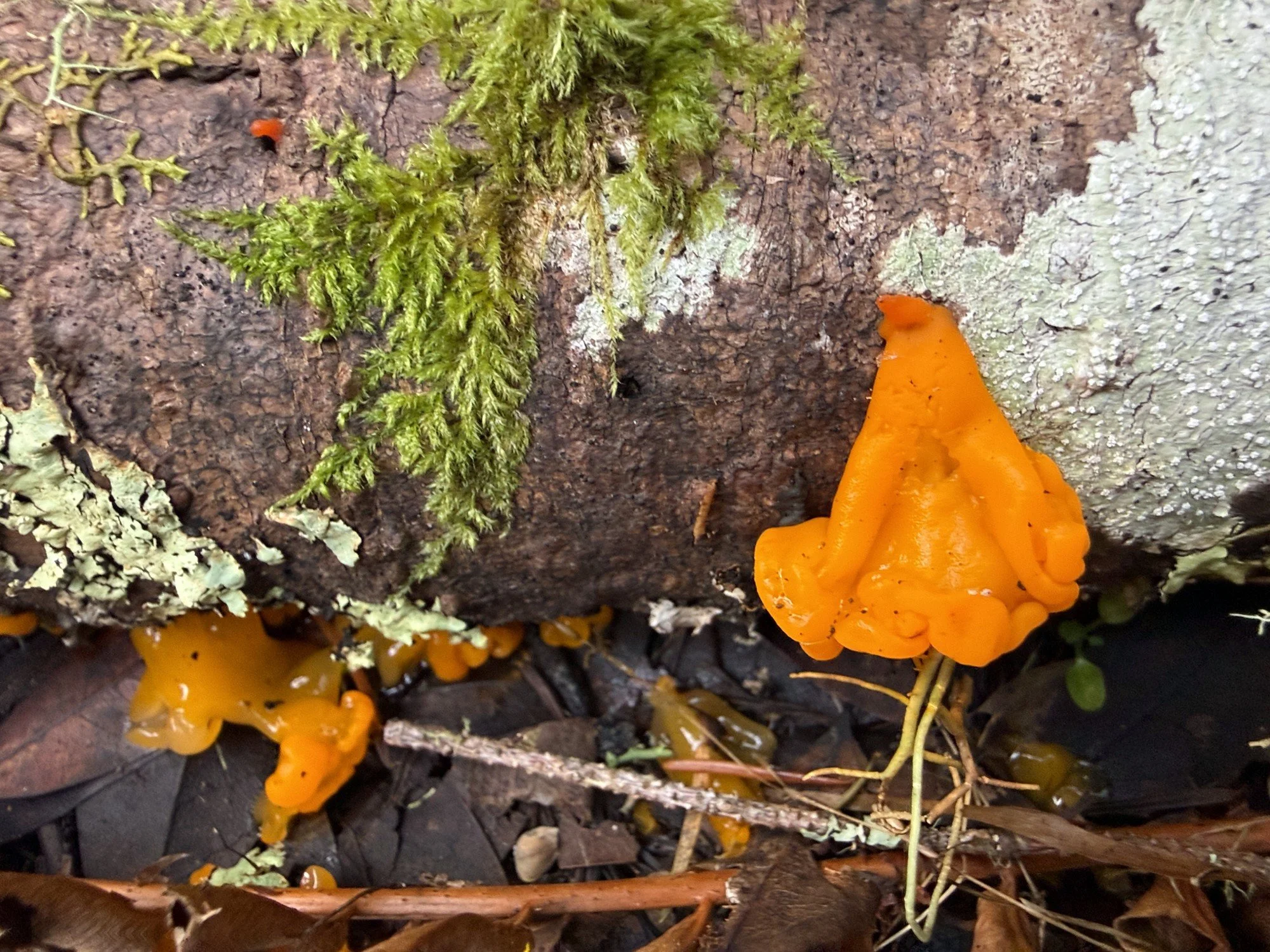
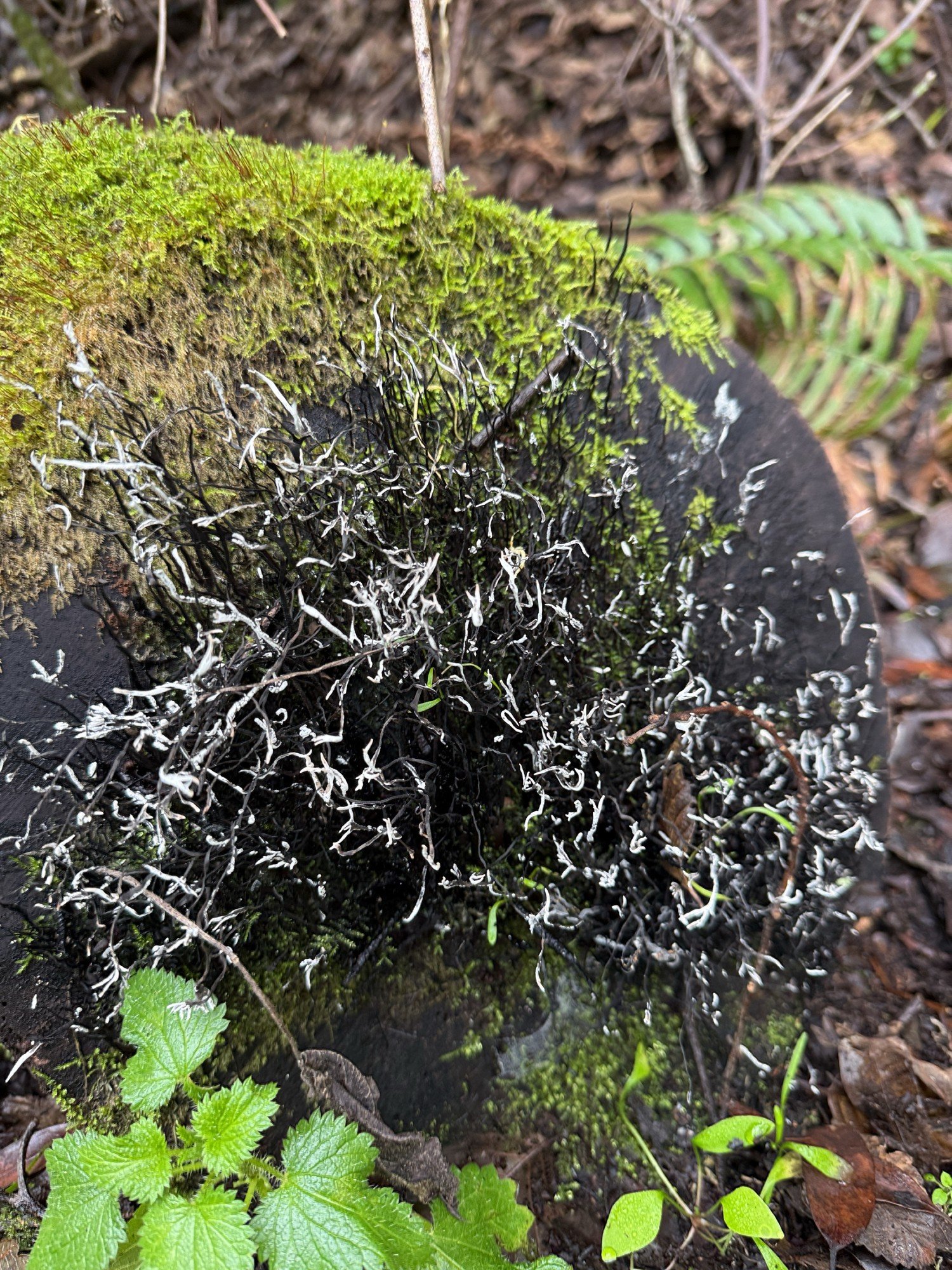
The riparian habitat of the Olema Valley Trail is a great spot for fungi and lichens. I found a large patch of candlesnuff fungus growing on the end of a log, and bright orange jelly fungus on a fallen Douglas fir branch. A pumpkin orange witch’s hat mushroom sprouted among dead leaves on the forest floor and spindly coral fungus reached upward beside a fallen trunk. At the end of the trail, a curious turkey tail spiraled up a wayward twig on a fallen log.
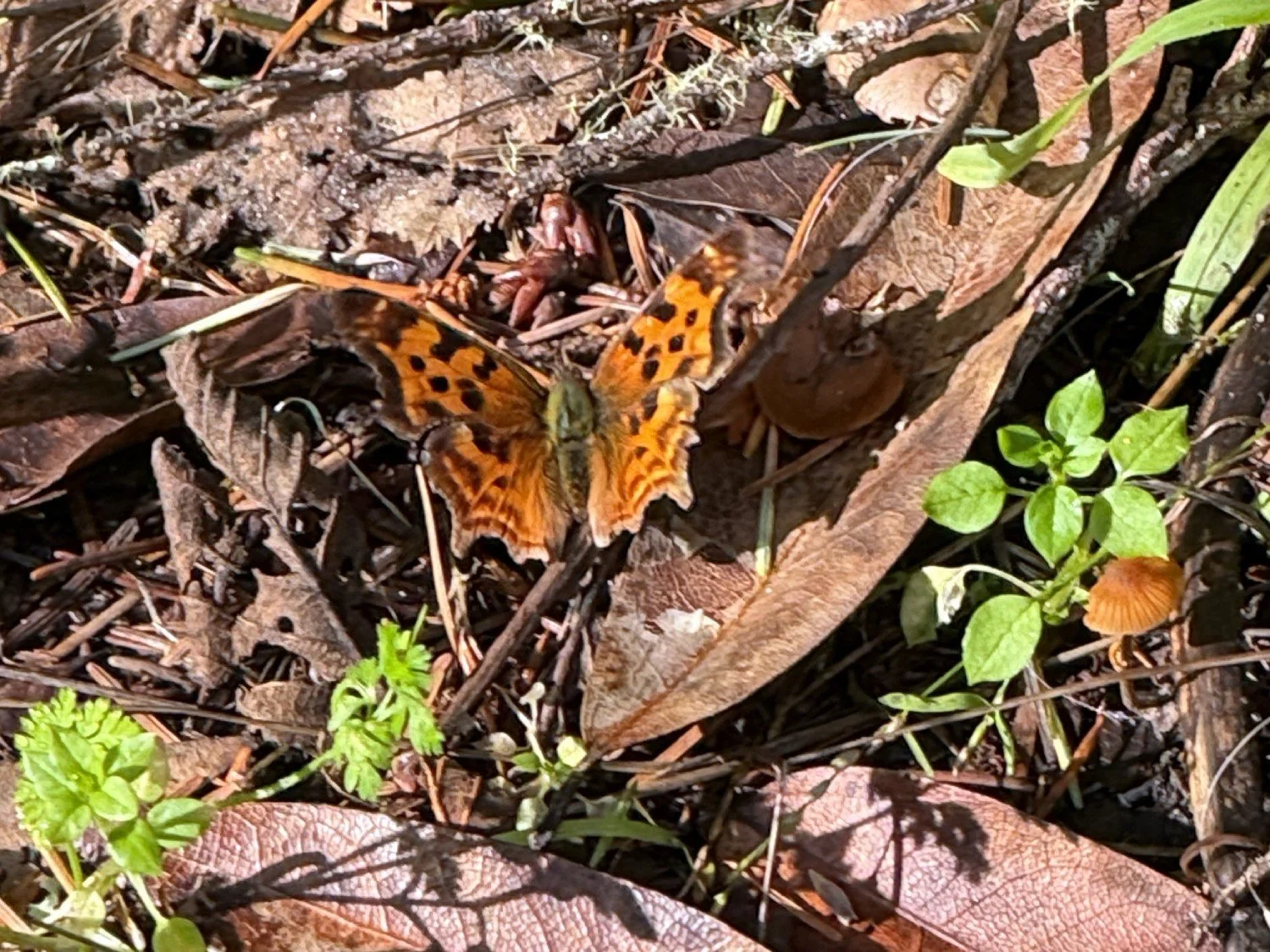
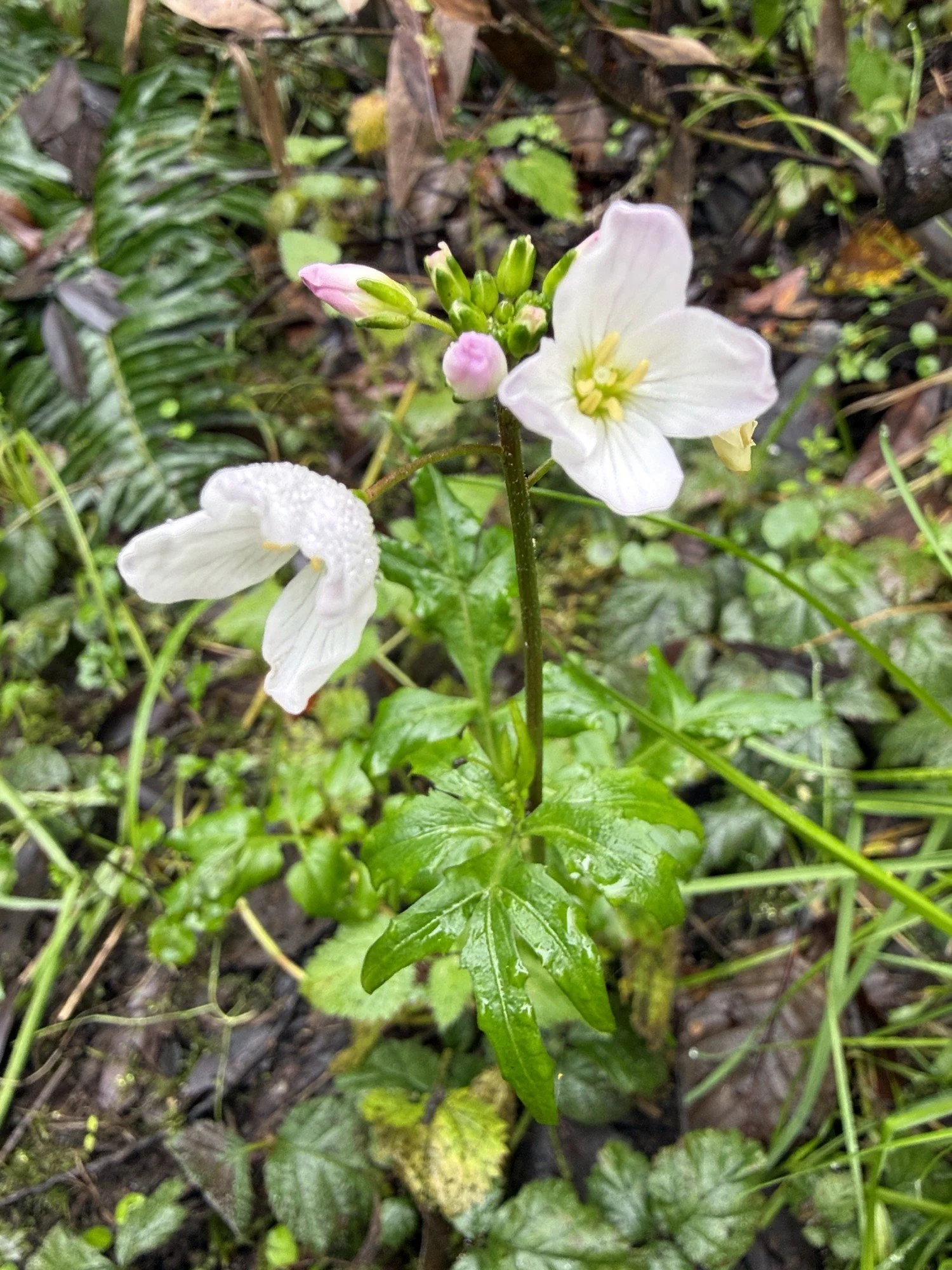
Blushing white milkmaids, a winter flower that brightens the forest, was dotted along the trail throughout my hike. Much to my surprise, a satyr comma butterfly flitted across my path. I was not expecting that in January! Later, I saw a red admiral and several white butterflies as well.
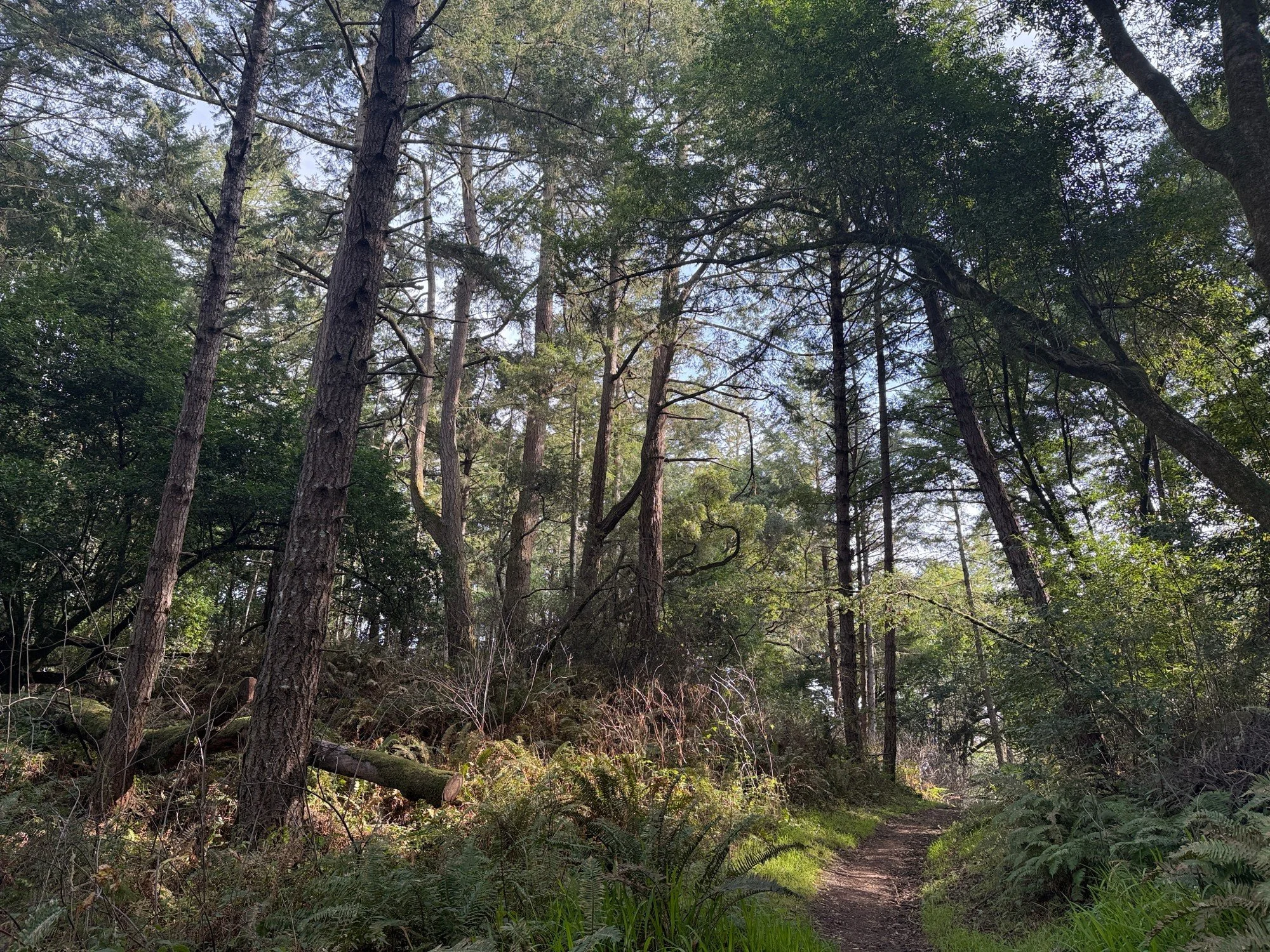
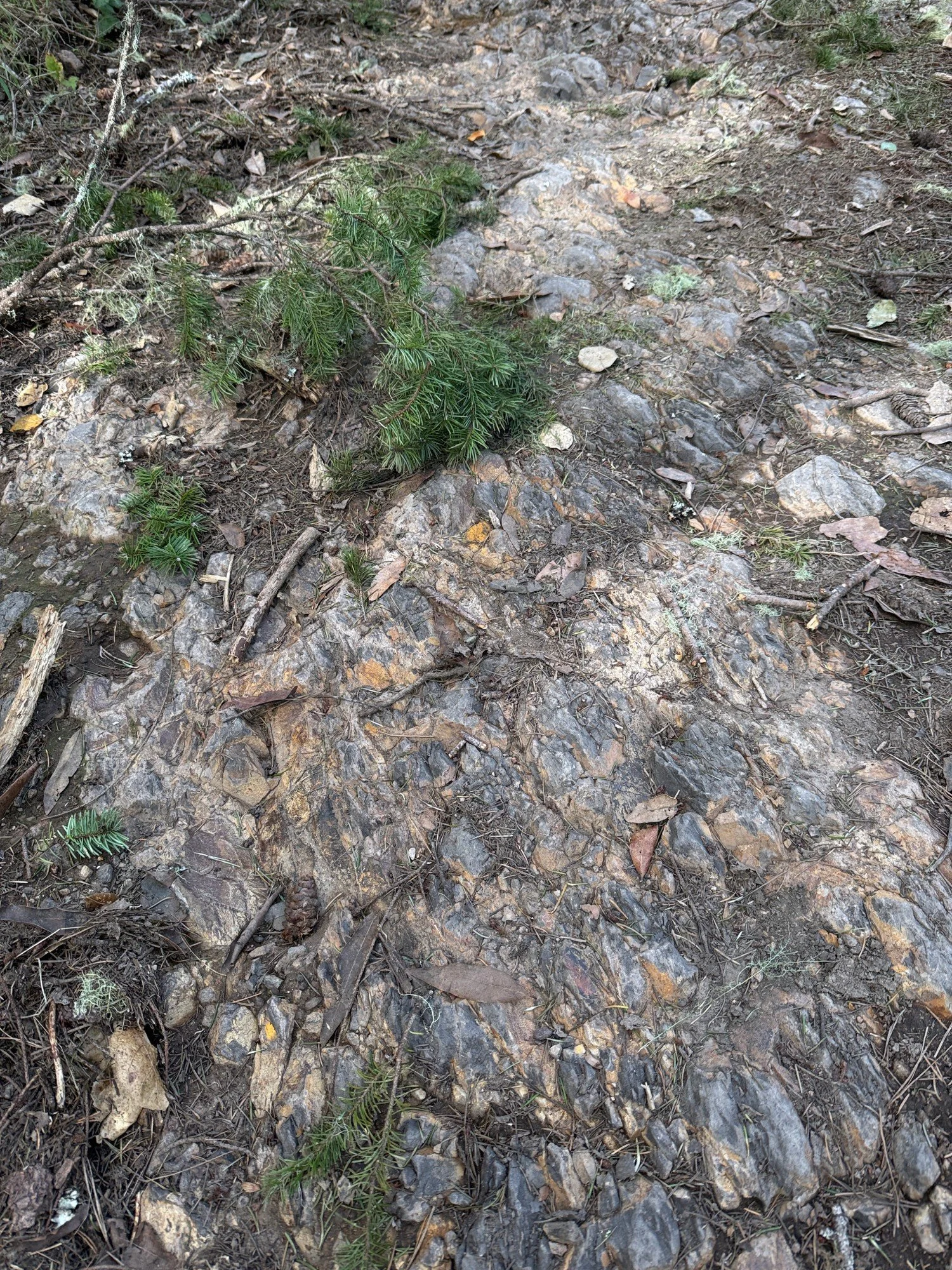
At 12:55, I arrived at the Bolema Trail. I heard many of the same birds with the addition of a downy woodpecker (according to Merlin) which surprised me with how loudly it pecked for such a small woodpecker. It’s possible it was a different woodpecker. I spotted a snag drilled with many rectangular holes, a signature shape of the pileated woodpecker hunting for its favorite food, ants and beetle larvae. I kept hearing a typewriter tapping sound which turned out was one of the many ruby-crowned kinglets along the hike. They make a “jit-jit-jit” sound when they are agitated. I began to recognize it’s tapping chitter which was thrilling for a novice birder such as myself. I spotted my first Douglas iris of the season — a ghostly white with a pale blush of lavender. Many areas of exposed granite line the trail as well as one old paved remnant from earlier ranching times.


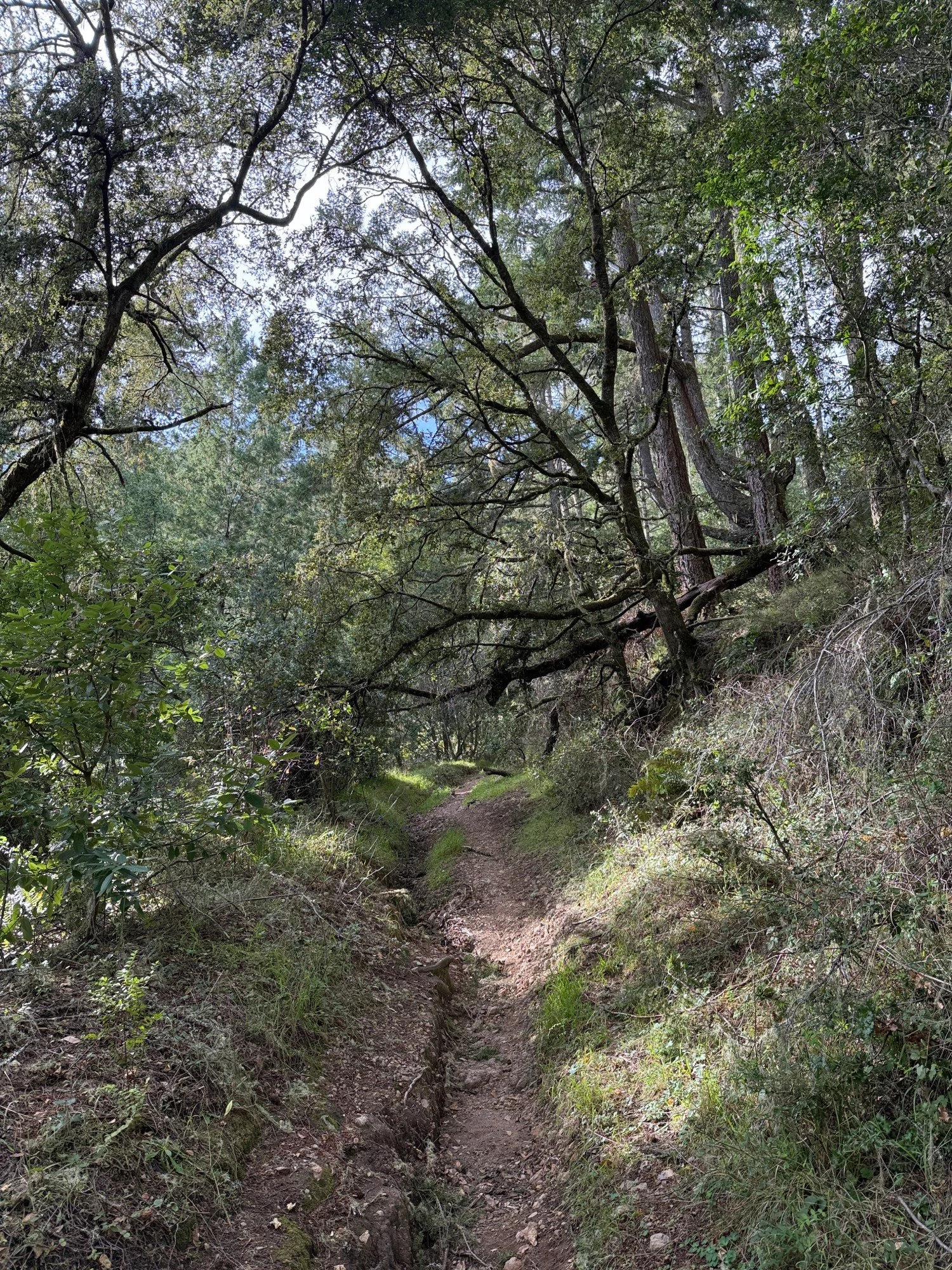
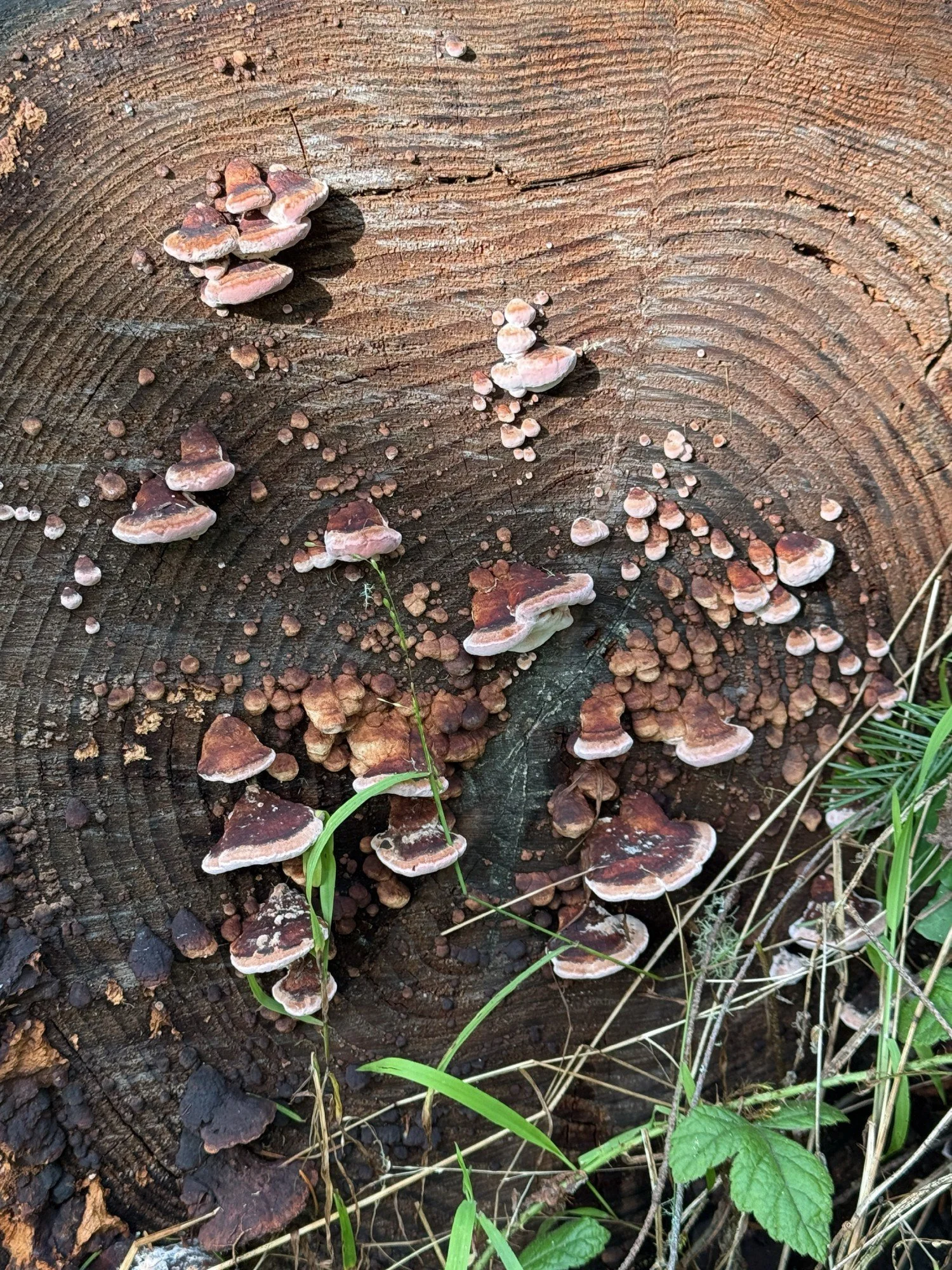
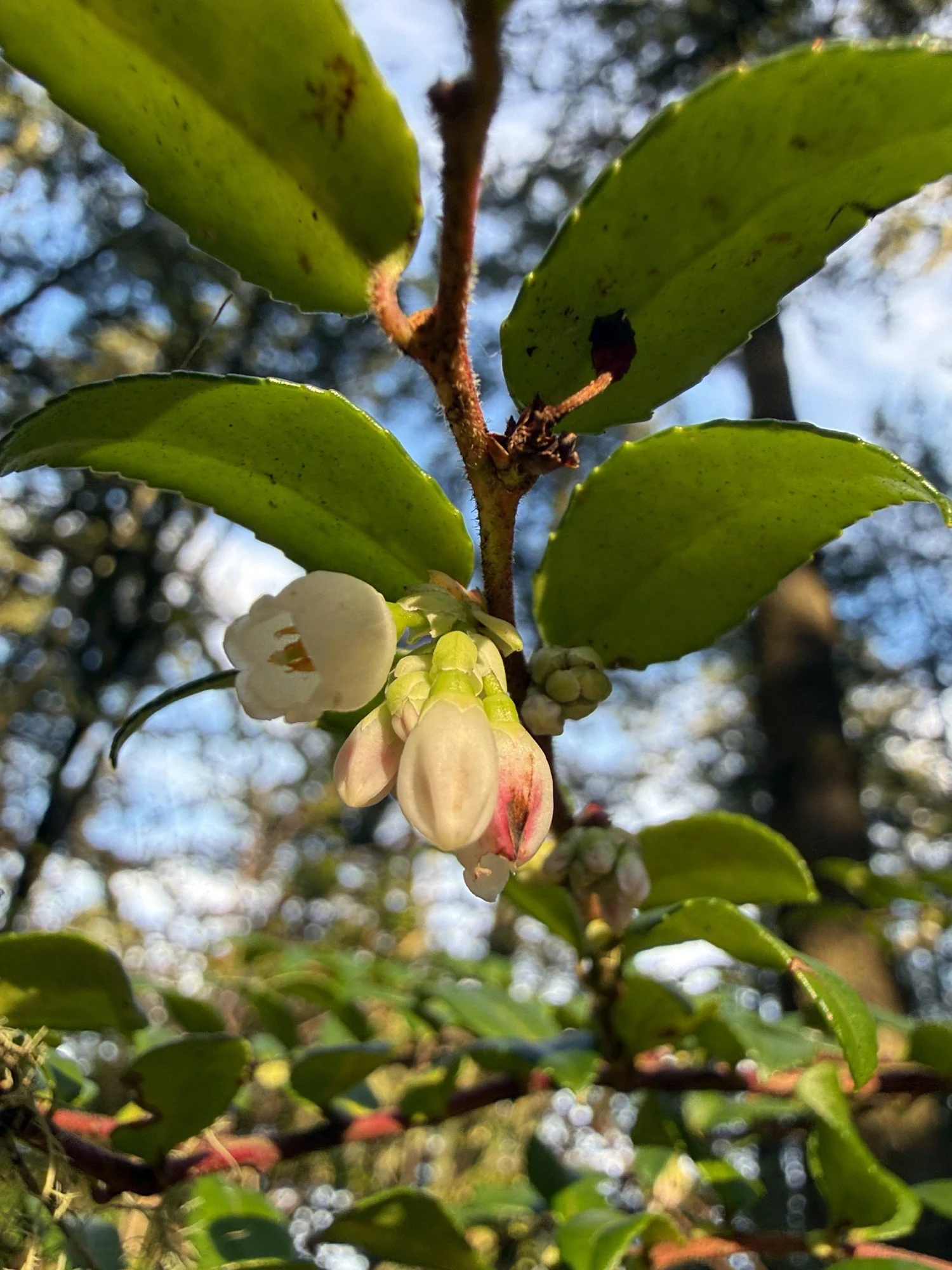
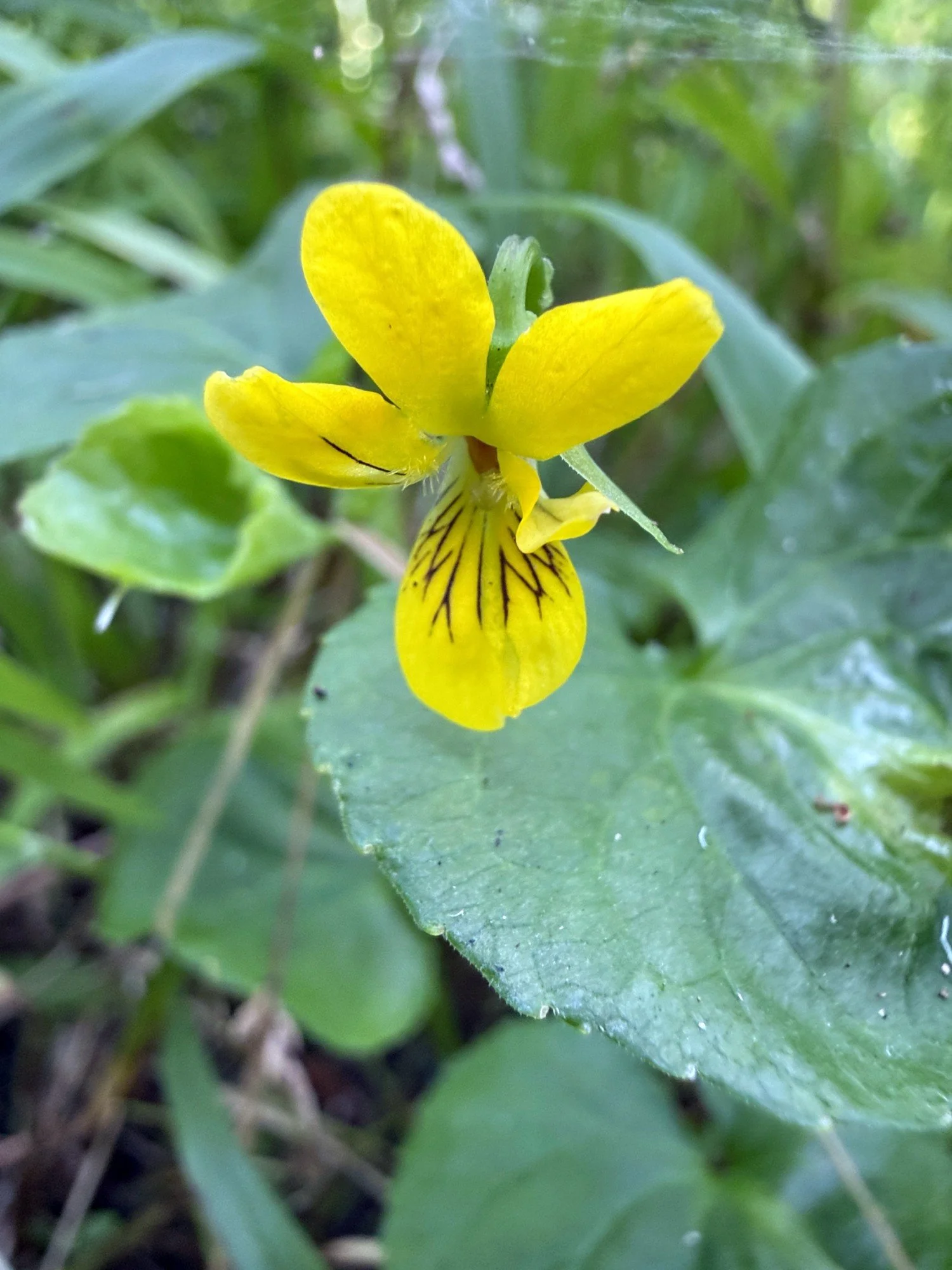
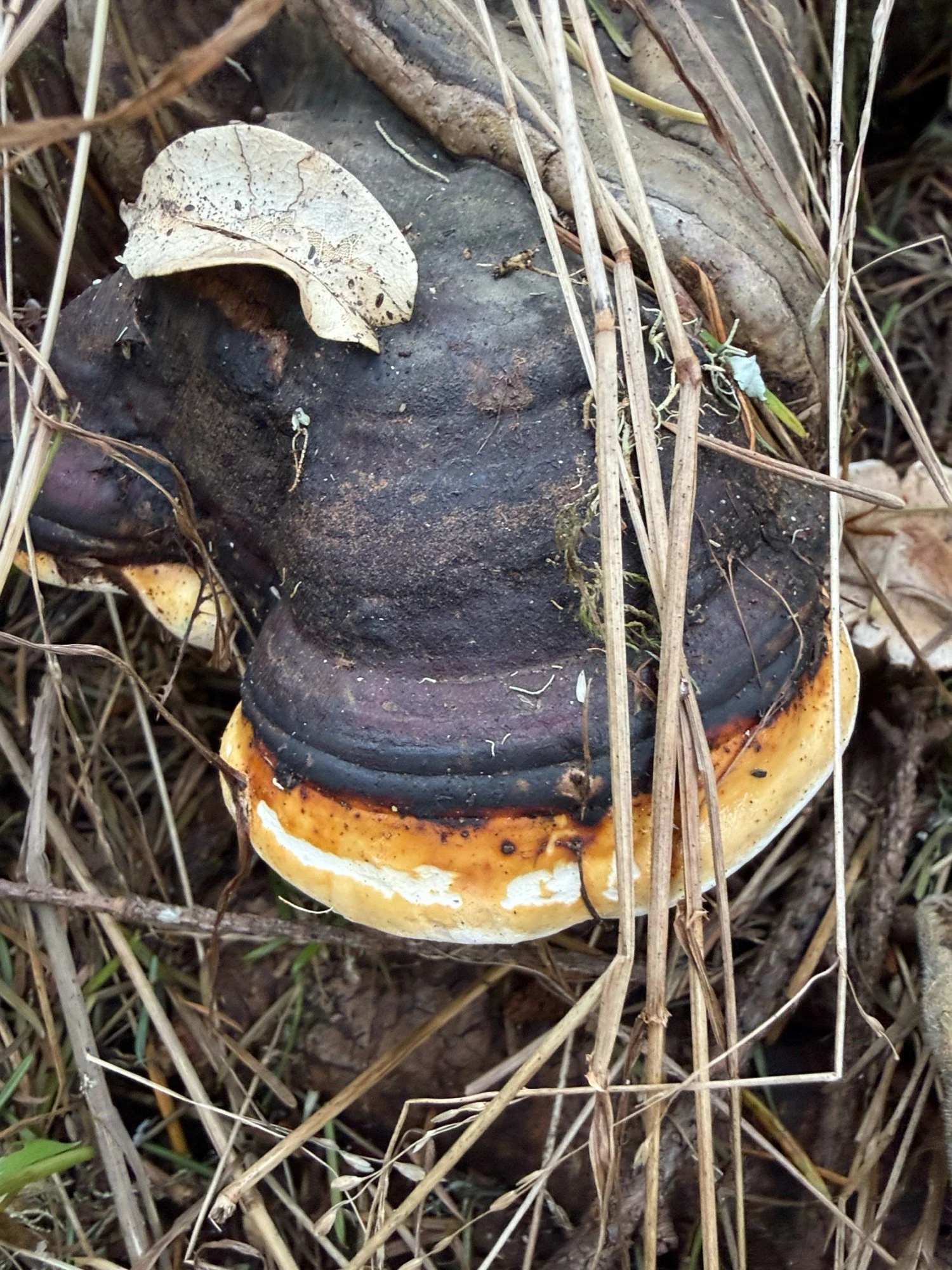
An hour later, I was on the verdant Ridge Trail. Forest opened to sunny slopes and clearings where insects abound and attract birds. In addition to the birds already listed, I added pygmy nuthatch, brown creeper, red-breasted nuthatch, Bewick’s wren, Hutton’s vireo, wrentit, and dark-eyed junco to the list. At 2:22pm, I recorded two minutes of sheer magic with at least nine bird species calling from the fir tops. Finally, enough birds were flocking that even as a novice I could easily watch them in my binoculars. The best moment was when a curious ruby-crowned kinglet dropped down onto a bare shrub and visited. It hopped onto a couple of different twigs and we watched each other for a bit. It was the highlight of my day! Further along the trail was evidence of powerful storms — a huge Douglas fir had fallen across the trail requiring me to climb over it. I encountered lovely rosy conk growing on the end of a fallen trunk and northern red belt shelf fungus which is common on this trail. A shaggy yellow dandelion and a tiny yellow stream violet were nestled in the grasses, and a few huckleberry were beginning to flower.
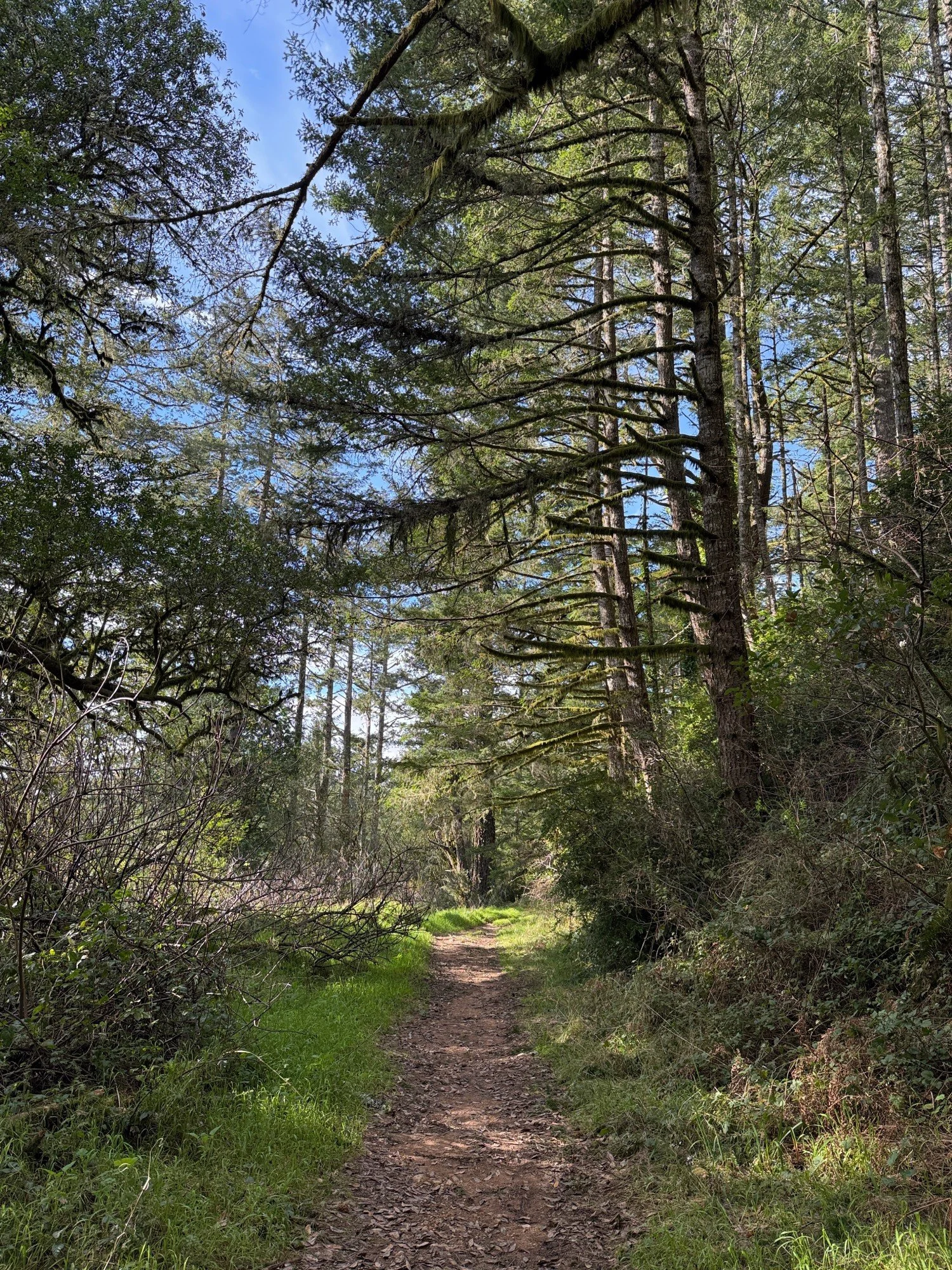
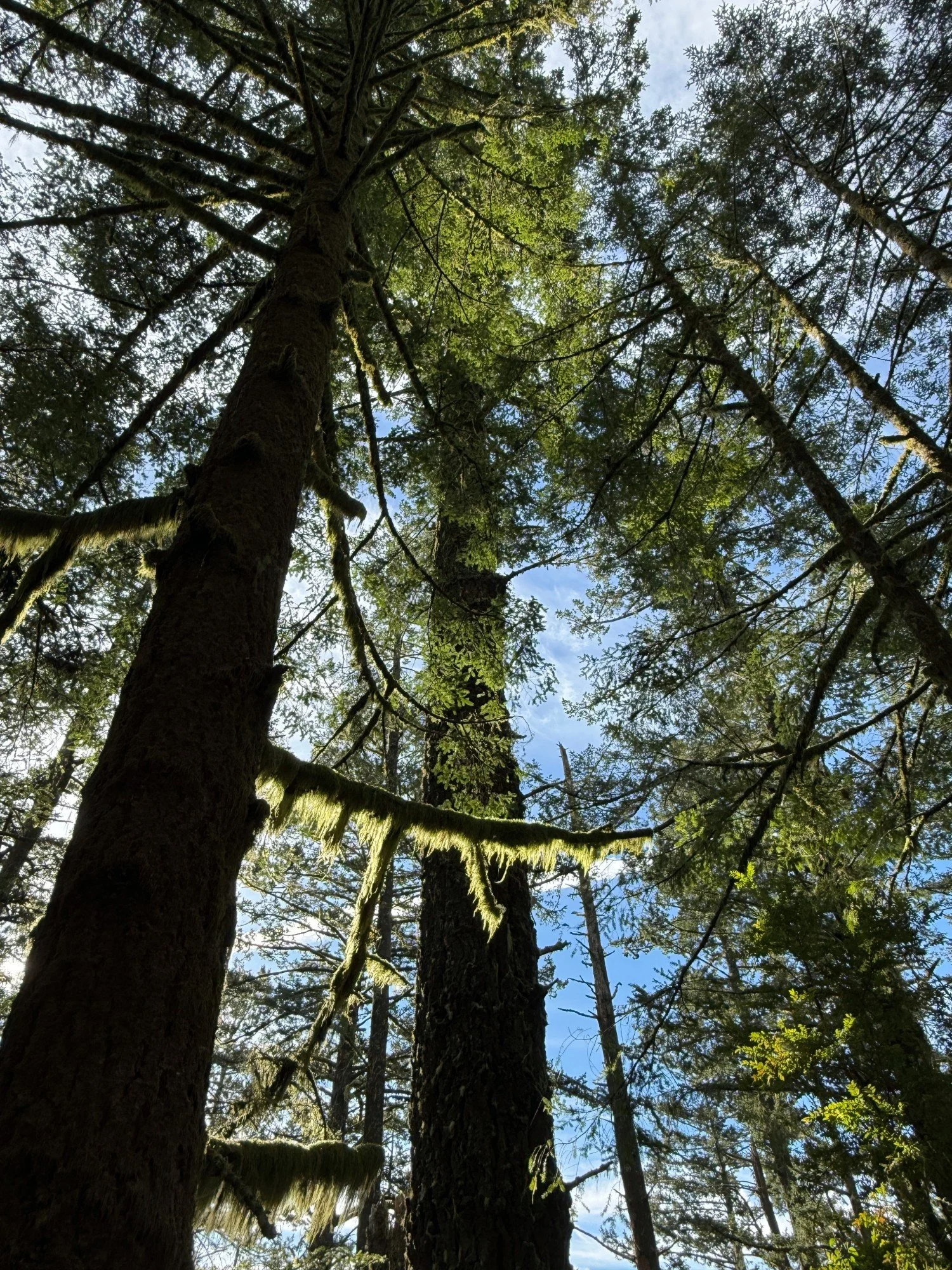
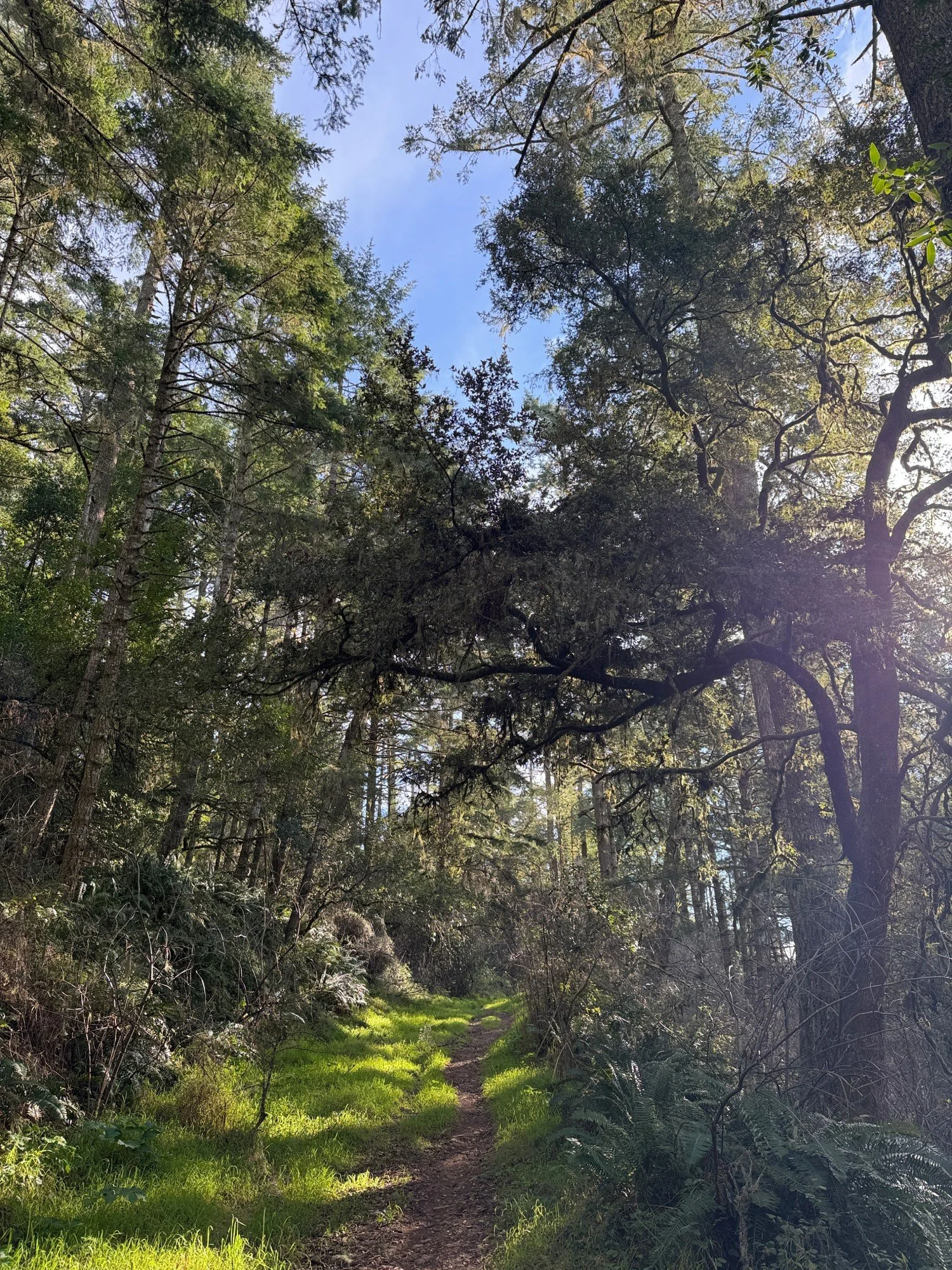
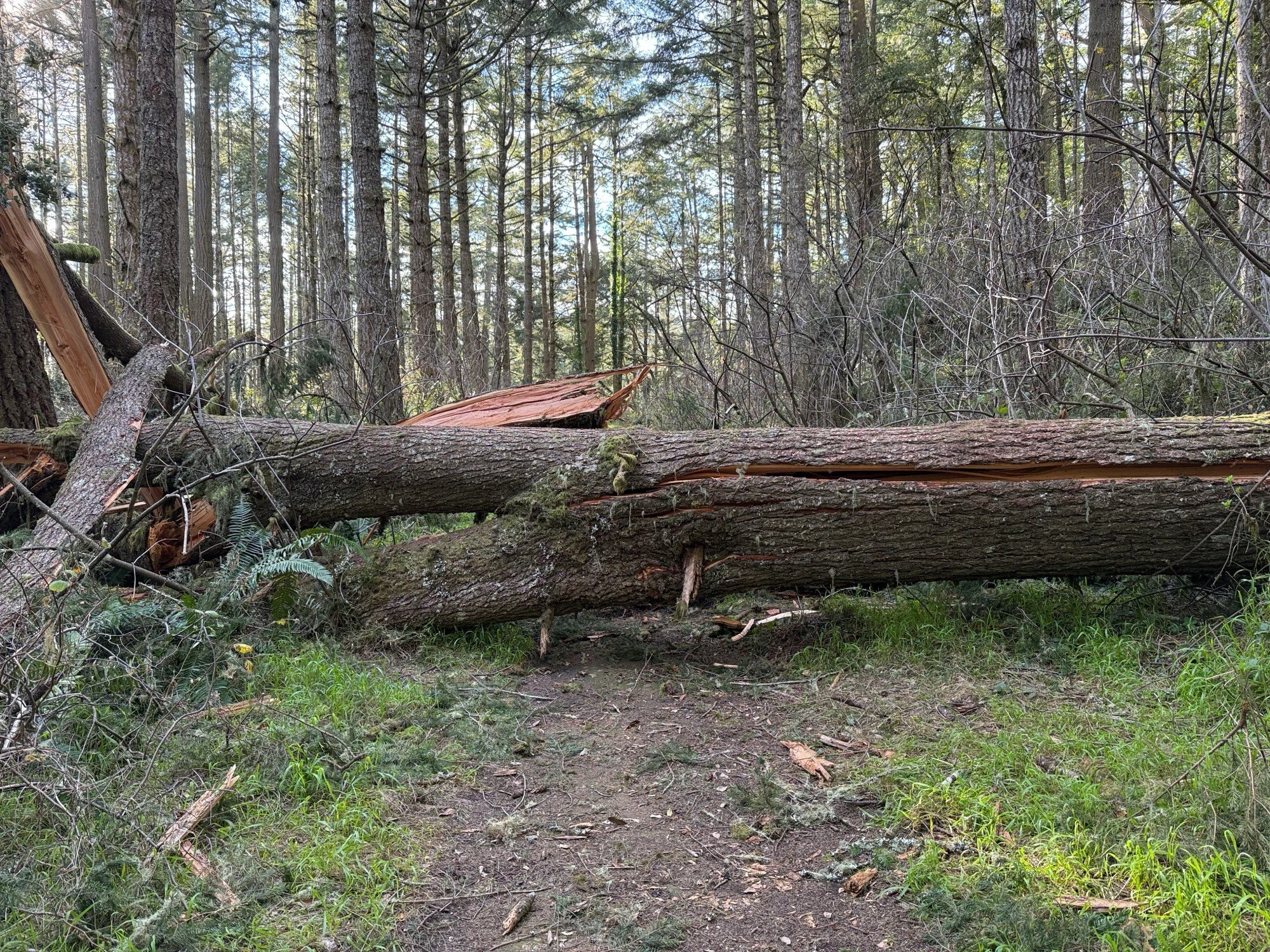
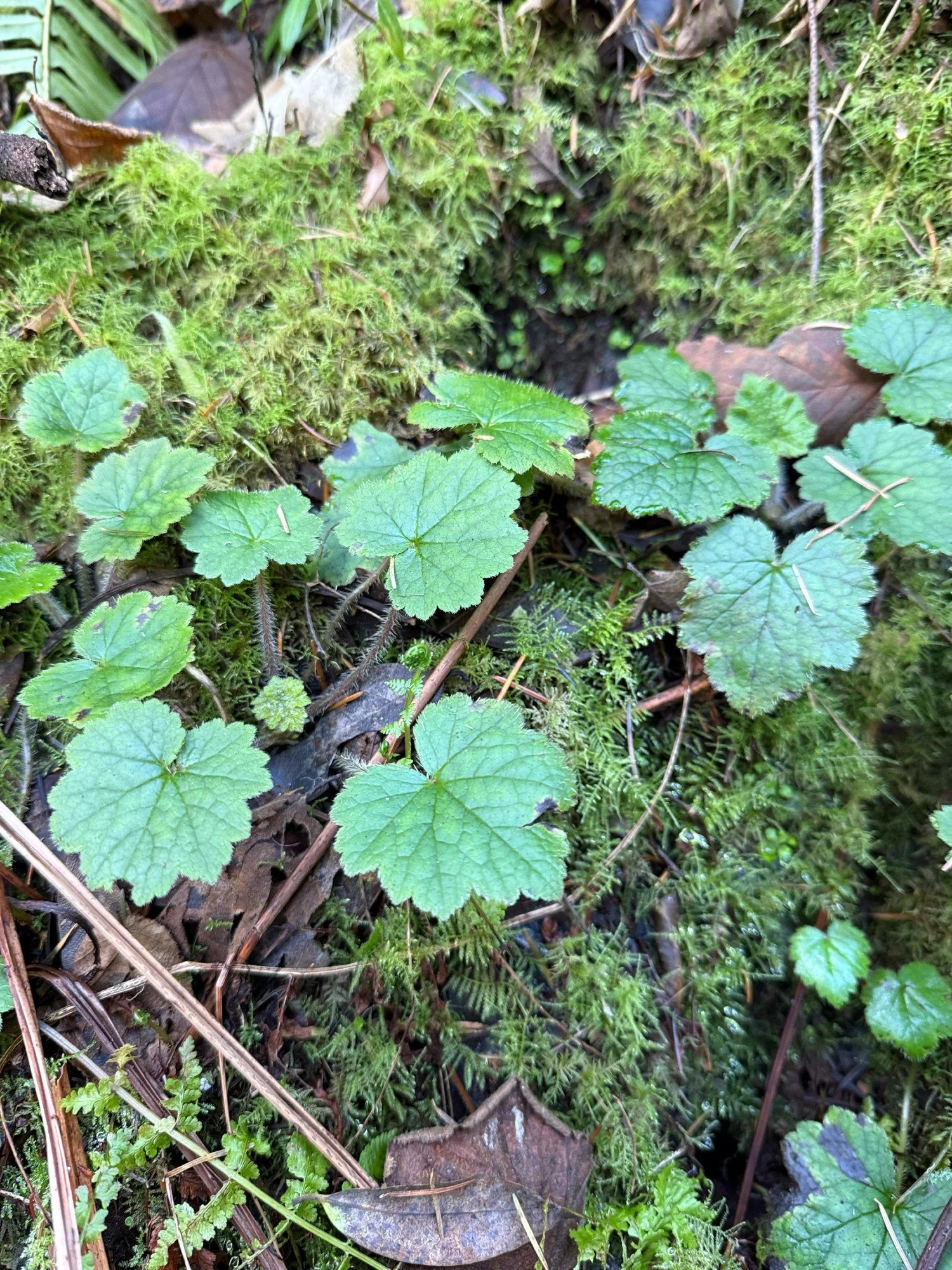
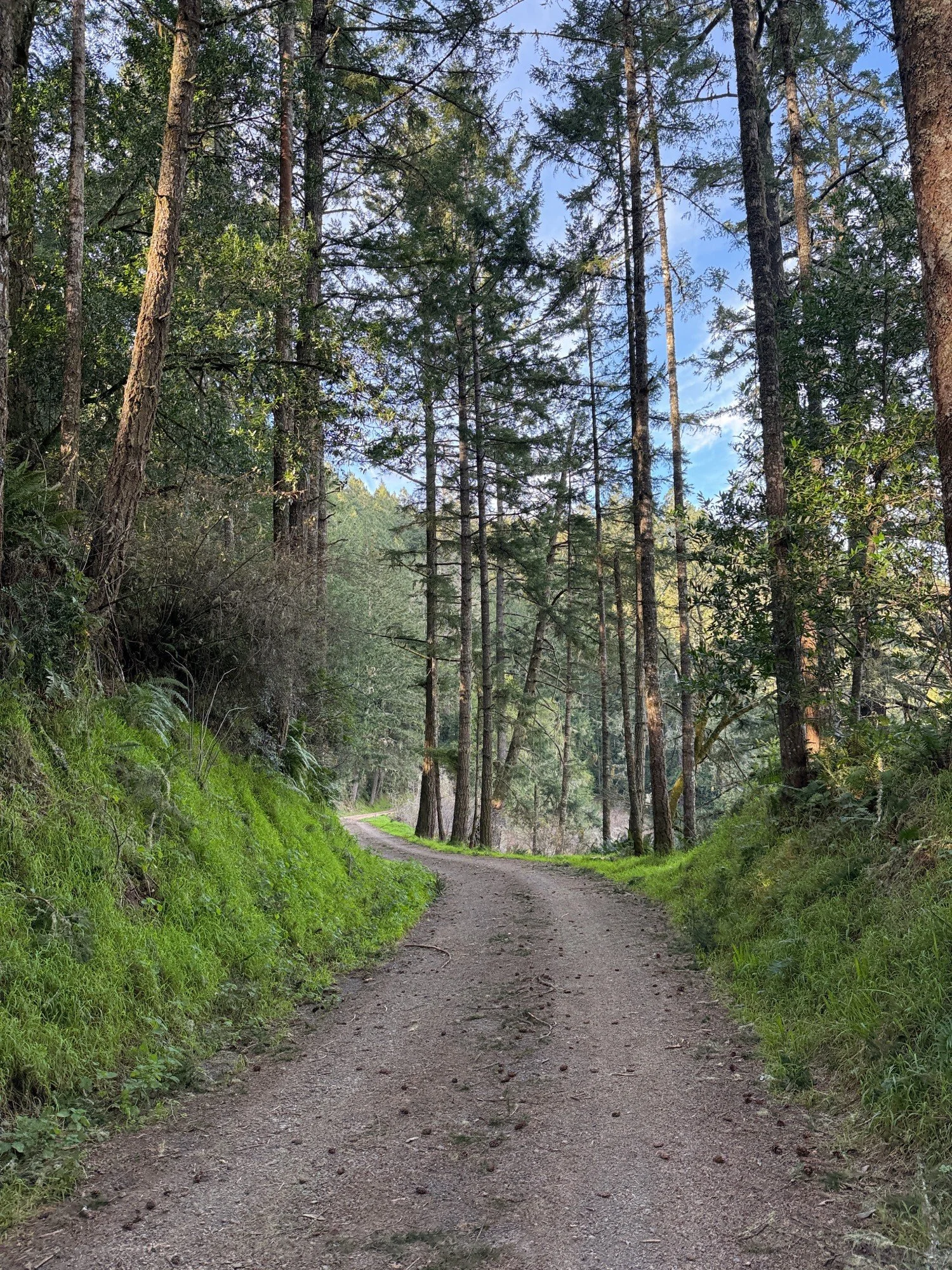
On the Stewart Trail at 2:58pm, I headed down Inverness Ridge on the wide gravel road with towering firs bordering the trail. I warned a trio on horseback that the Ridge Trail was not accessible due to the fallen tree blocking the path. They were thankful for the warning as their riding time was limited in the afternoon. I scanned the edges of the trail for California turret spider holes but didn’t see any. I heard acorn and hairy woodpeckers calling and drilling trees in the distance. Merlin identified a red crossbill several times which seemed unusual but possible in this area rich in conifer cones. I didn’t see any birds along this trail — they were well hidden in the huge firs. The slopes along the Stewart Trail were covered in ferns and greenery. I spotted fresh bracken fern, lady fern, maidenhair fern, and a profusion of polypody fern. Dark green fringe cup leaves were sprouting on the moist slopes but we’ll need to wait a few more months for the signature flowering spike dotted with clumps of wispy magenta tentacles.
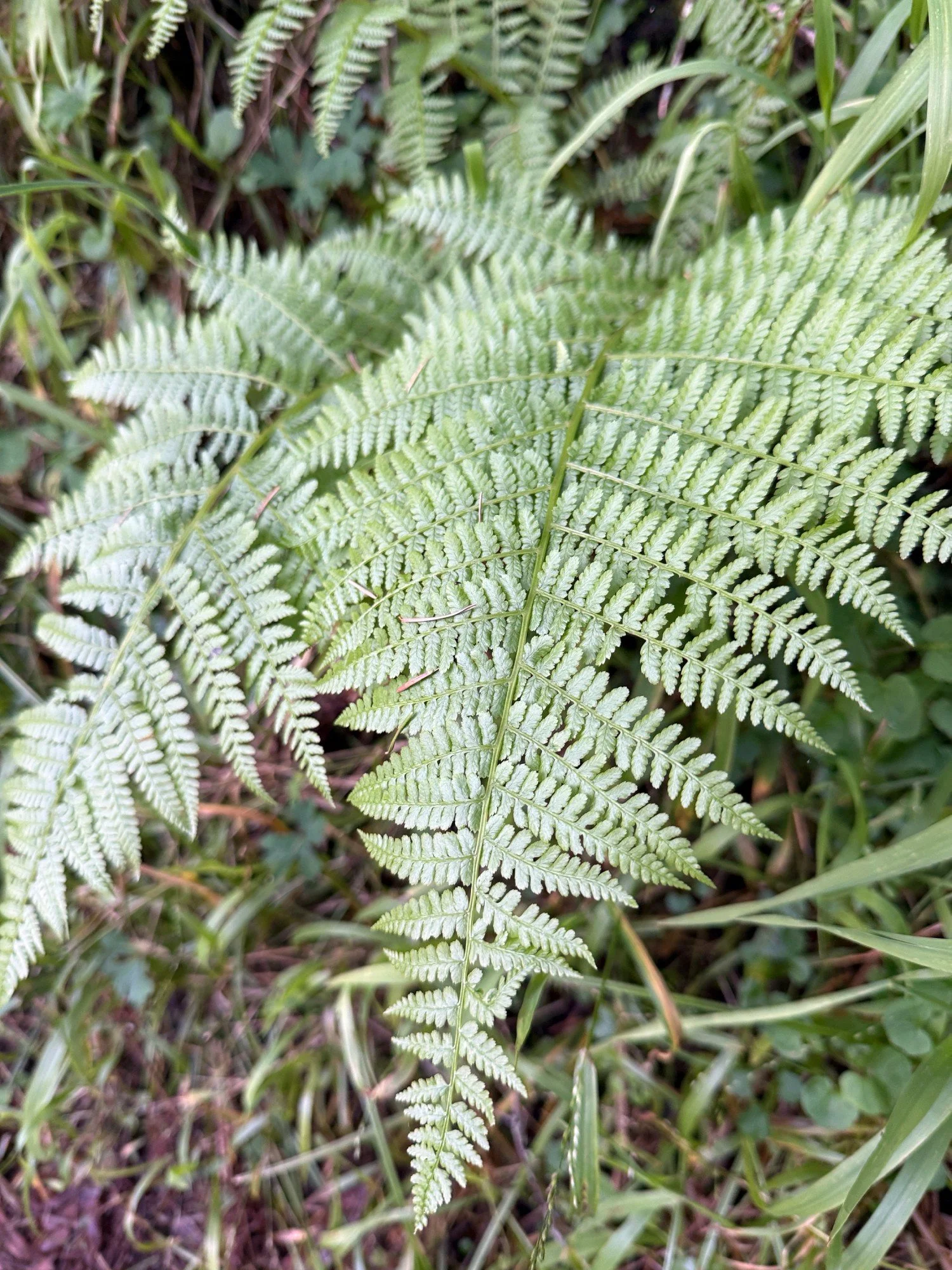
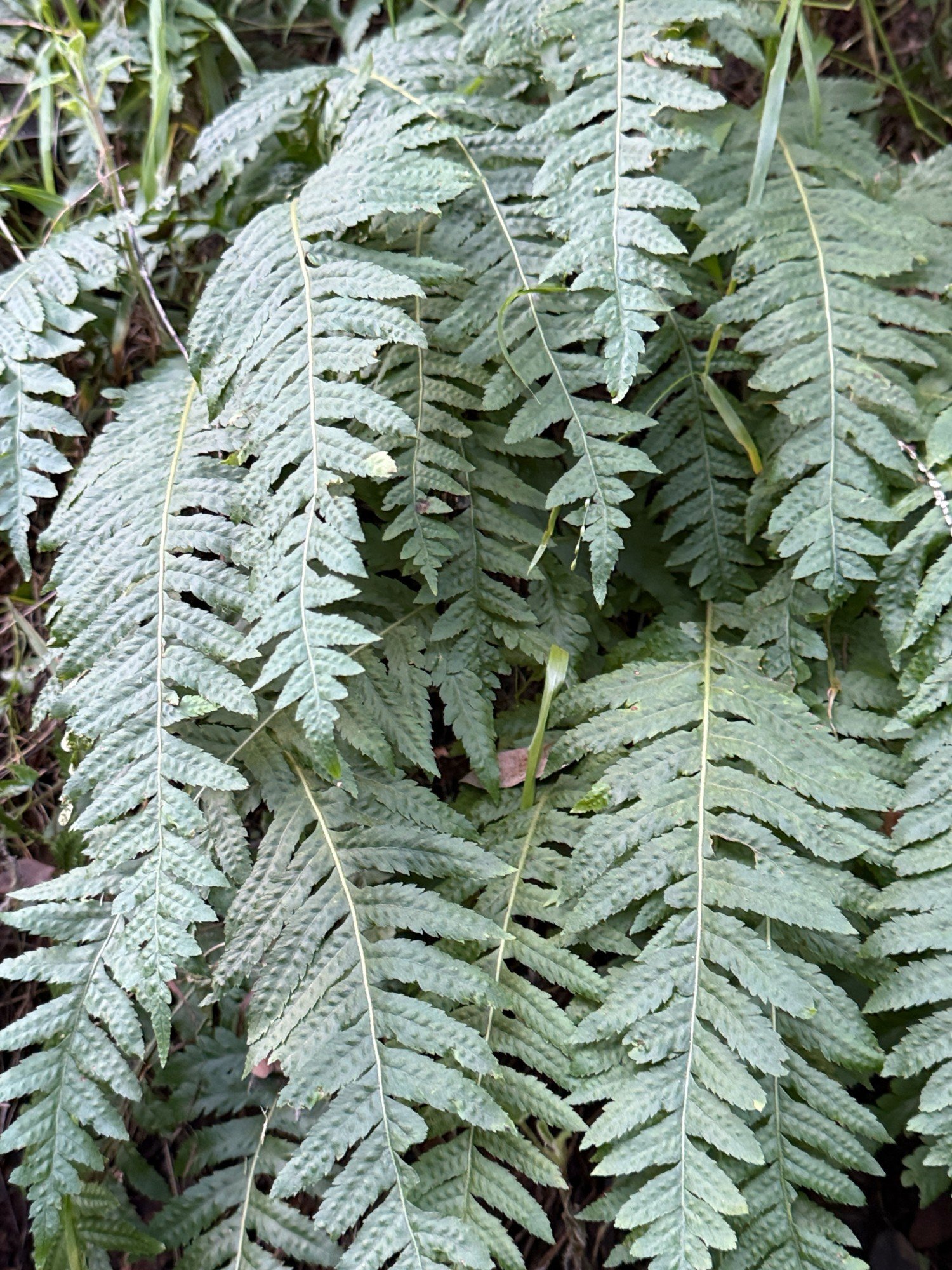
Back at the mill pond at 4:16pm, the raucous pine siskin party had ended and the late afternoon pond was peaceful. I peeked again through the cattails but didn’t see any ducks on the pond.
My hike reminded me what an incredible birding spot Five Brooks is year-round. If you can, get out to Five Brooks for a hike this winter.
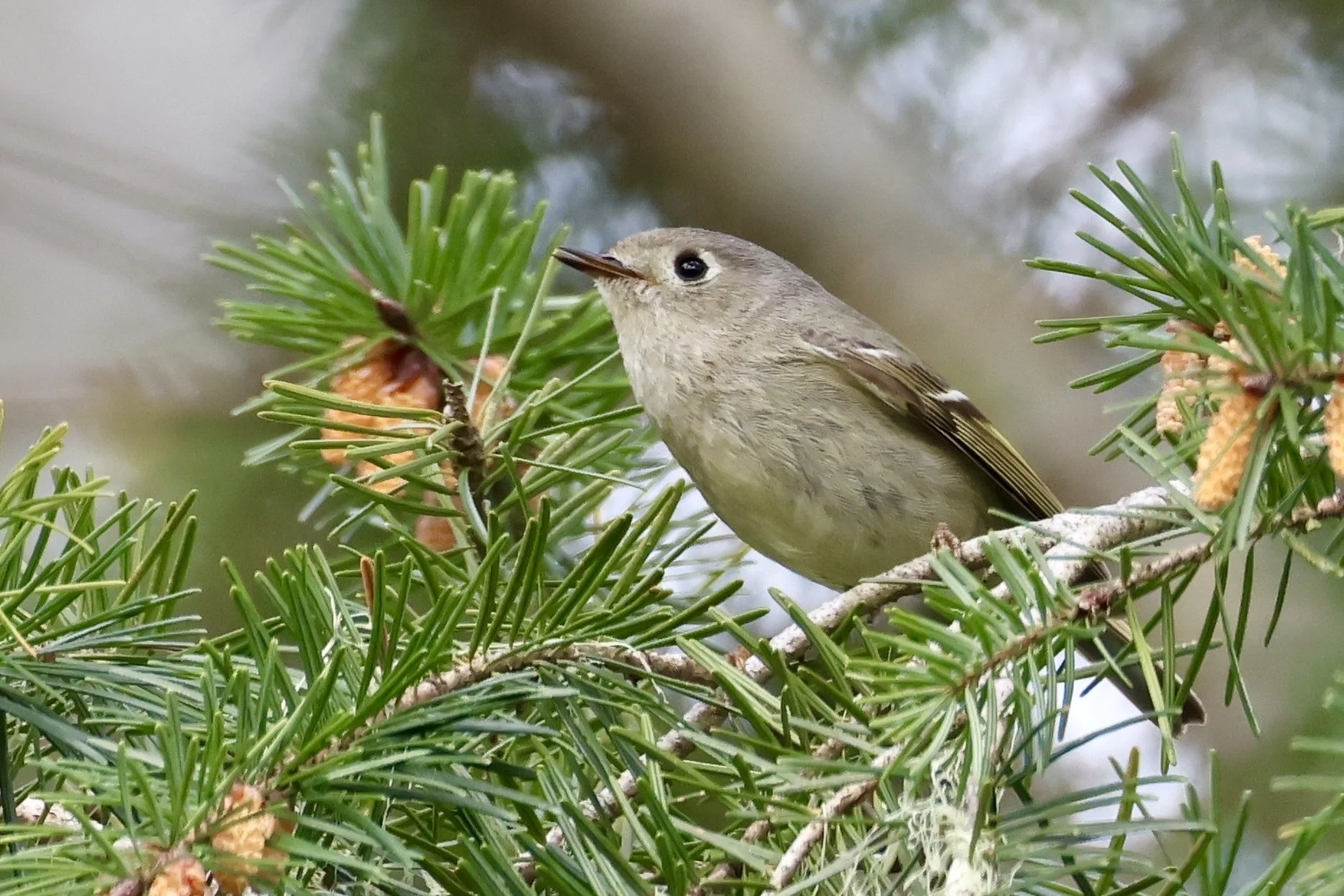
Image credit: ruby-crowned kinglet M.R. Perry, March 2025 at the Mill Pond