
A friendly flycatcher on the Muddy Hollow Trail
Do you get frustrated by hearing birds but never seeing them? Get yourself out to Muddy Hollow Trail! As a beginning birder, I was delighted by how many birds were easy to spot in the trees and bushes at Muddy Hollow. Not to be outdone by the birds, the butterflies made a good showing along the trail.
Muddy Hollow Trail and Limantour Spit were my choice for the 2026 Point Reyes Hiking Calendar for the month of August. I decided to test if these trails were good suggestions. Short answer: Oh yeah! I spent so much time watching and listening to birds on the Muddy Hollow Trail, I didn’t have time to visit the shorebird-rich Limantour Spit. Fortunately, the trails share Limantour Estero so many shorebirds and waterfowl can be spotted from the Muddy Hollow Trail.
Being a birding novice, I rely heavily on the Merlin app to identify birds by sound but I noticed some birds weren’t making any sound and therefore were eluding Merlin. The trick is to record sound on Merlin for ninety seconds to two minutes to give birds time to be heard. I was amazed by how many birds will start chirping when you stand still for two minutes. They are out there — you just have to be patient.
I started my hike on Muddy Hollow Trail at the Limantour trailhead. An advantage of starting on this end of the trail is the vault toilets - especially convenient after a long drive. Immediately, I heard a Wrentit and Northern Flicker in the nearby pine trees. I didn’t need the Merlin app to identify these birds - a small win! They have a distinctive call and are common enough that I’ve heard them frequently in Point Reyes over the years.
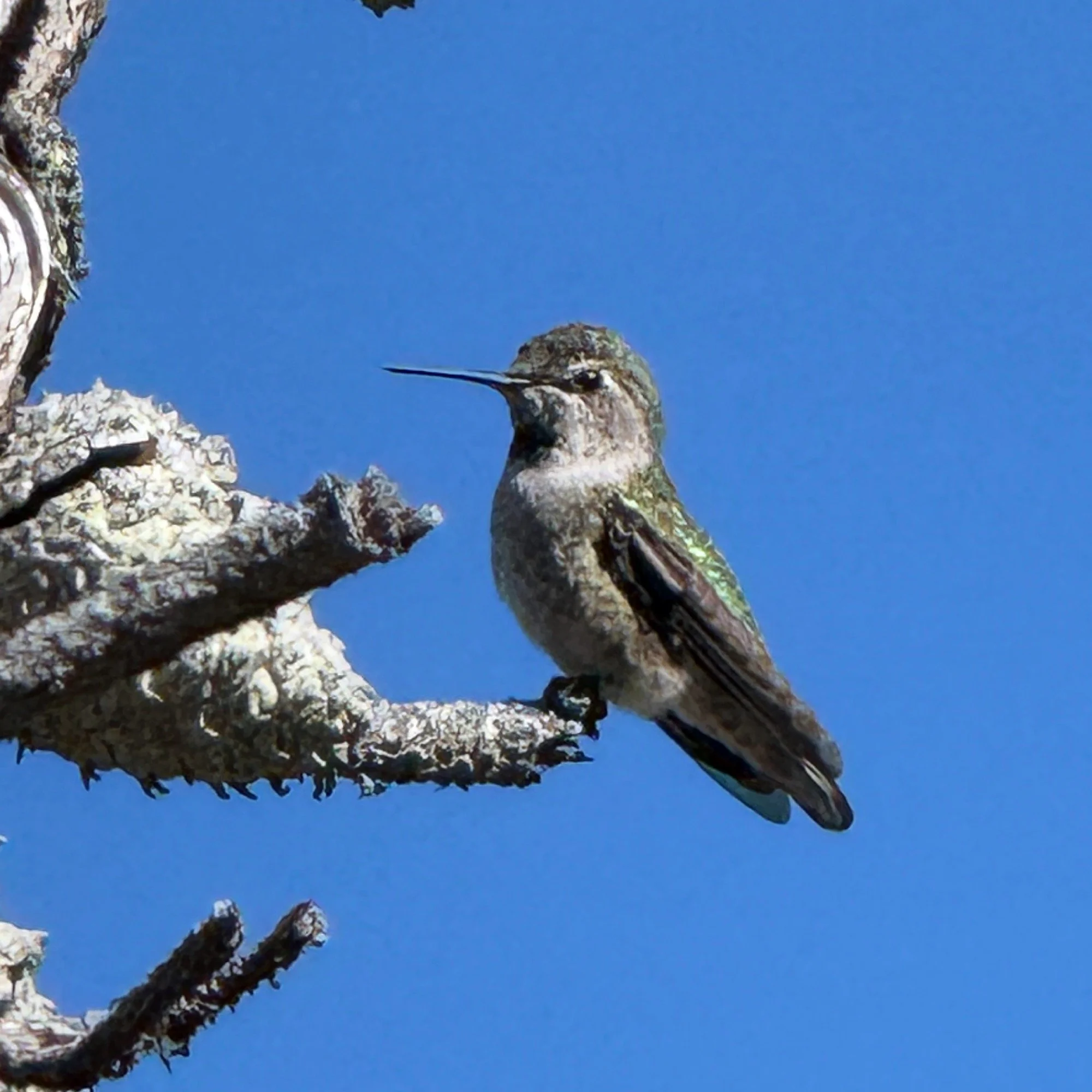
Emerging from the trees overlooking the Limantour Estero marsh, Merlin heard Western Gull, Elegant Tern, Least Sandpiper, and Killdeer. I saw gulls, and about a dozen sandpipers feeding in the mud. The trail led through an open area overlooking the marsh then passed through patches of pine trees. In the pines, Merlin heard Bewick’s Wren, White-crowned Sparrow, Anna’s Hummingbird, Common Yellowthroat, Black Phoebe and ever-vocal Song Sparrows. I was eager to spot the Common Yellowthroat but couldn’t find it. The Anna’s Hummingbird was easier to spot - zipping around then perched at the top of a pine snag.
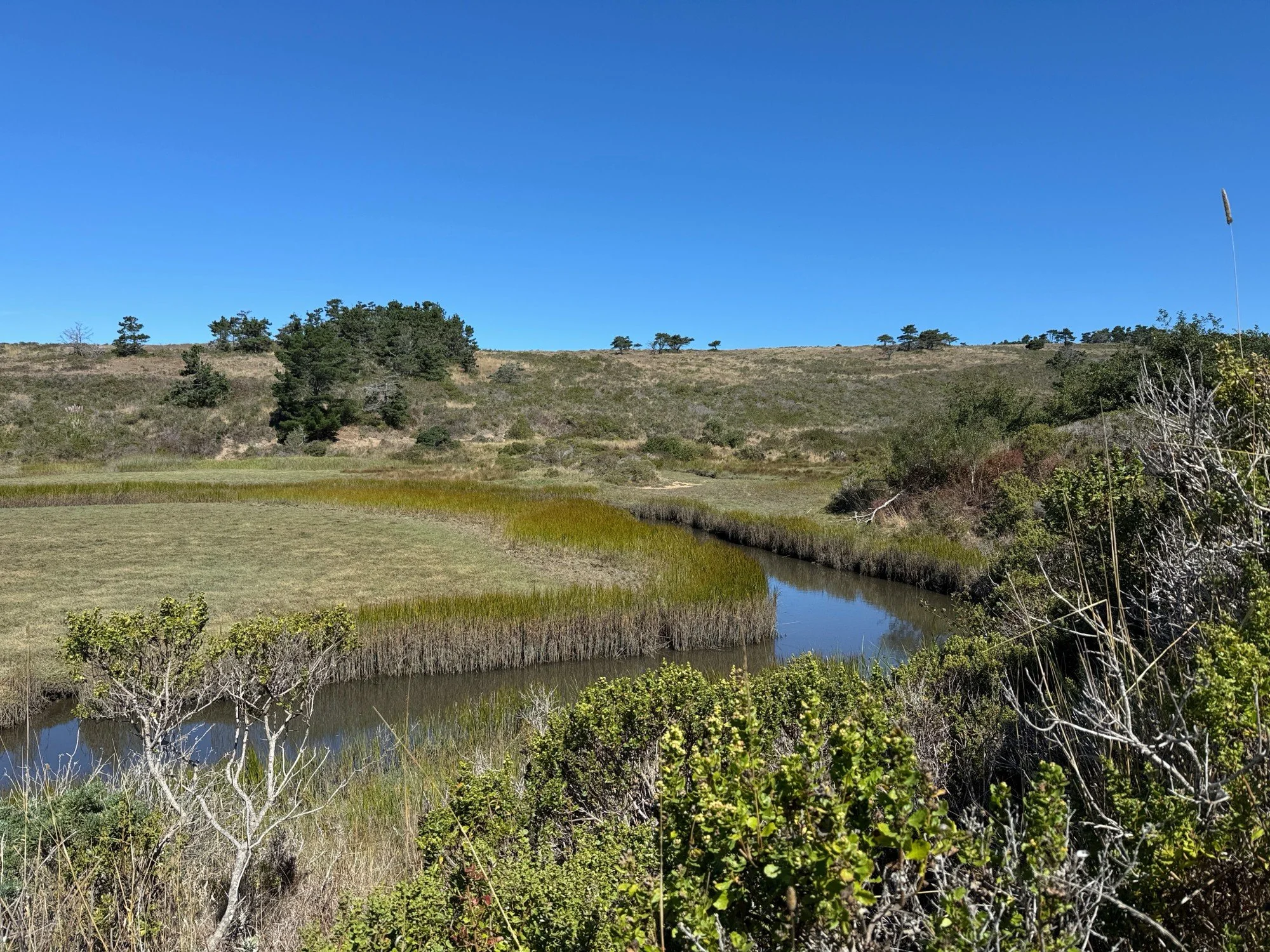
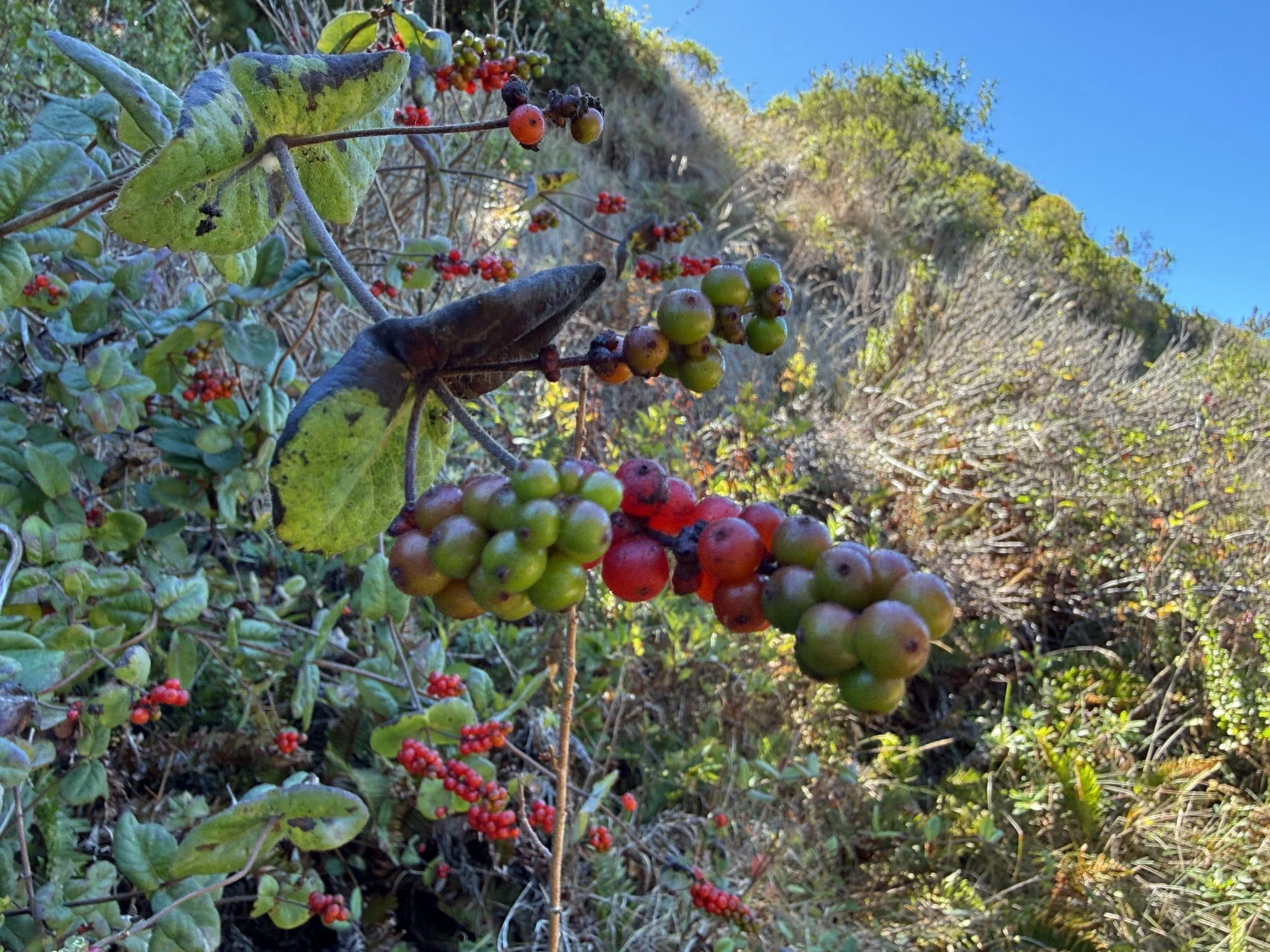
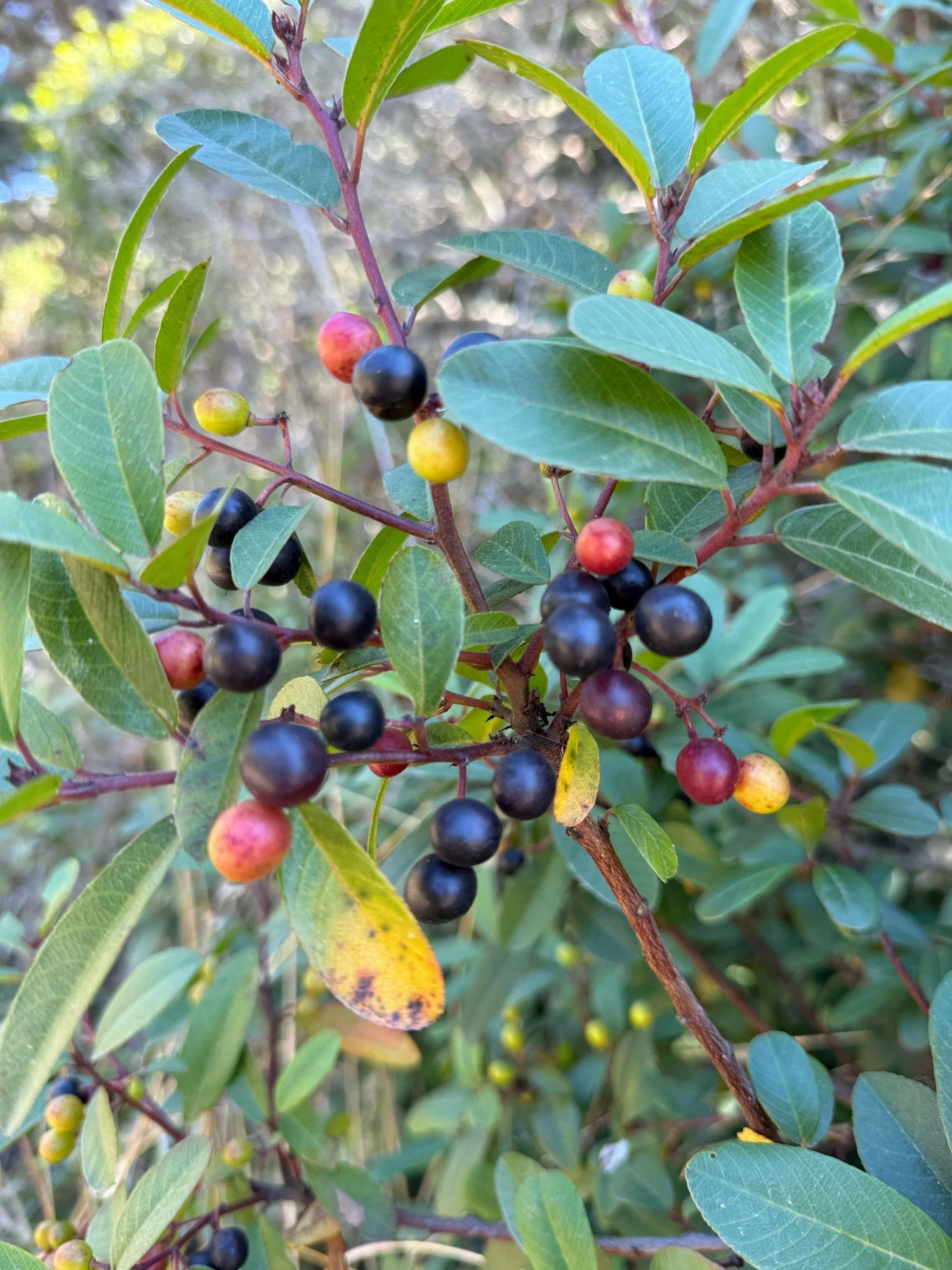
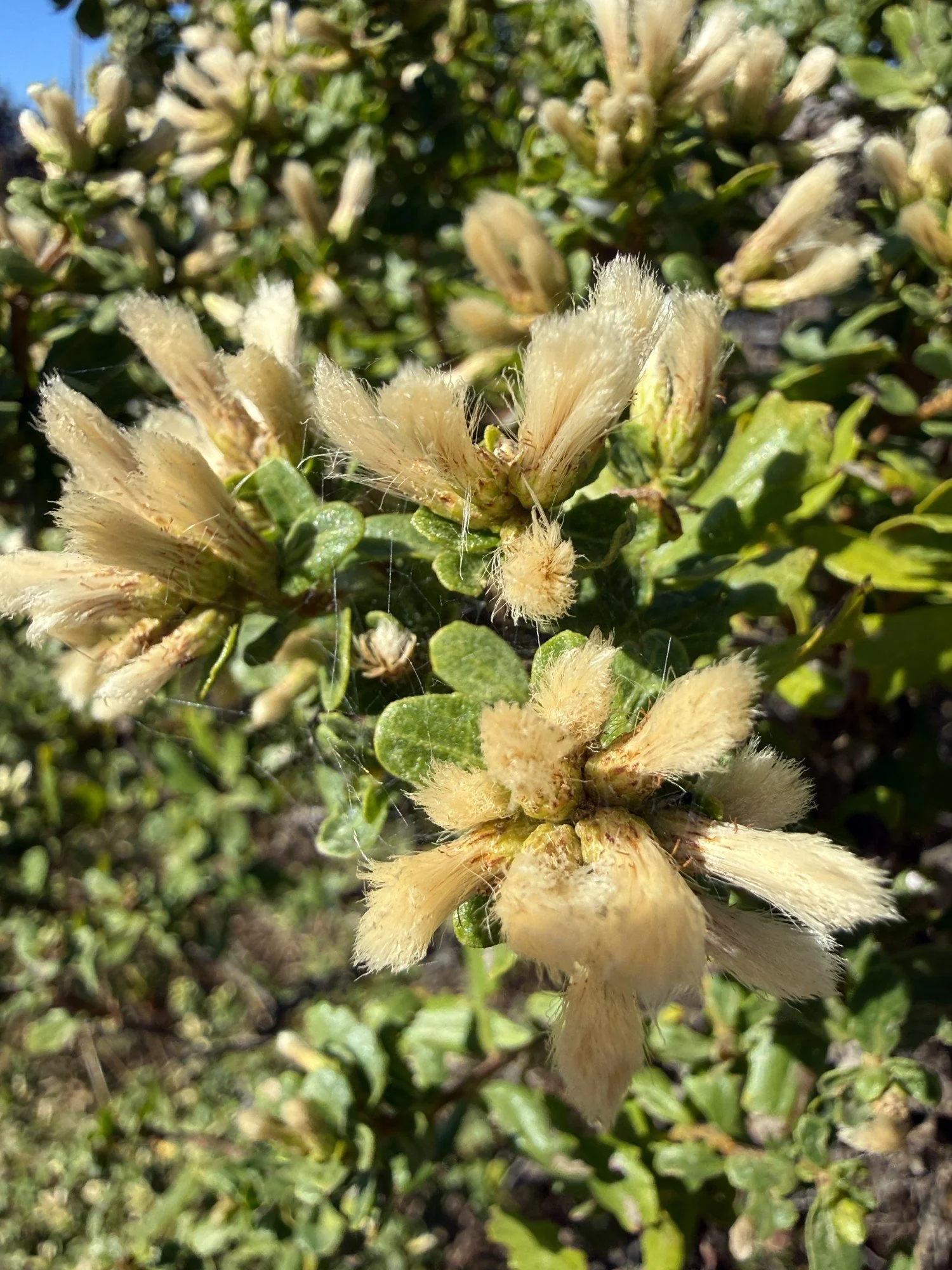
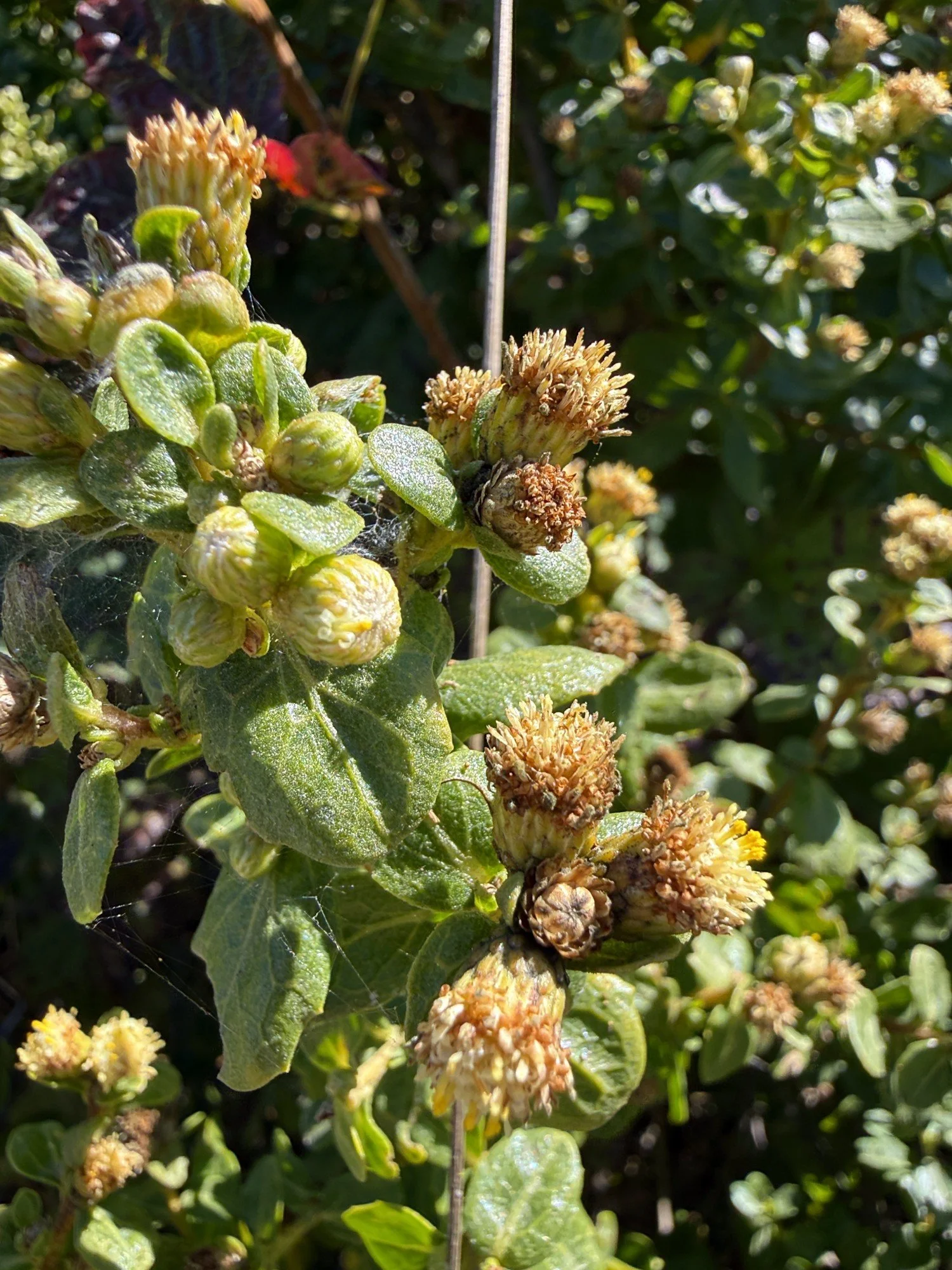
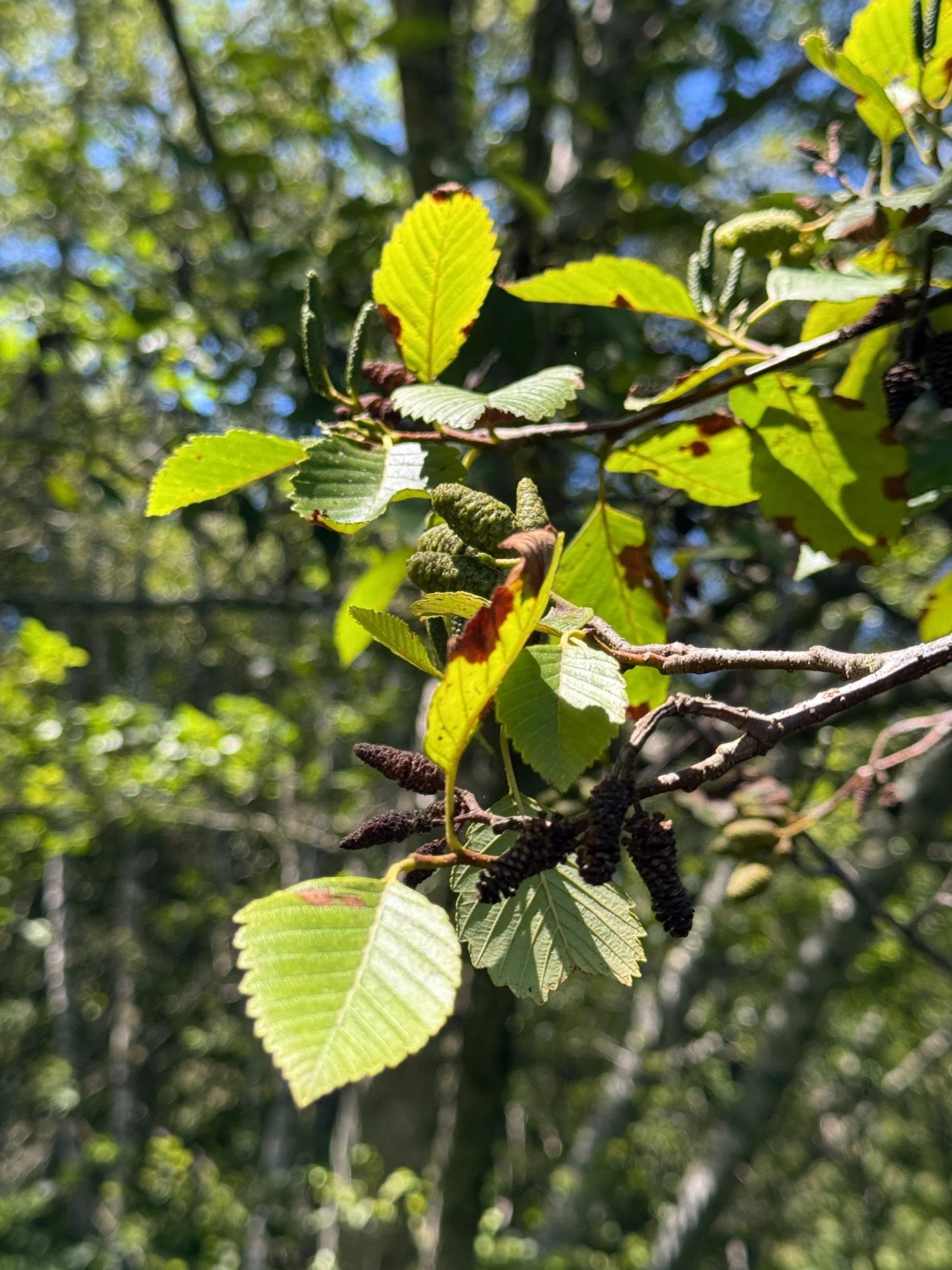
Not much was flowering along the trail this time of year though vibrant Orange-bush Monkeyflower along with berries from Coffeeberry, Pink Honeysuckle, and Twinberry Honeysuckle added dots of color among the trailside dried grasses. Coyote Brush was flowering. Females and males are separate plants. The female flowers are tiny pale paintbrushes that turn into fluff and spread in the wind, and the male flowers are spiky balls. Poison oak was thriving, turning a beautiful red color heralding fall in Point Reyes.
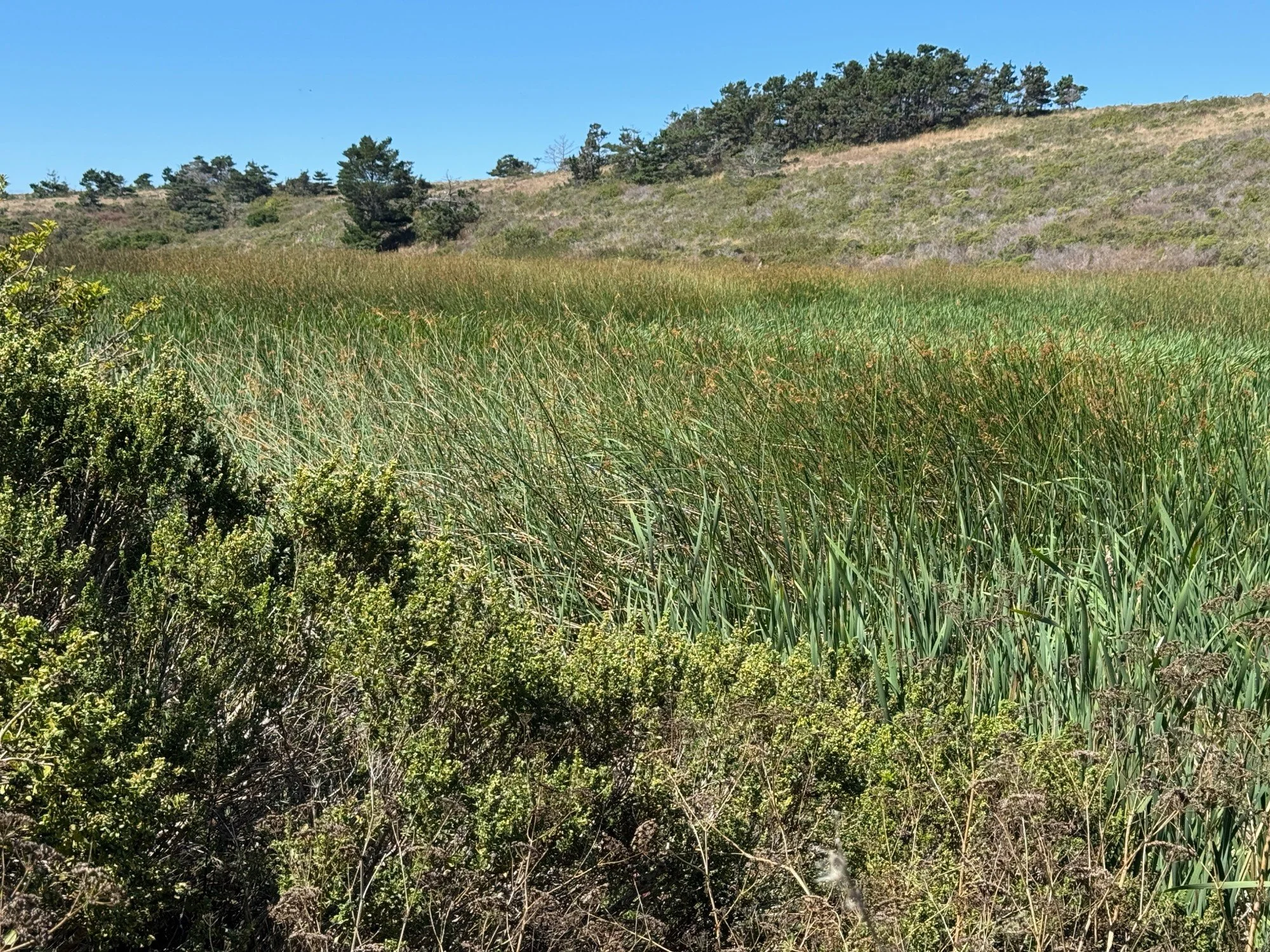
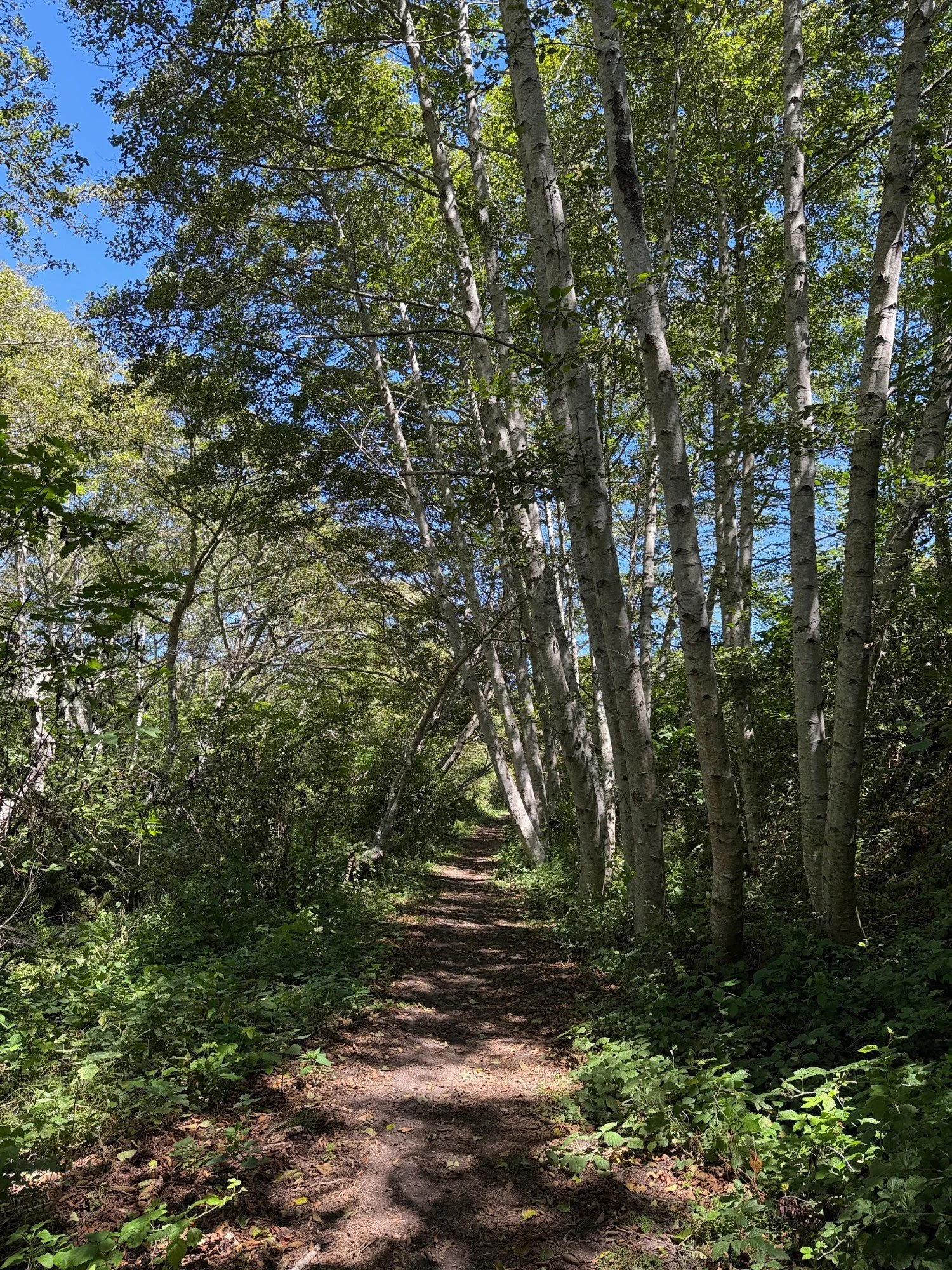
Moving out of the pines to the end of the marsh, Merlin added American Goldfinch, House Finch, Western Bluebird, Pine Siskin, and Barn Swallow. I failed to locate any of these birds. Into the Muddy Hollow Creek area lined with alders and willows, Lesser Goldfinch and American Goldfinch were heard but not seen, along with Wilson’s Warblers heard numerous times. I paused at the edge of a wetland area covered in tall tule reeds, sedges, and alders where I encountered some of the most charismatic birds. A Virginia Rail squealed like a pig, and a Marsh Wren called from within the thick reeds. I couldn’t spot either one. Moving deeper into alders and willows, Merlin added Hutton’s Vireo, Spotted Towhee, and Chestnut-backed Chickadee. I saw the towhees near the ground and the ever-present squeaky chickadees.
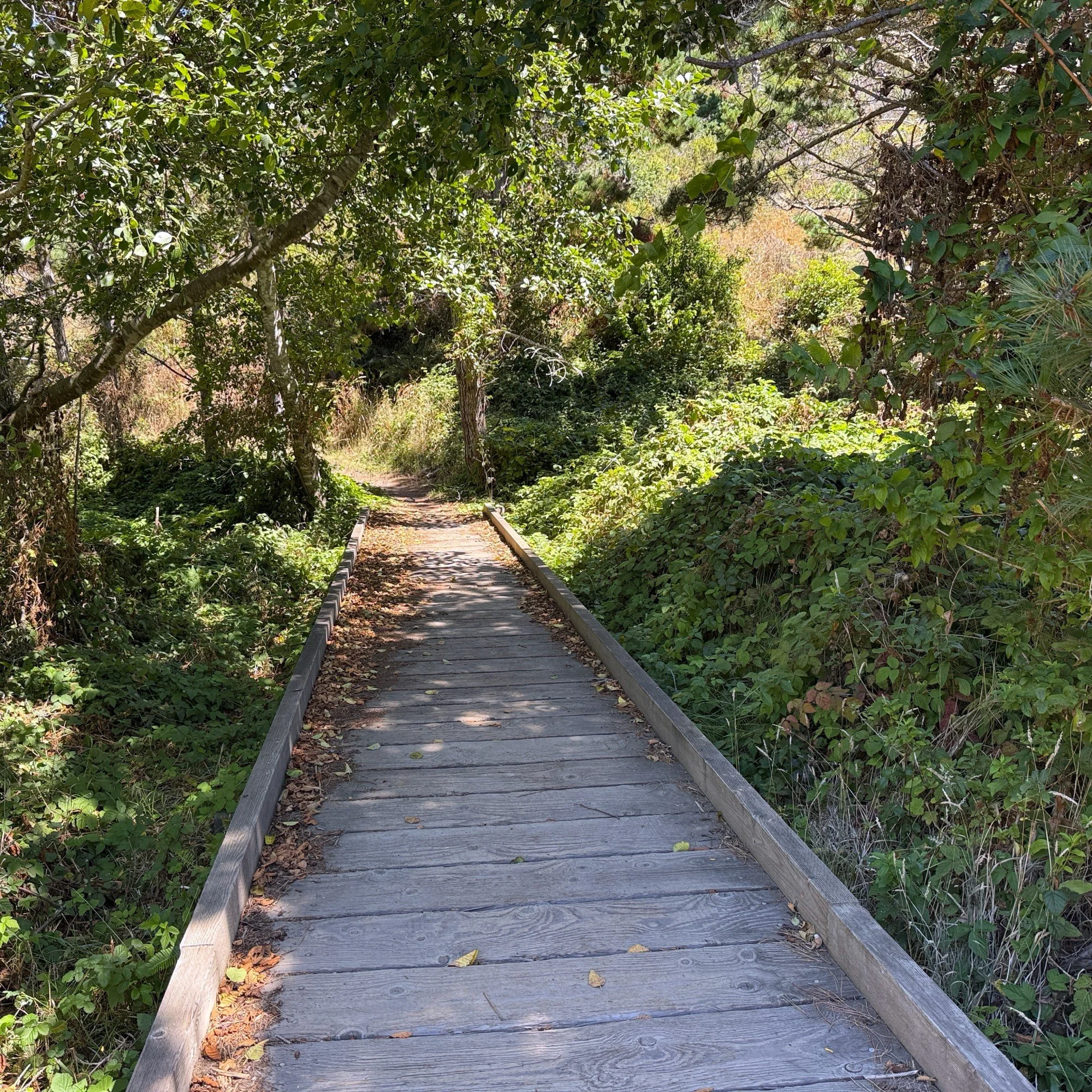
Further along, in the enchanted alder canopy, I spotted a Hairy Woodpecker moving from one alder to the next, pecking at trunks. See a video of the woodpecker. At the boardwalk, Merlin heard an Orange-crowned Warbler. I scanned the foliage but didn’t see it.
My most embarrassing moment was when I heard a low lion-like growl. I dismissed it, but then heard it again. This time it was clearly the sound of a Tule Elk bellowing. How did I not recognize that distinctive sound? The willows were too thick to spot the elk.
One of the most lively areas was near the end of the dirt trail among patches of pines. It’s here Merlin identified a Purple Martin. I looked everywhere but couldn’t find it. I couldn’t remember where to look — high trees or ground, and vowed to research it later. I discovered later at home that Purple Martins are aerial insectivores (they catch flying insects in mid-air) and frequently forage over open water, marshes, and damp meadows where insect activity is high. Look high into the sky above the trees to find them hunting or look at dead snags and perches to find them resting or scouting.
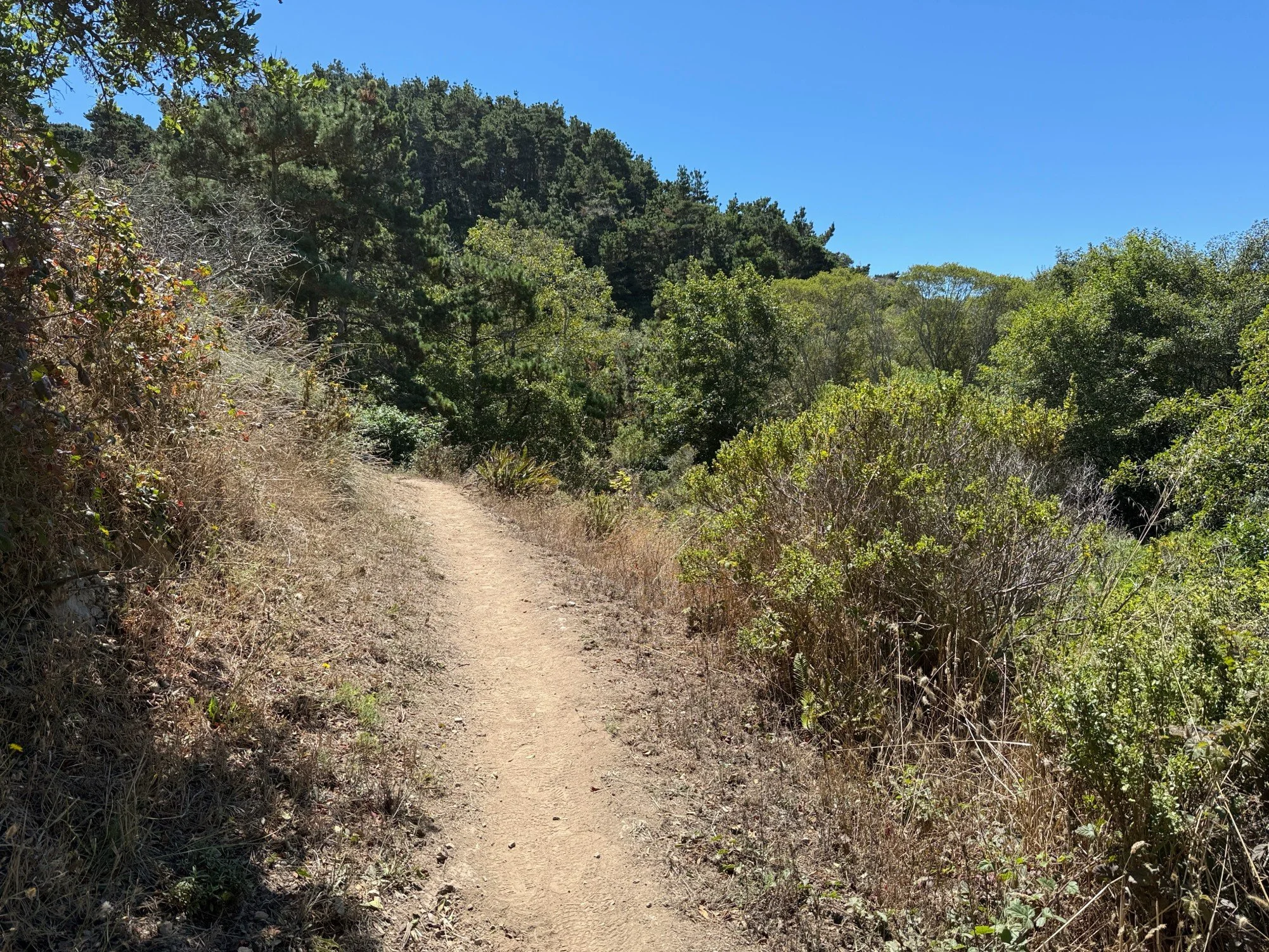
I turned around at this point since I was at the end of the main trail before it turns into a gravel road. I discovered another active bird spot in an open space where the trail has a wide curve with a hill on one side and willows and alders in the canyon below. I call it the “poppy spot” because California Poppy blooms profusely here in the spring and greets you cheerfully as you round the curve. Merlin heard the Purple Martin numerous times as well as Bushtit, Orange-crowned Warbler, Bewick’s Wren, Northern Flicker, and Spotted Towhee. The loud screech of three Red-shouldered Hawks calling in the sky drew my attention. Was it two males fighting over a female? Was it a family? Was it a hawk party? I watched them flying and lunging overhead.
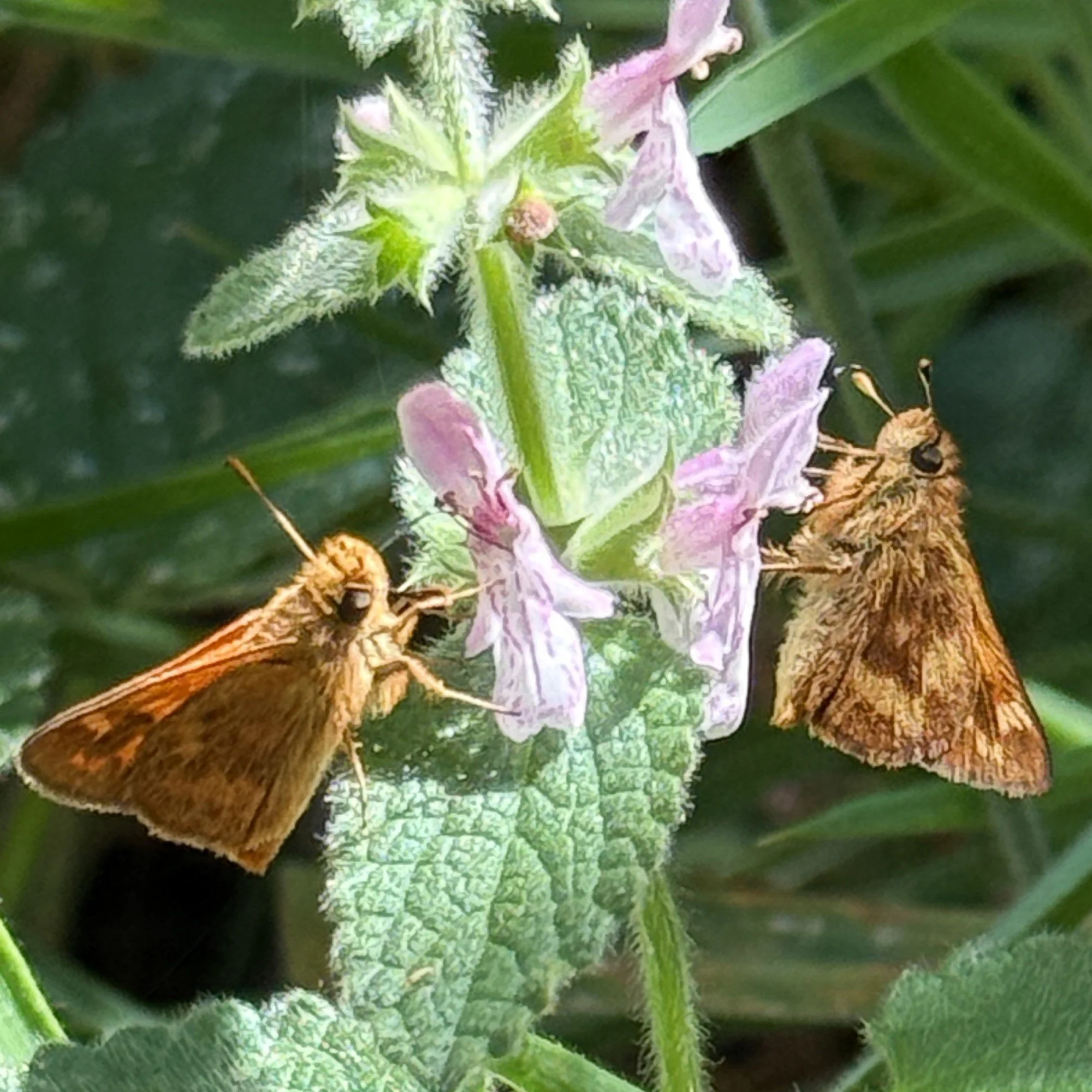
I passed many butterflies — especially Skippers which seemed to be favoring hedgenettle flowers and blackberry leaves. iNaturalist suggested several different species based on my photos. I’ll have to wait to see what the experts decide — woodland, rural or umber skippers? I got at least one good photo of two skippers on the same flower - they stayed in place long enough to snap a few shots. Check out a video of the Skippers in action. I saw many small Mylitta Crescent butterflies but they were too fast for me to photograph.
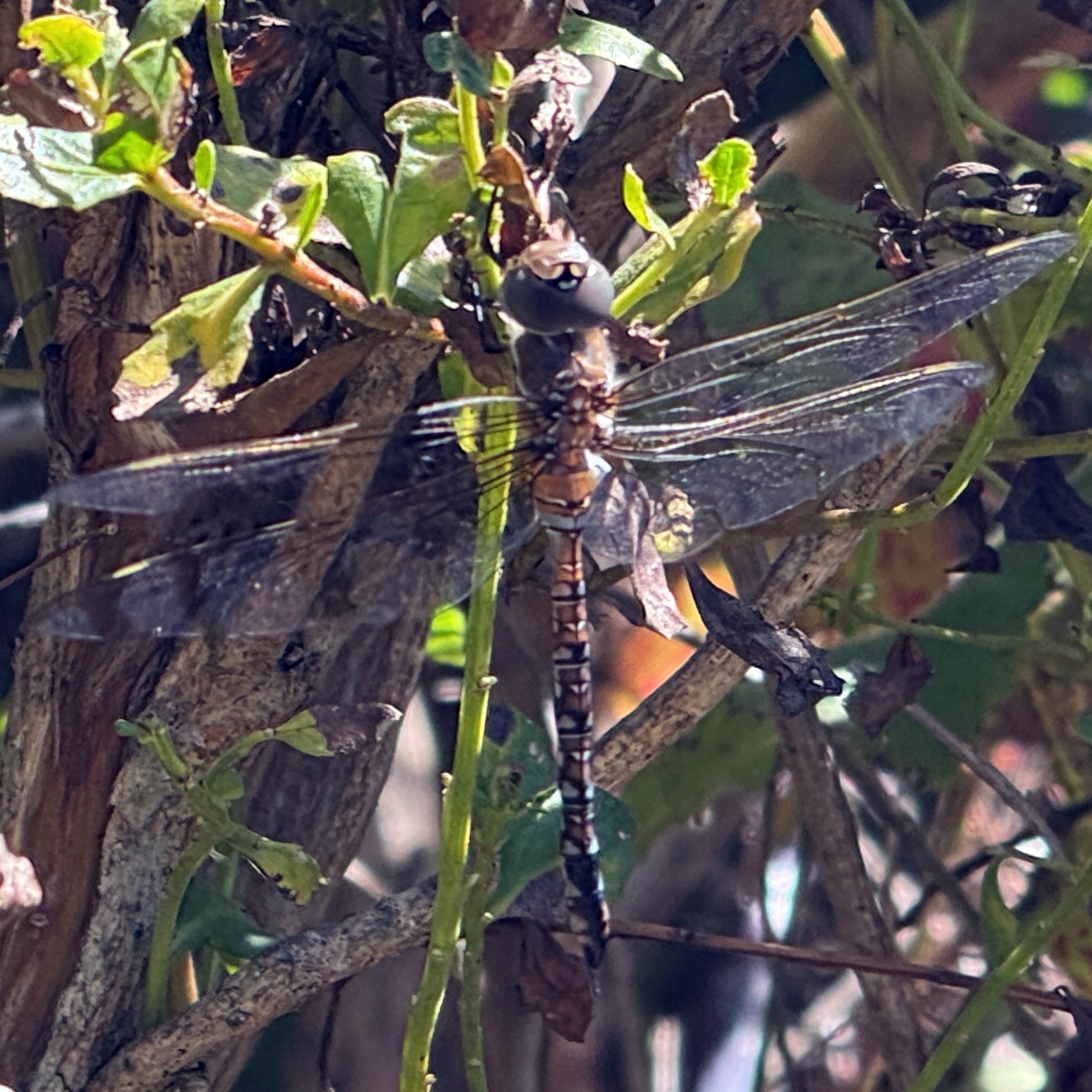
Dragonflies made their presence known — circling and diving overhead — bright red Cardinal Meadowhawks and huge Darners. The wood boardwalk in the open sun and trailside blackberry hedges were popular gathering spots.
I returned to the alder canopy, one of the magical spots of beauty in Point Reyes — especially in spring when pink candy flowers line the trail. I sat in the middle of the trail and trained my binoculars on any movement coming from the tree foliage. Was it a yellow warbler or a falling yellow leaf? Both were fluttering in the forest. I saw several Wilson’s Warblers with their brown heads and stripes, and a solid yellow warbler (maybe the Northern Yellow Warbler?) Chestnut-backed Chickadees were flitting through the branches. Birds were flying alone and sometimes in pairs, often diving from high branches. It was so much fun watching them pecking, peeking around leaves, and hanging upside down. It took all my binocular skills to track their quick movements. I was enthralled. How lucky to be sitting in this beautiful forest surrounded by birds.
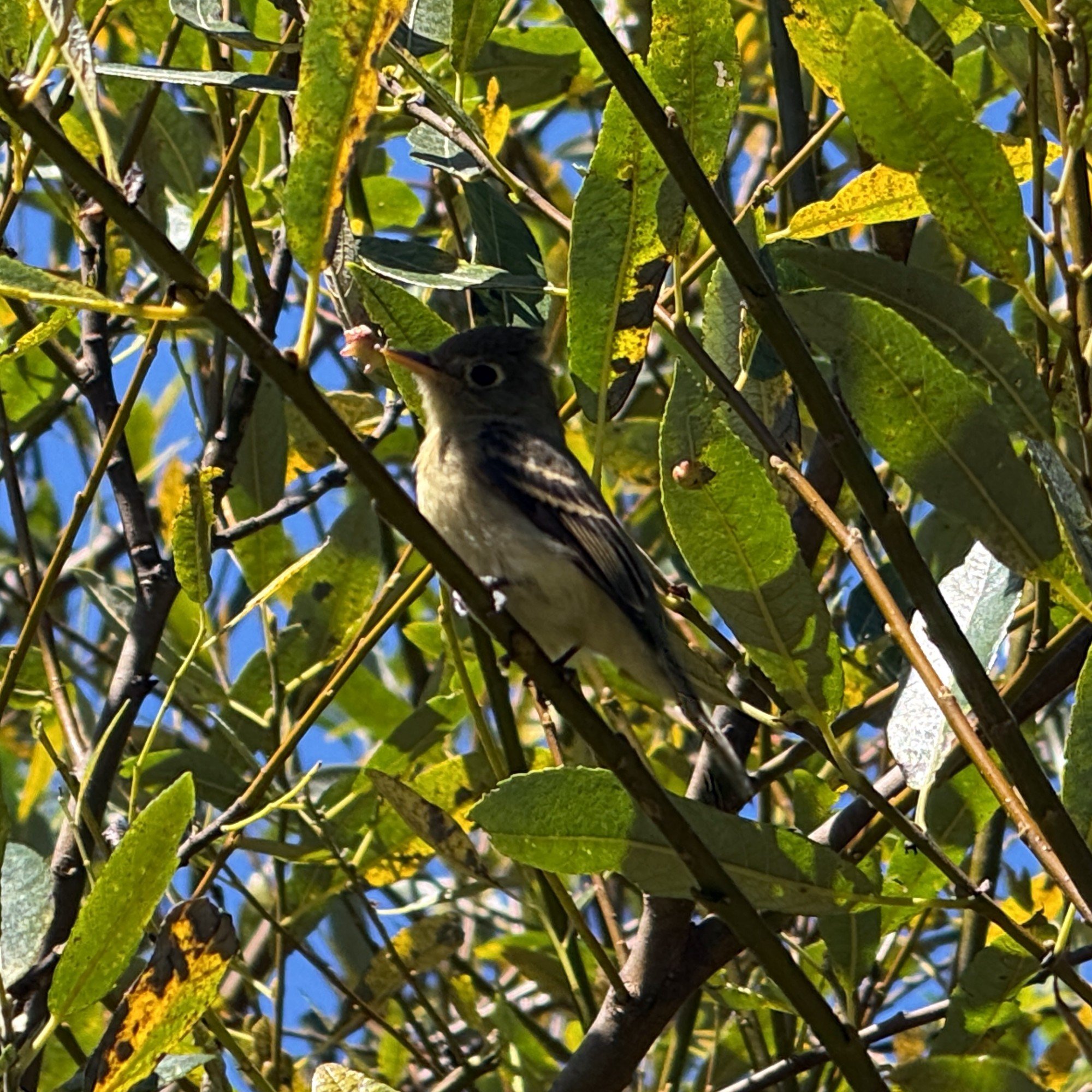
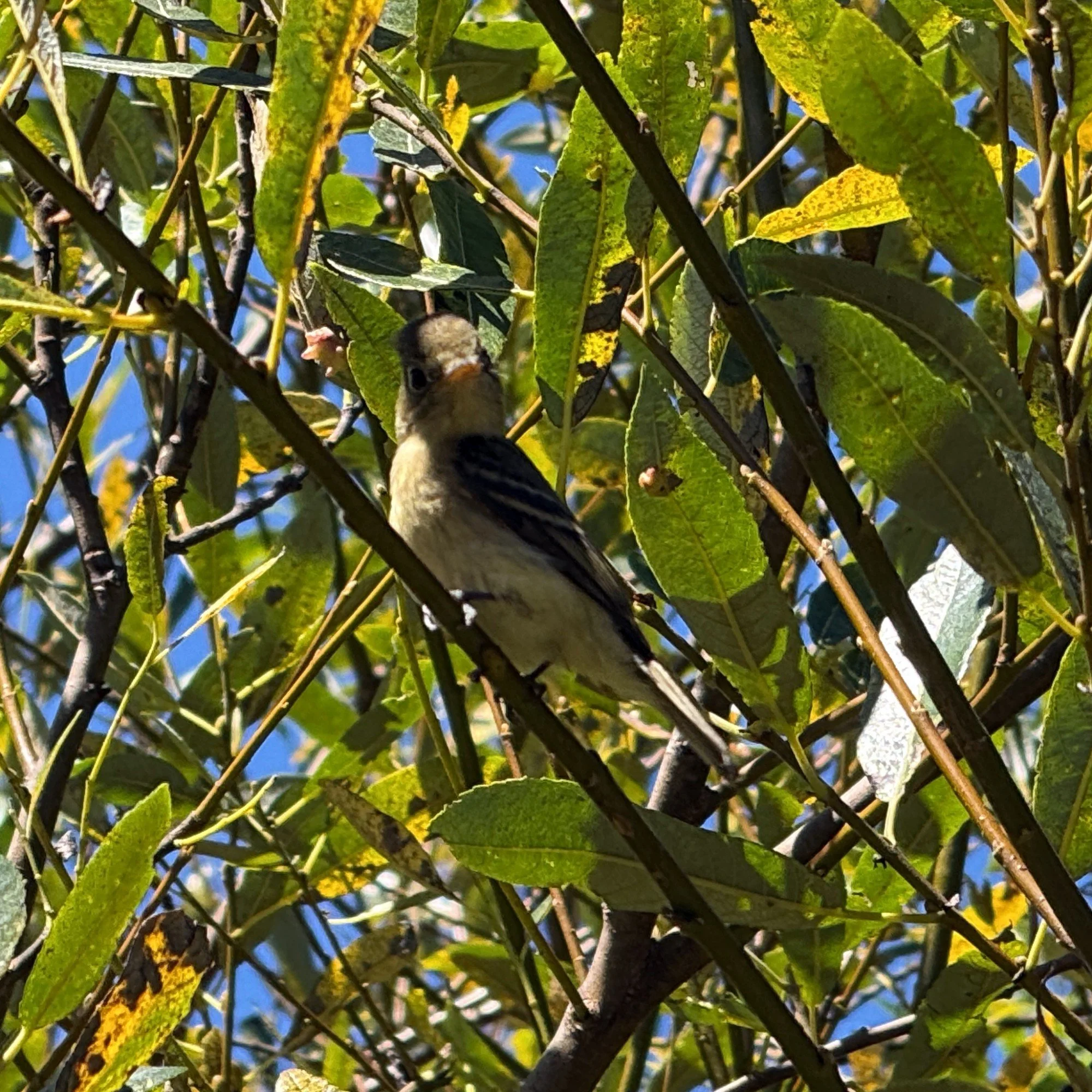
On my way back, the friendly Western Flycatcher was still sitting on a low branch near the edge of the trail in the willow forest near the marsh. Check out a video of the friendly Flycatcher. I visited a bit more. My favorite moment was watching its head turn different ways to watch me. It was silent but so expressive. I hoped my presence was not a threat. Was it bravely guarding a nest? I didn’t see one in the willows but I didn’t know what to look for. Later I read they are cups made of moss, lichen, grass, strips of bark, leaves and lined with finer materials. They are more than four inches wide with an inner cup two inches wide and one inch deep and are located in tree stumps, upturned roots of fallen trees, or the fork of a small tree. I talked with a birding expert later who thought it could have been a juvenile.
The last bird I saw was a Pacific Wren nestled in tall reeds. It flew deeper into the reeds quickly when it saw me.
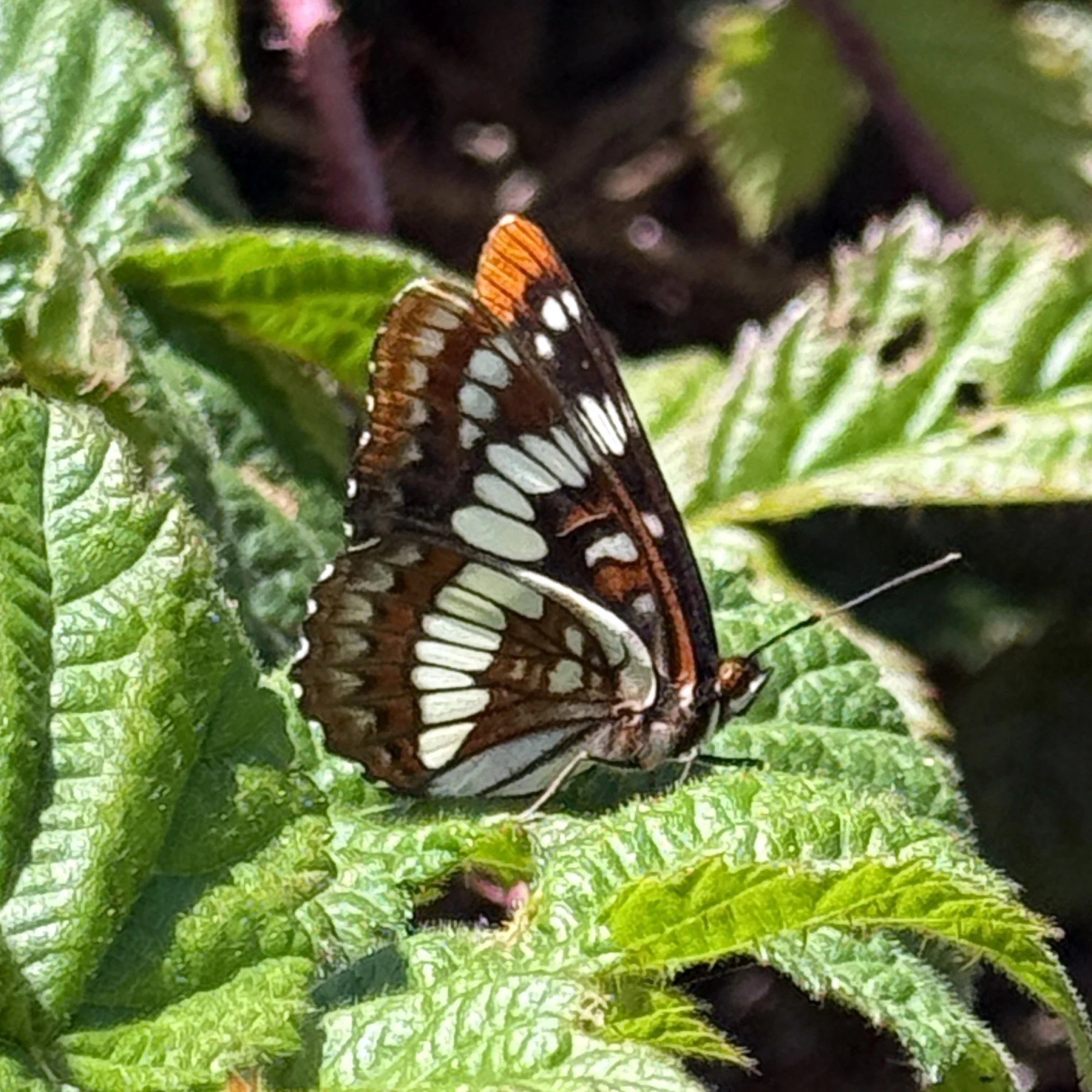
My final magic moment was watching a Lorquin’s Admiral butterfly sitting on a hedge of trailing blackberry. See the video.
Back at home, I reviewed the birds Merlin identified and was amazed at how many yellow birds were heard along the trail that day: Common Yellowthroat, American Goldfinch, Lesser Goldfinch, Wilson’s Warbler, Northern Yellow Warbler, and Orange-crowned Warbler.
Get out to Muddy Hollow soon if you can!