Blazing a trail at Bull Point
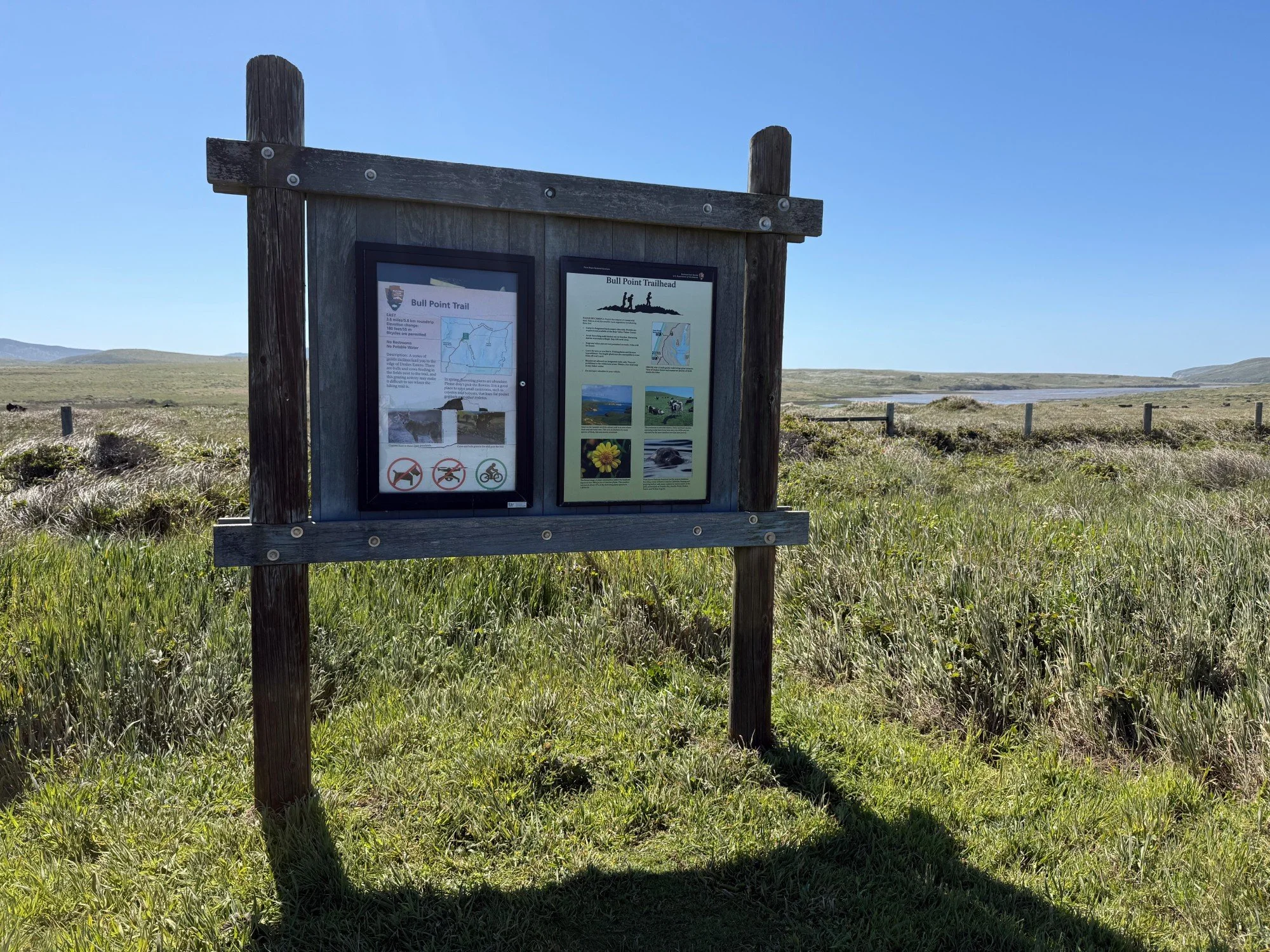
On a windy day in May, I set out to explore Bull Point. My intention was to hike the actual trail rather than wading through weeds and mud off-trail in pursuit of rare flowers and butterflies as I often do. I was delighted to see cows and calves grazing the grasses near the trailhead, leaving the trail clear and easy to navigate. Targeted grazing is now being used as one method to manage these former ranch lands which have become overgrown in the absence of grazing over the past several years.
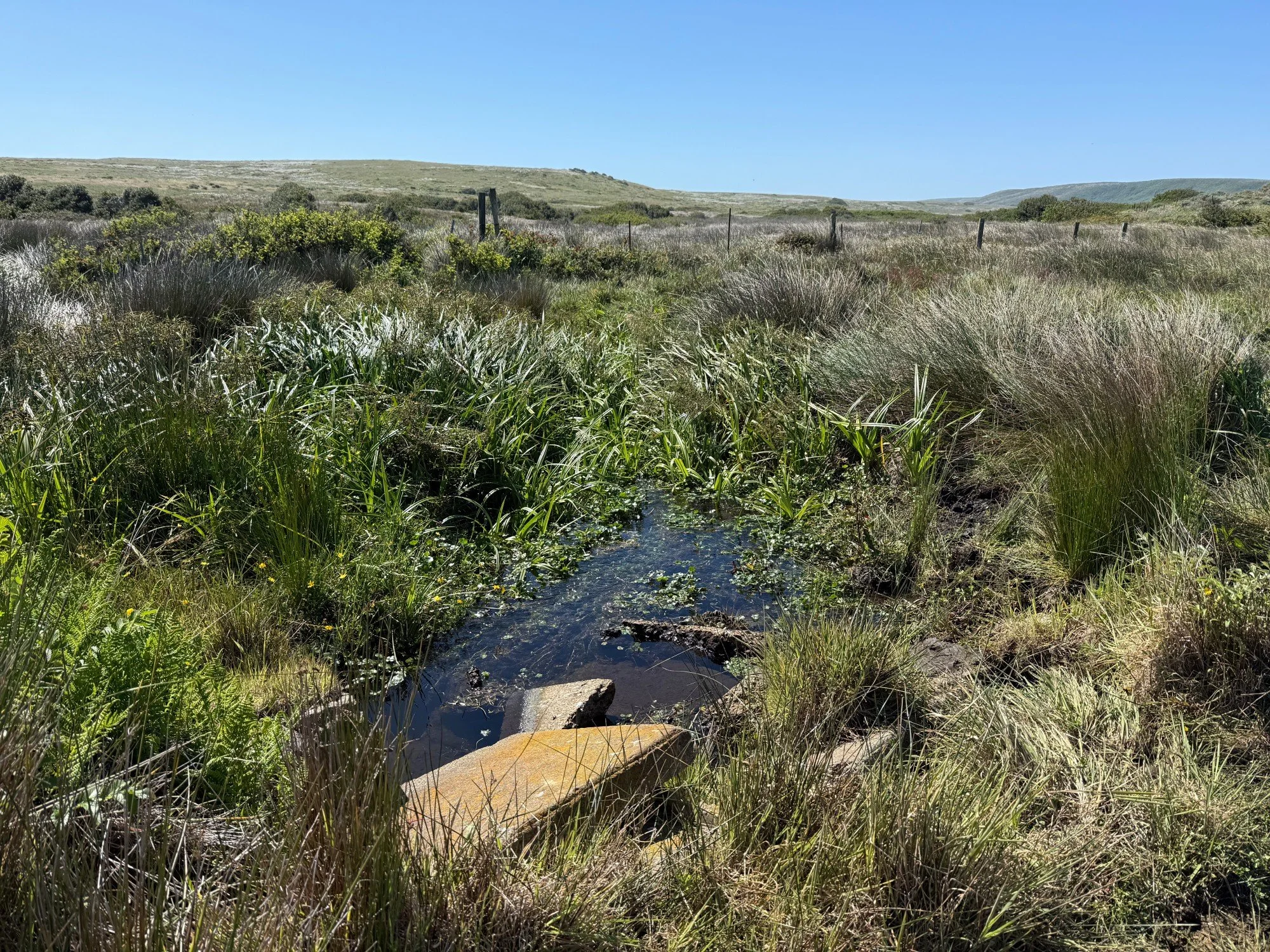
My first stop was the verdant seep at the bottom of the hill lined with sedges and rushes and bustling with Red-winged Blackbirds. I paused for a few minutes to watch the captivating blackbirds flitting in and out of tall reeds and calling to each other. Savannah Sparrows, Song Sparrows and White-crowned Sparrows joined the chorus from the surrounding grasses and coastal scrub bushes.
Continuing on through the gate, I followed the tire marks in the flattened grass — the closest indication of a trail. I followed this path beyond the point where I know the actual trail should be. Admittedly, I was distracted looking for flowers, listening for birds, and chatting with some folks I met along the path, but it was still a little embarrassing not to be able to find the trail after so many years of hiking here. In past visits, well-worn cow paths marked the trail but now the grasses had covered the old paths. My intent to hike the actual trail was thwarted but my enthusiasm and curiosity to hike this new path were strong.
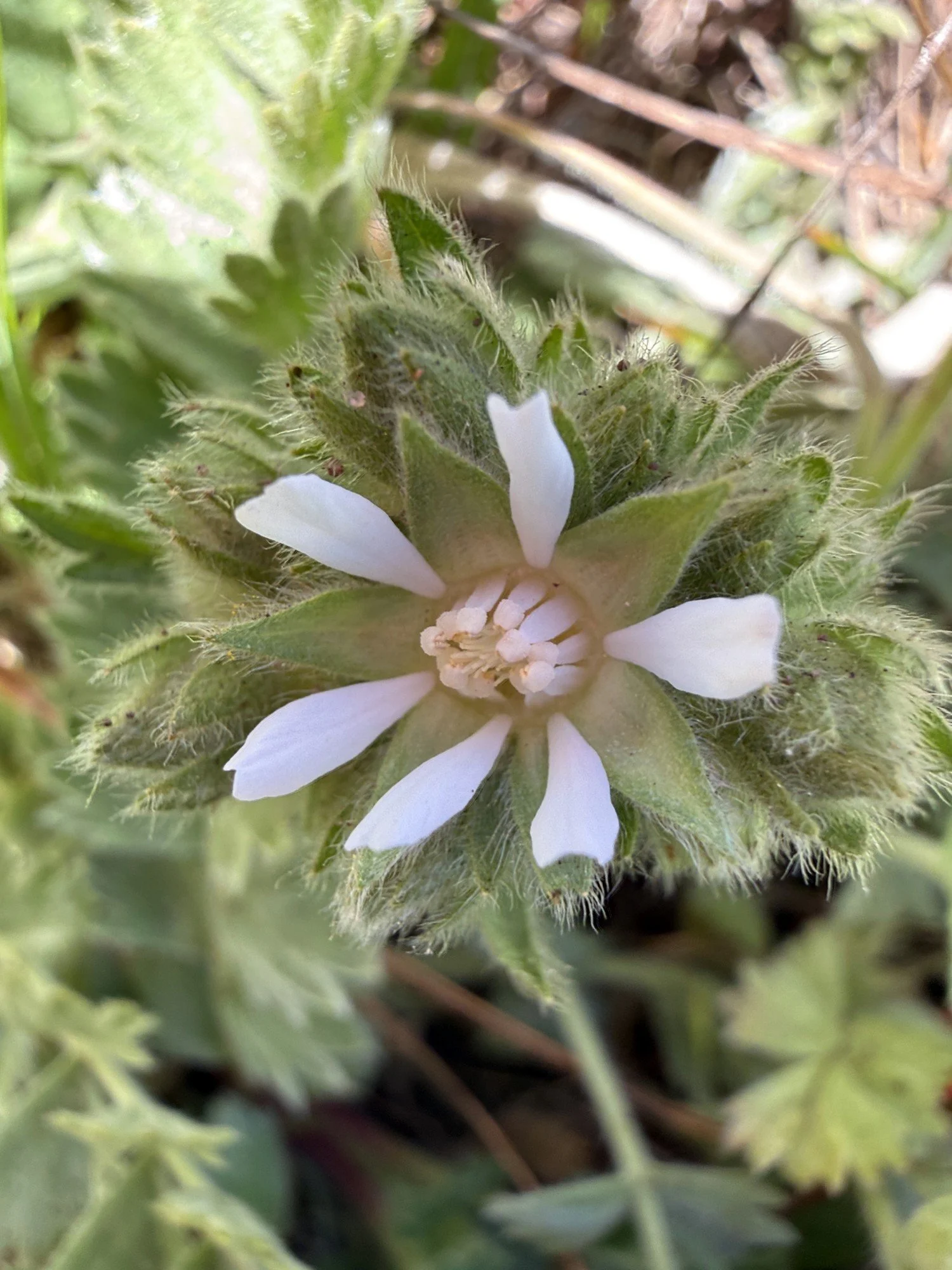
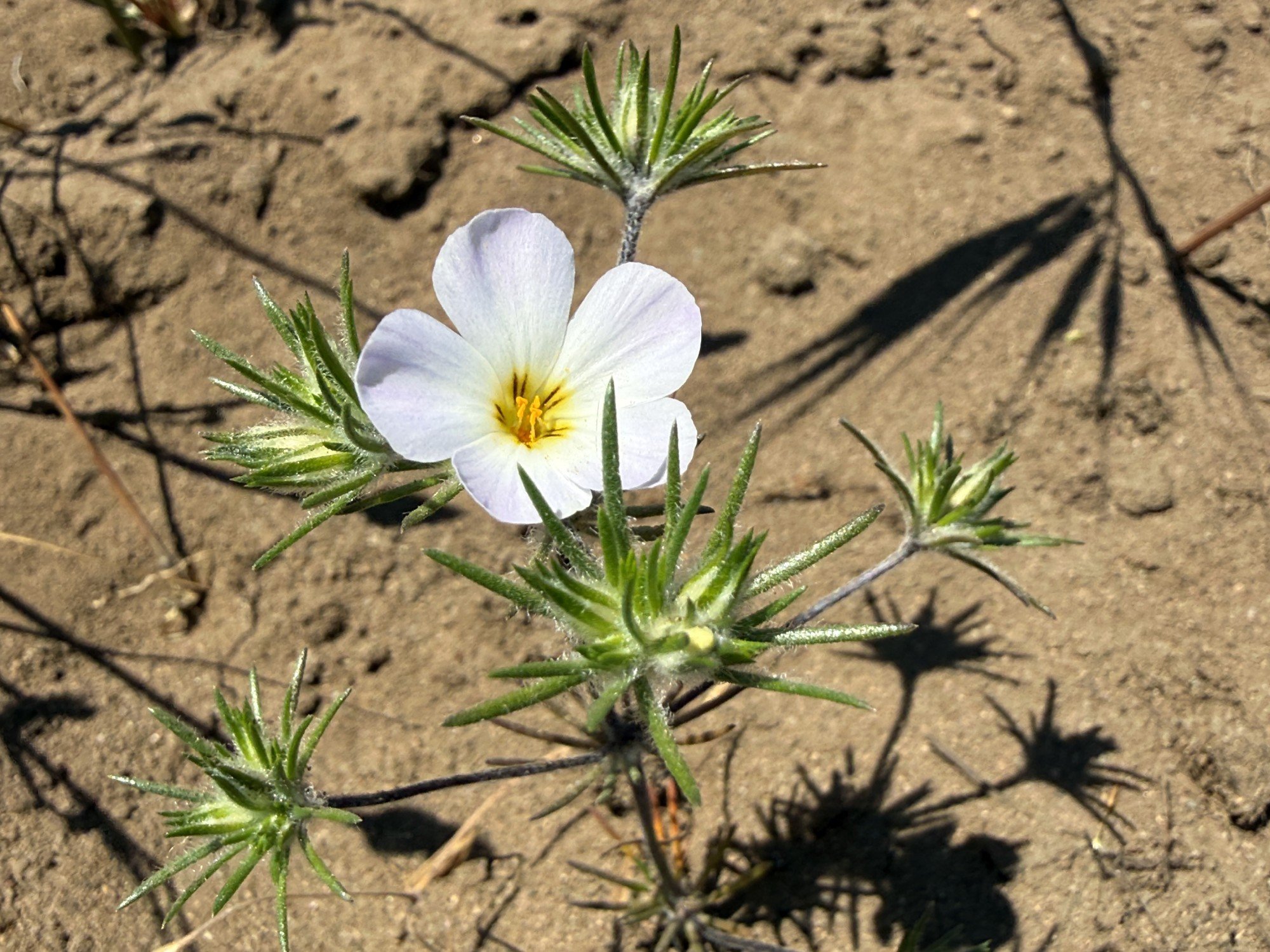
Along the first part of the trail after the gate, not far from the scrubby dunes, the rare Point Reyes Horkelia appeared nestled in tall grasses. I could smell its honey perfume before I spotted it. Another rare flower, Large-flowered Leptosiphon was making an early appearance. I almost didn’t recognize it as a single flower. In June and July at Bull Point, magnificent clusters waving in the wind will be hard to miss.
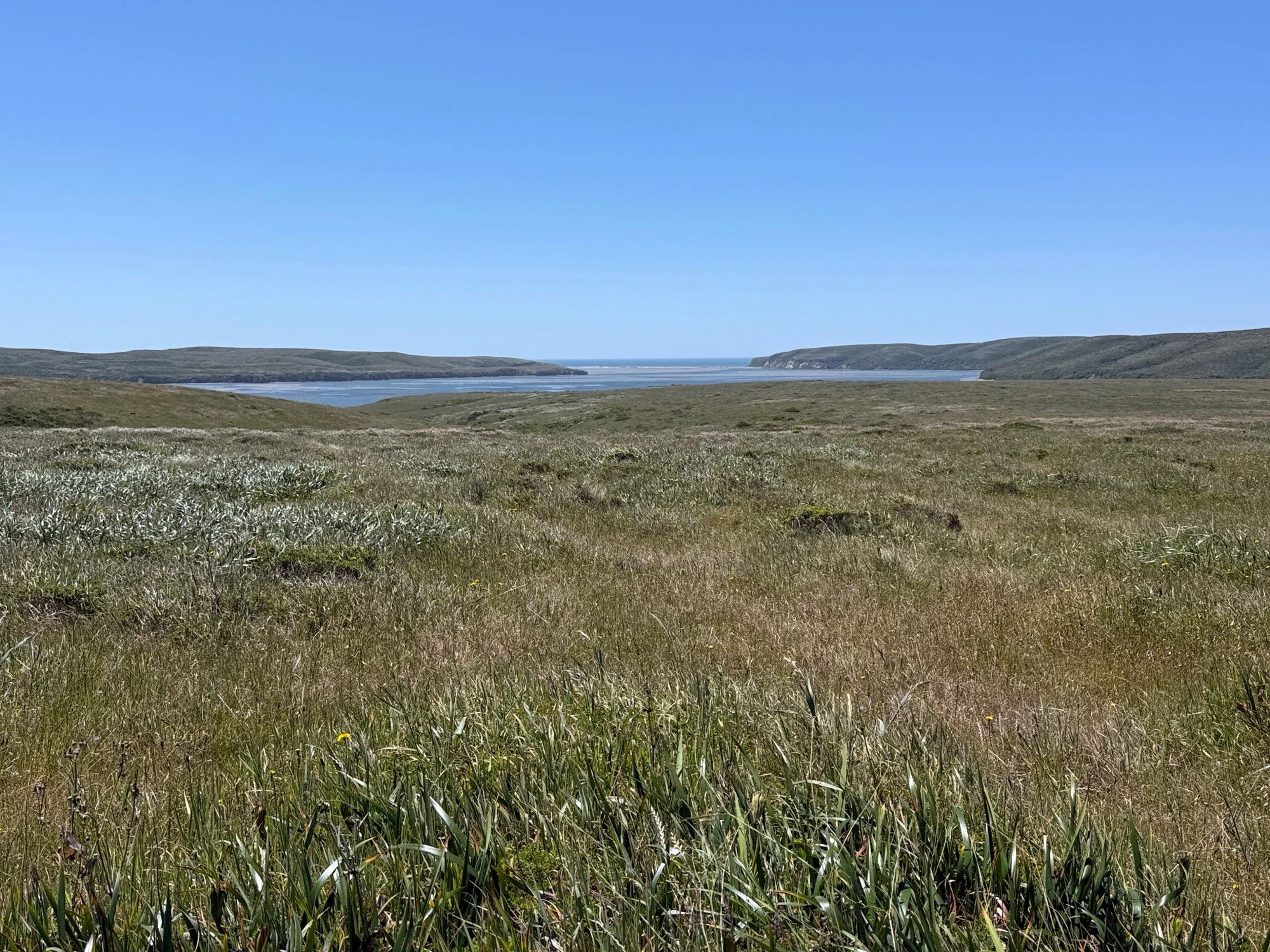
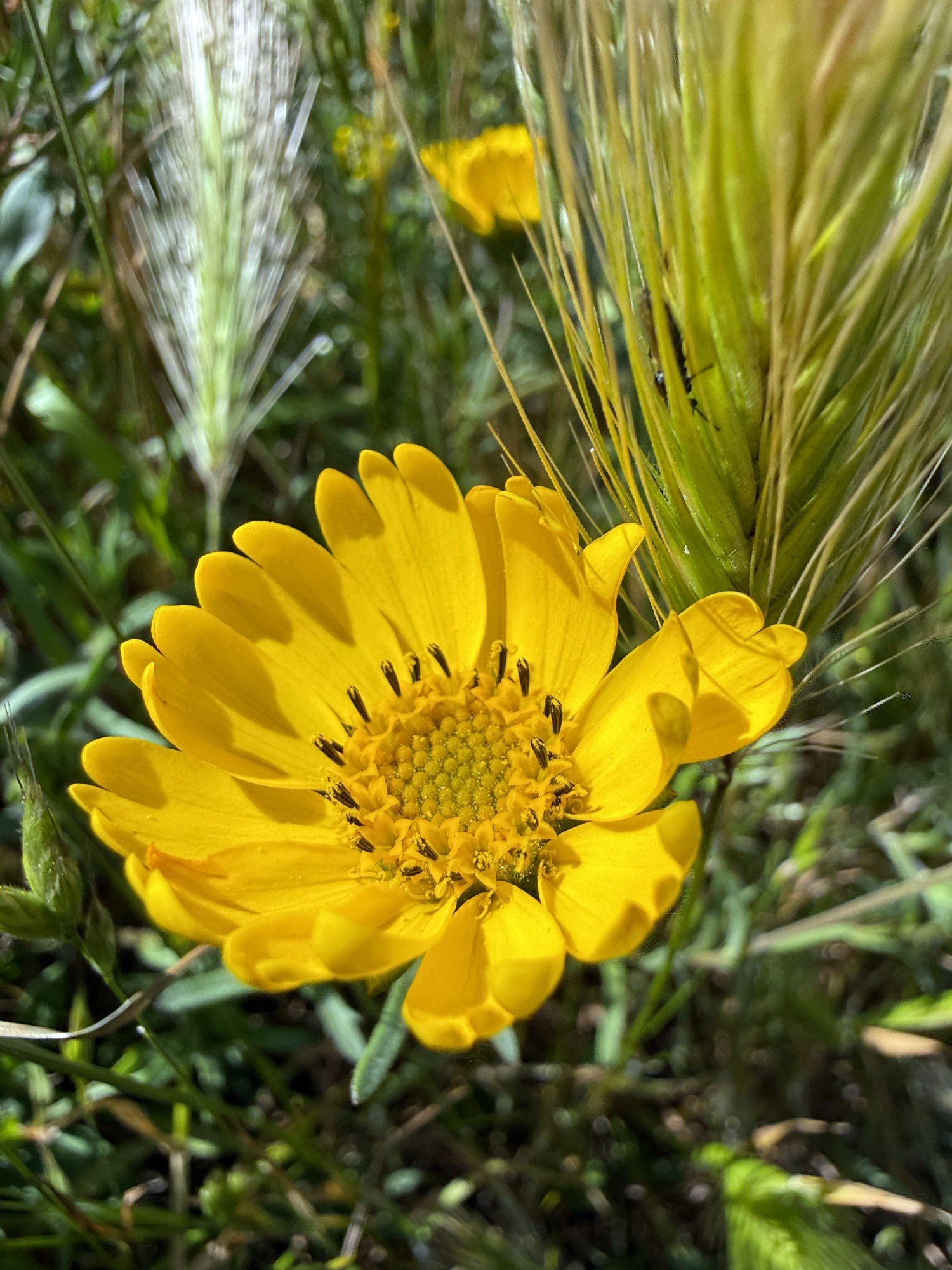
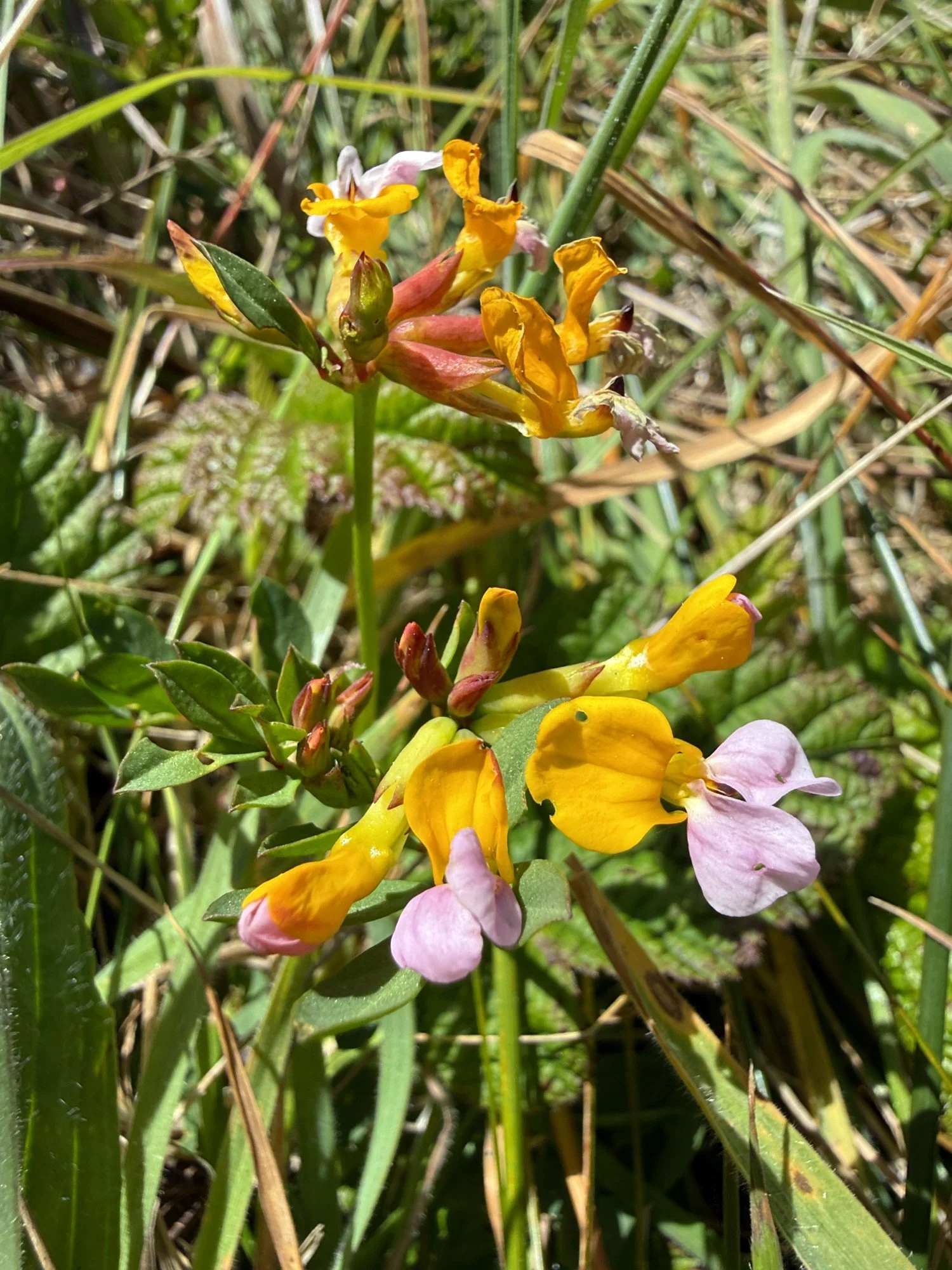
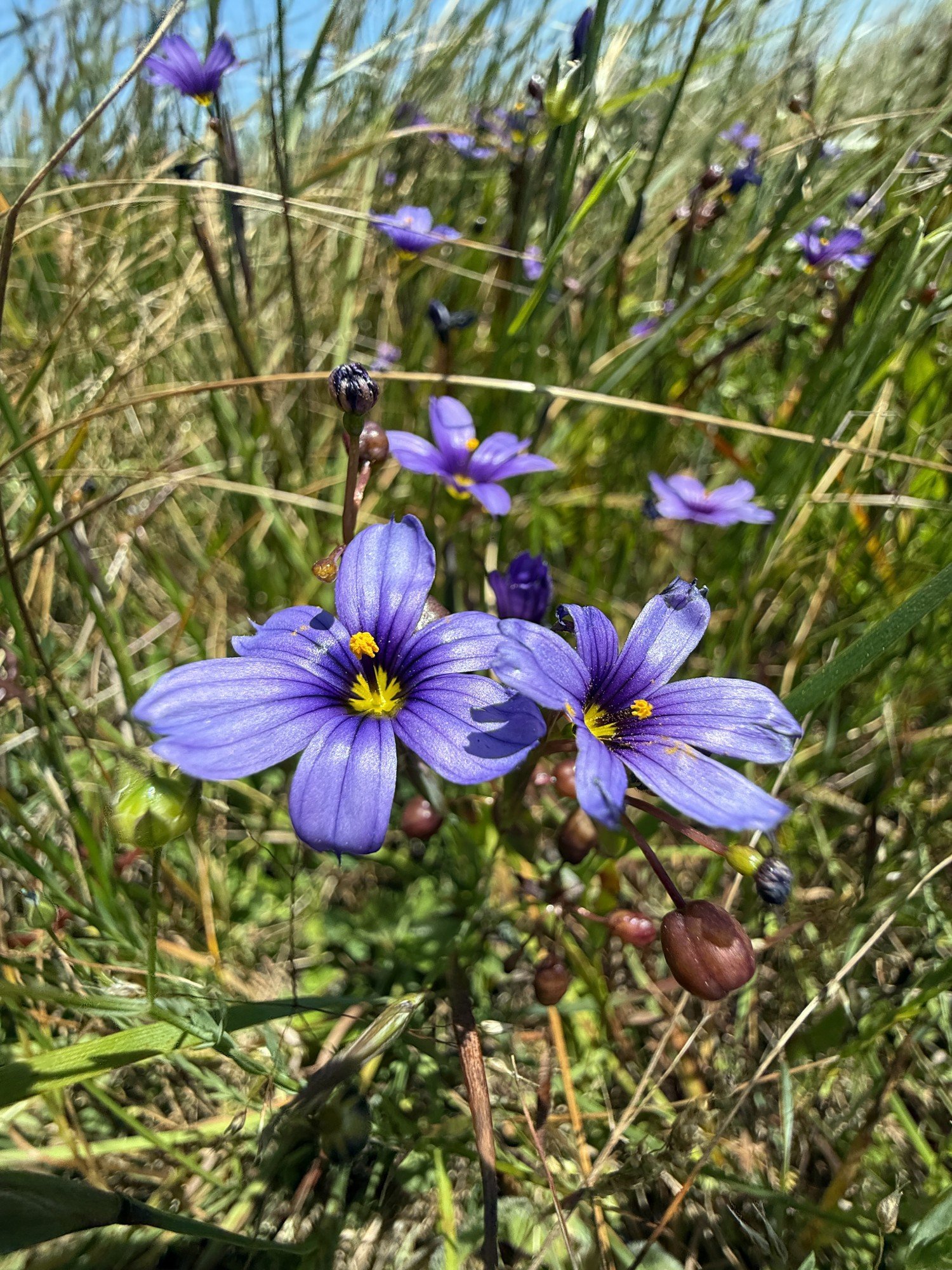
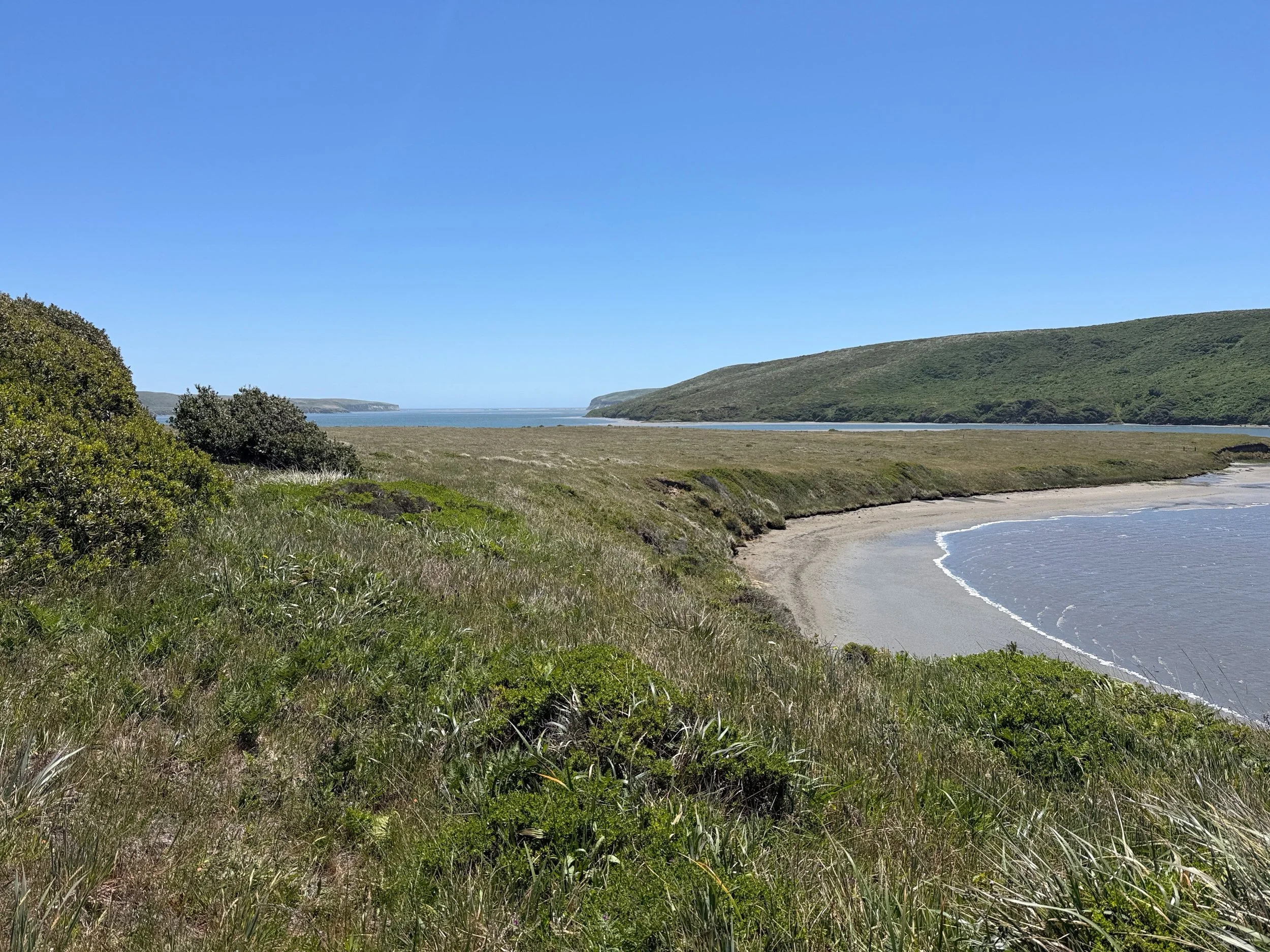
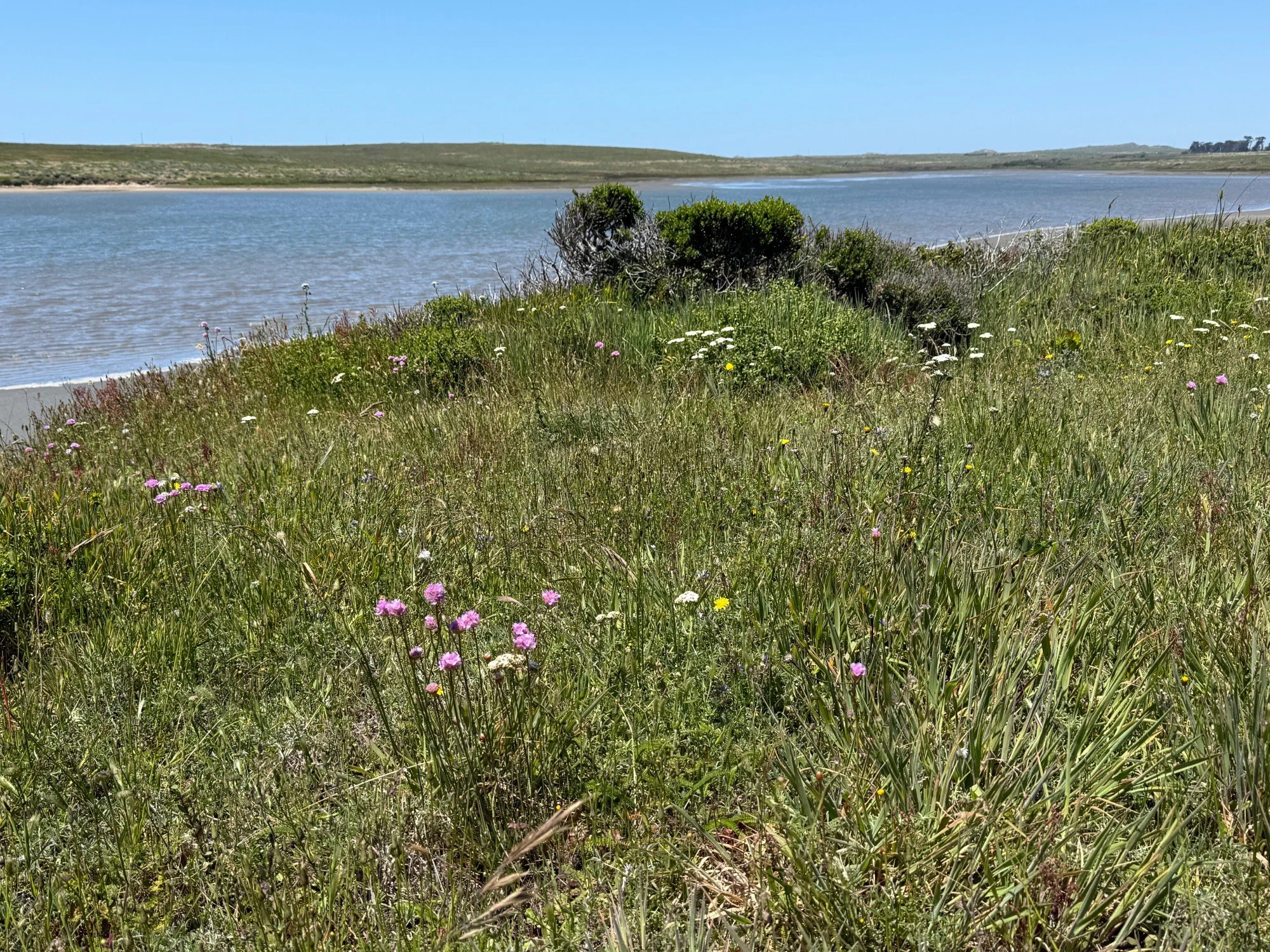
My new path took me across the grassy field toward the Schooner Bay side of Drakes Estero. Looking to the sides of the trail, a variety of wildflowers were woven among the grasses — creamy white Yarrow standing tall, jaunty Blue-eyed Grass in clumps everywhere, and a big patch of bright yellow Tidy Tips (the all-yellow variety is found at Bull Point) that I mistook for Hayfield Tarweed. Pastel candy-colored Witch’s Teeth, yet another rare flower, was abundant and easy to spot. Many badger holes dotted the landscape, but no badgers.
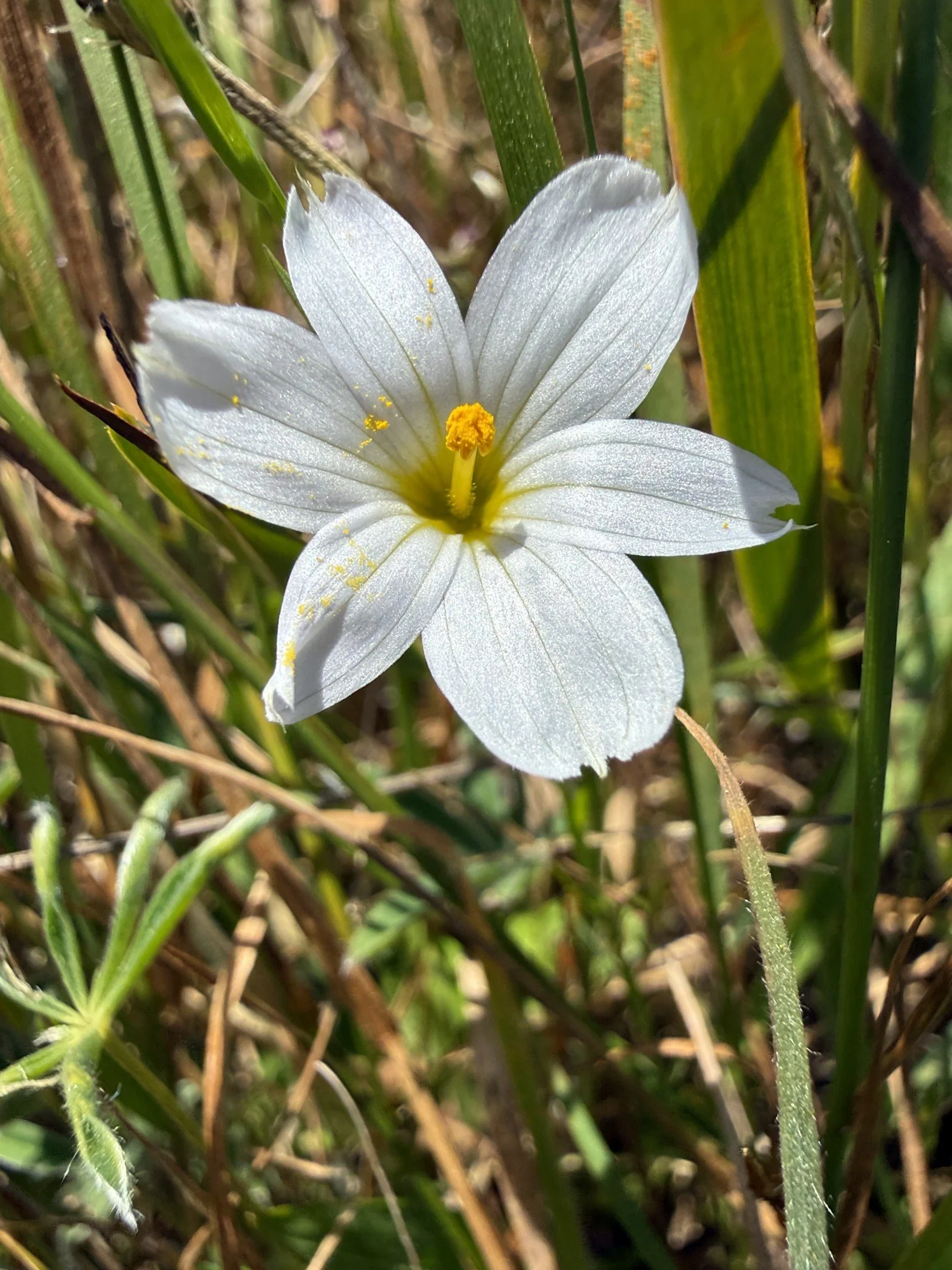
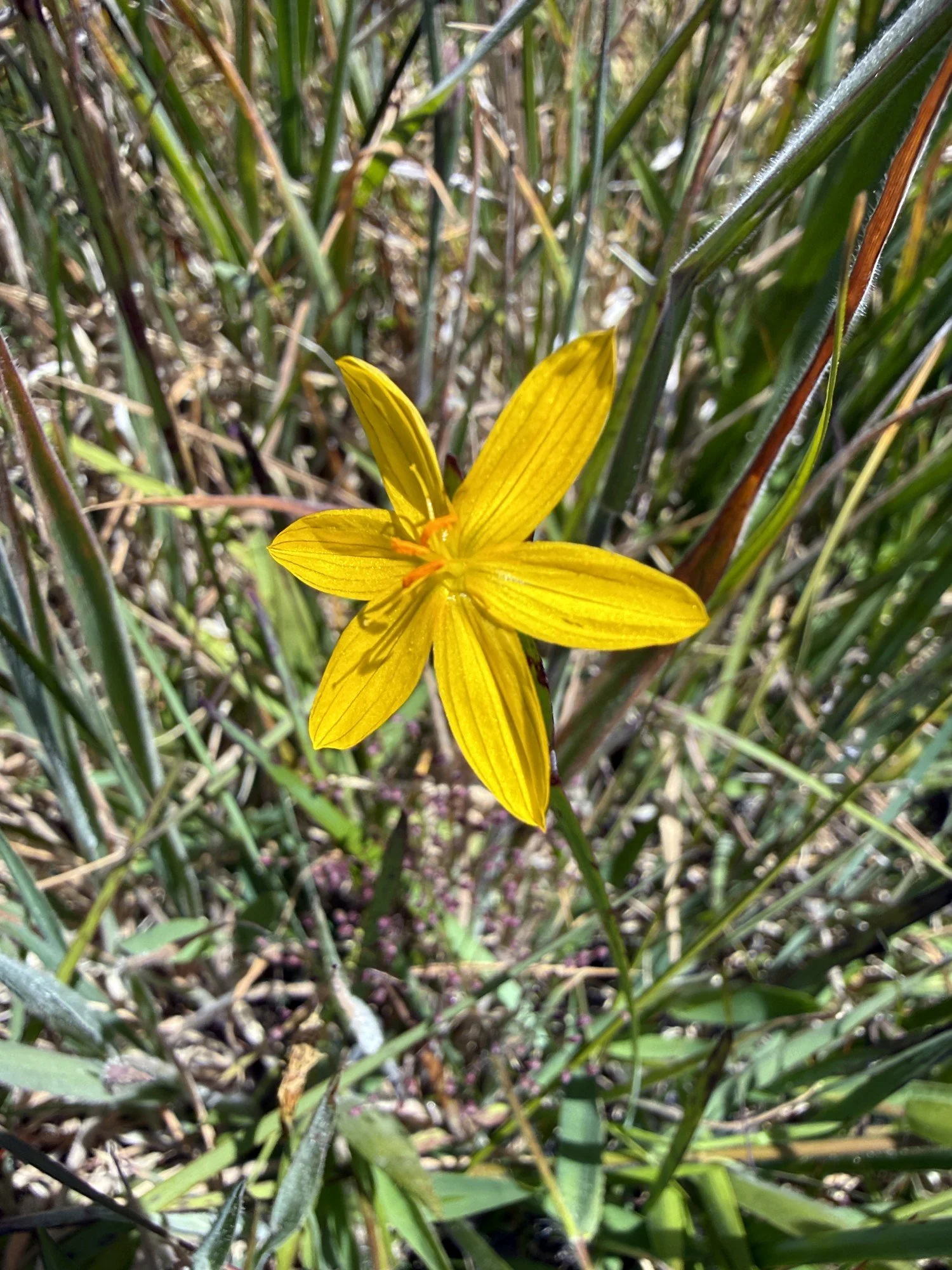
Bull Point is the land of Blue-eyed Grasses. I was lucky to discover all three colors blooming: blue, yellow, and white. These flowers are not grasses at all but rather irises. Blue-eyed Grass (Sisyrinchium bellum) flowers range in color from pale blue and violet to deep purple and white, while the California Golden-eyed Grass (Sisyrinchium californicum) has yellow flowers and grows in moist habitat, often in coastal areas. Bull Point has huge swaths of Golden-eyed Grass in boggy areas.
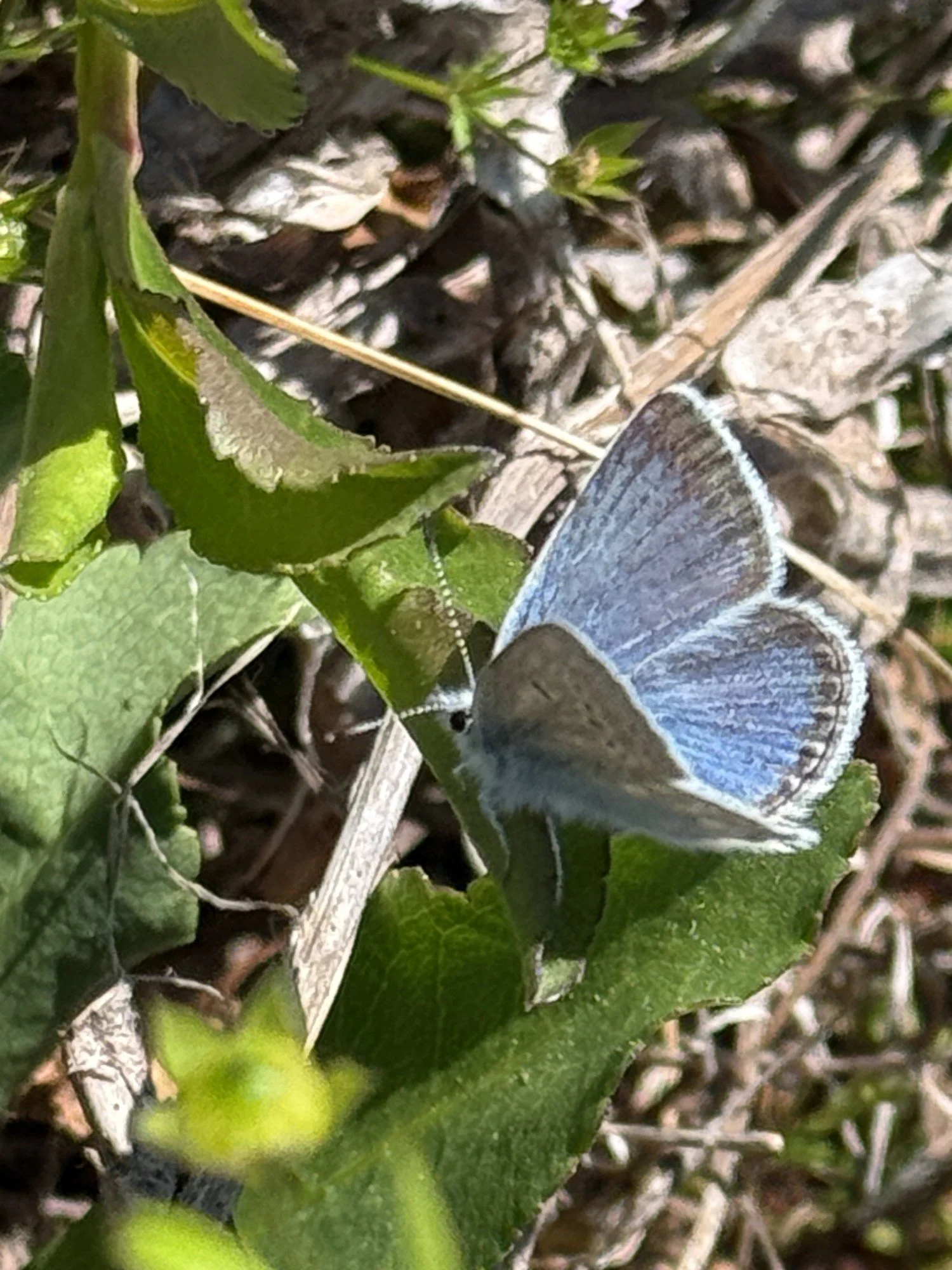
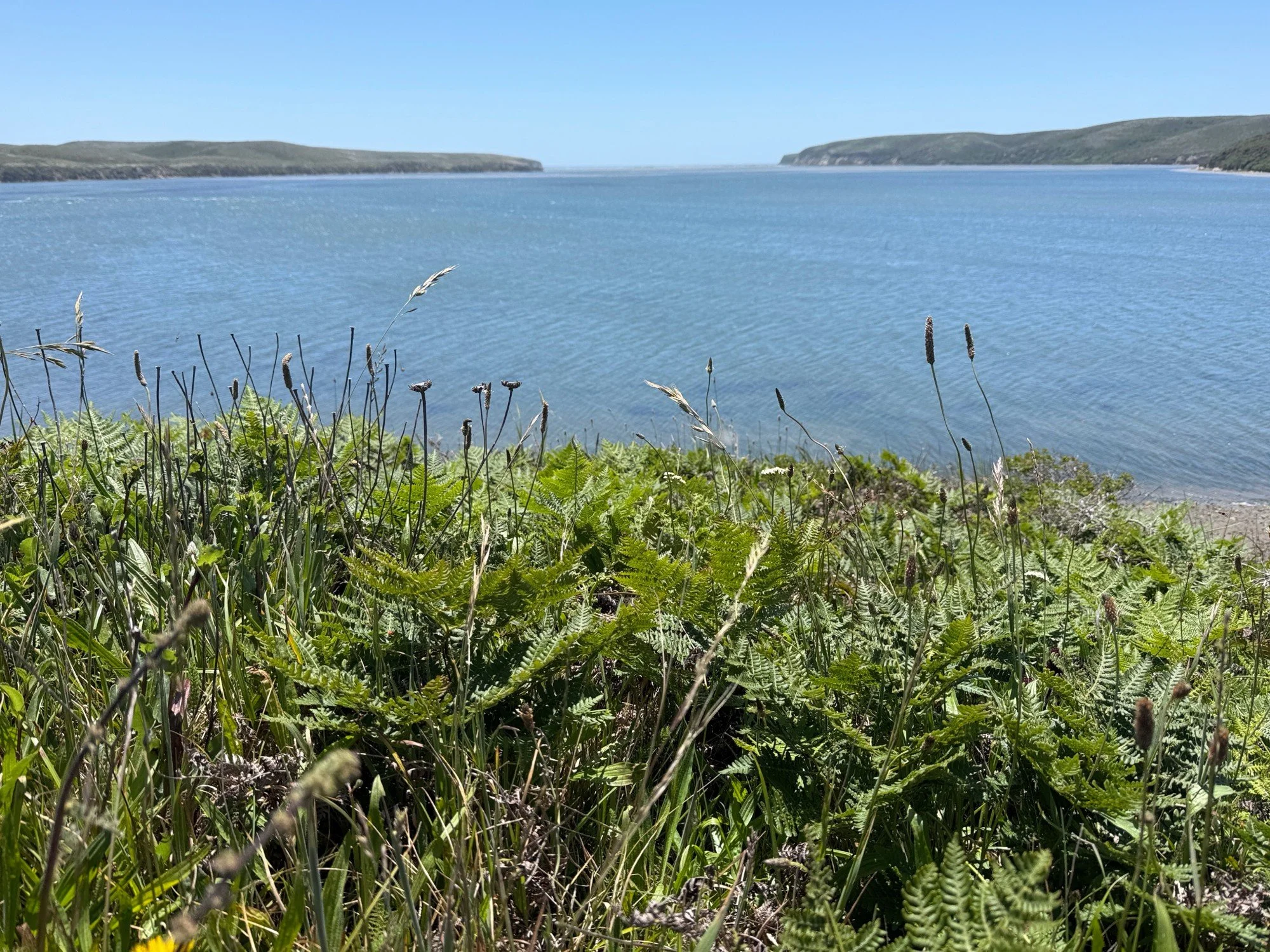
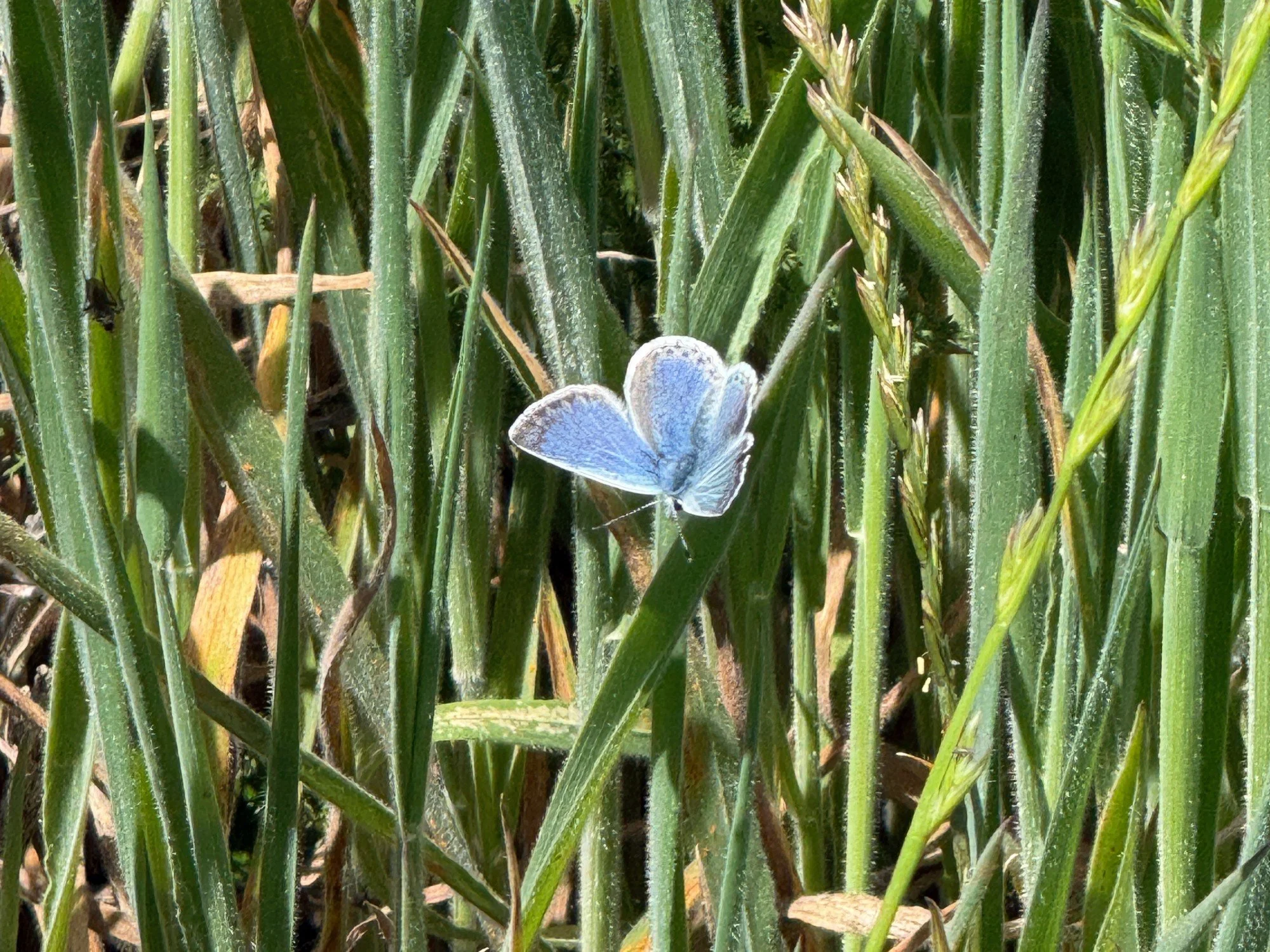
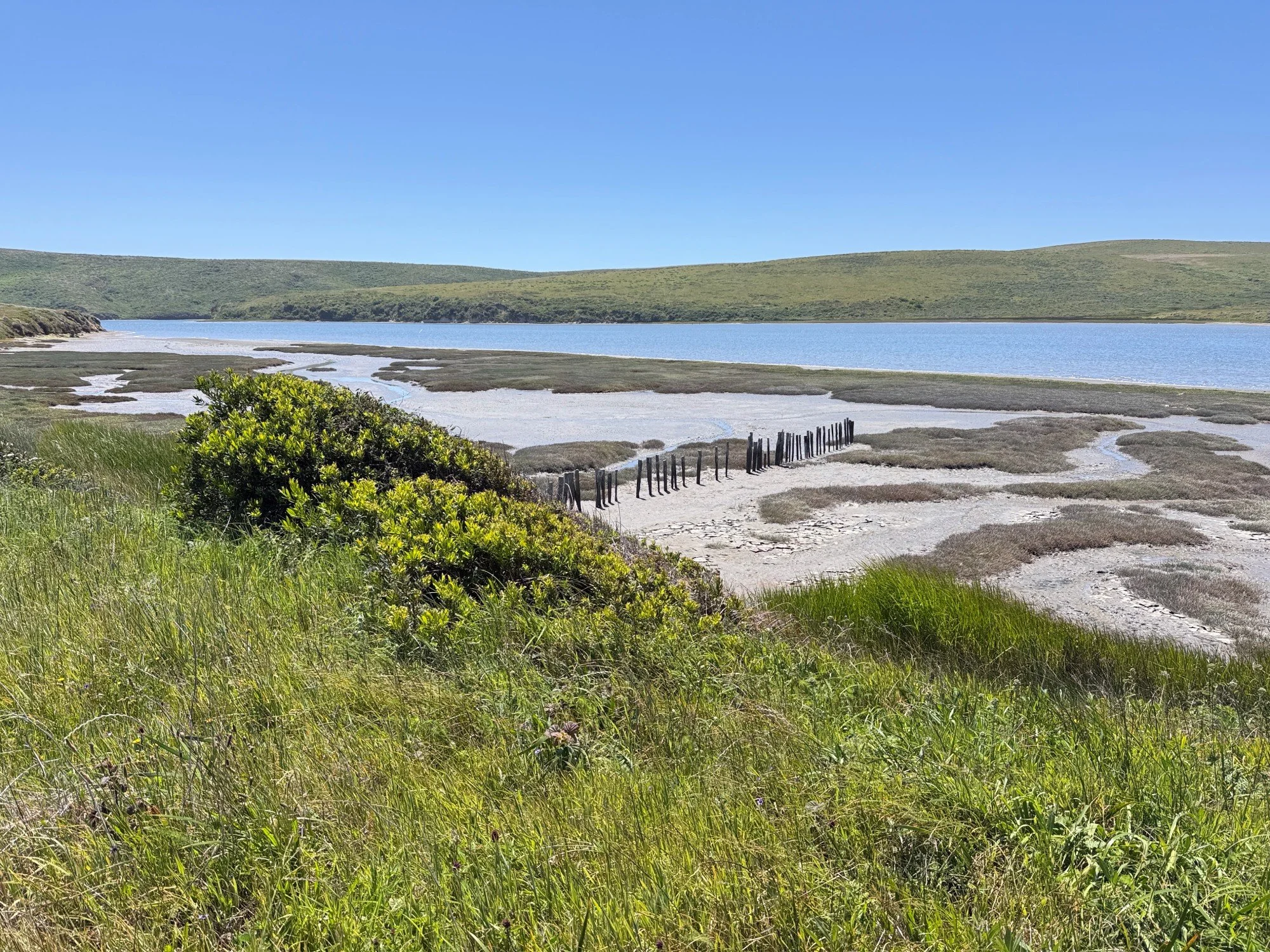
As I approached Drakes Estero, I decided to hike around the edge of Creamery Bay rather than retracing my path back. A dicey decision. Not surprisingly, I ended up slogging through mud and deep grasses at multiple points, picking up a few hitchhiking ticks. I had to focus hard not to trip over Trailing Blackberry vines and other ensnaring plants and potholes hidden in the tall grass. My reward for hiking the hard way was encountering numerous butterflies bravely fighting the wind to visit oases of cliffside wildflowers. I observed Boisduval's Blue (Icaricia icarioides), Point Reyes Blue (Icaricia icarioides ssp. parapheres), Common Ringlets, and some Crescents.
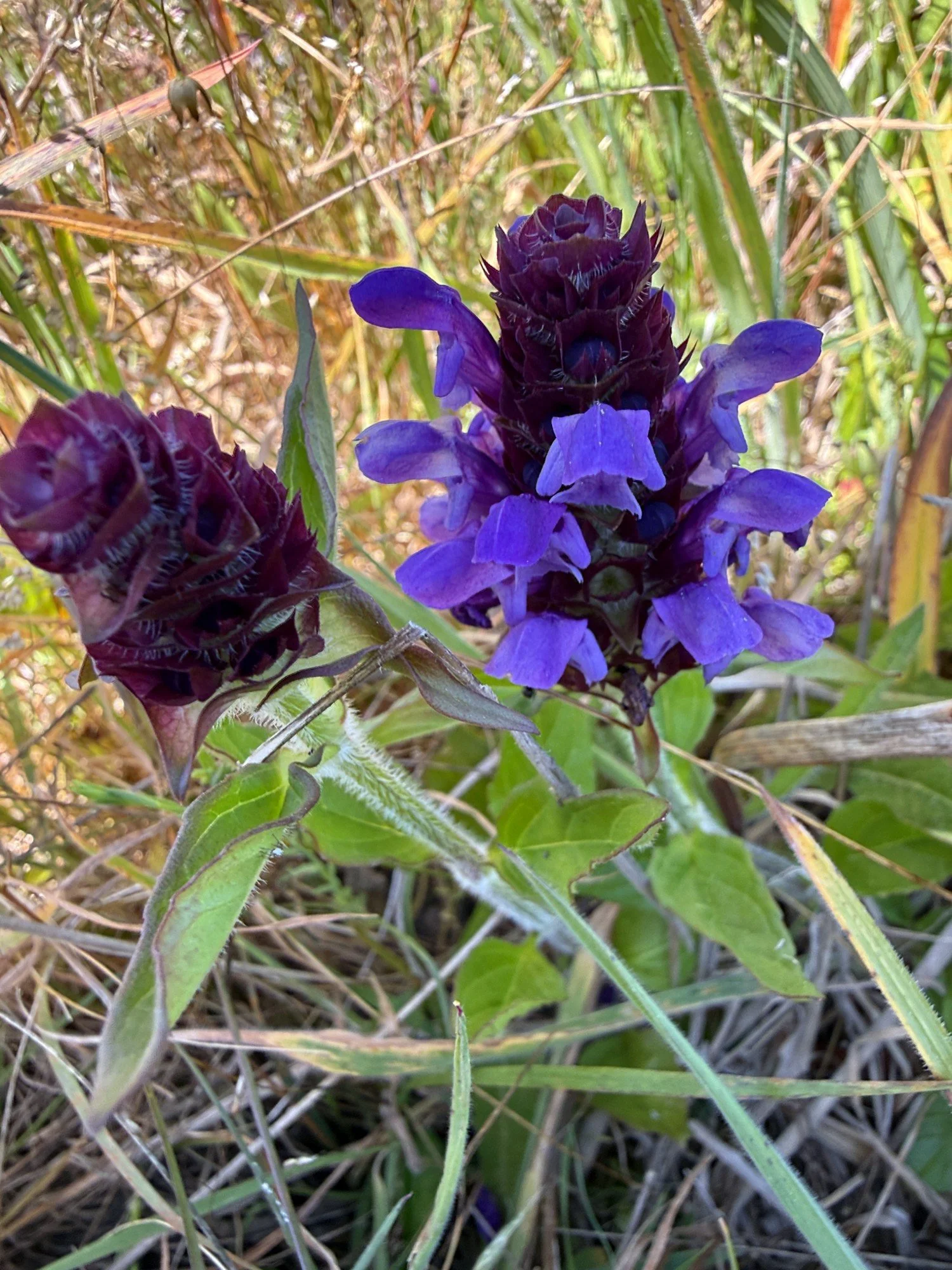
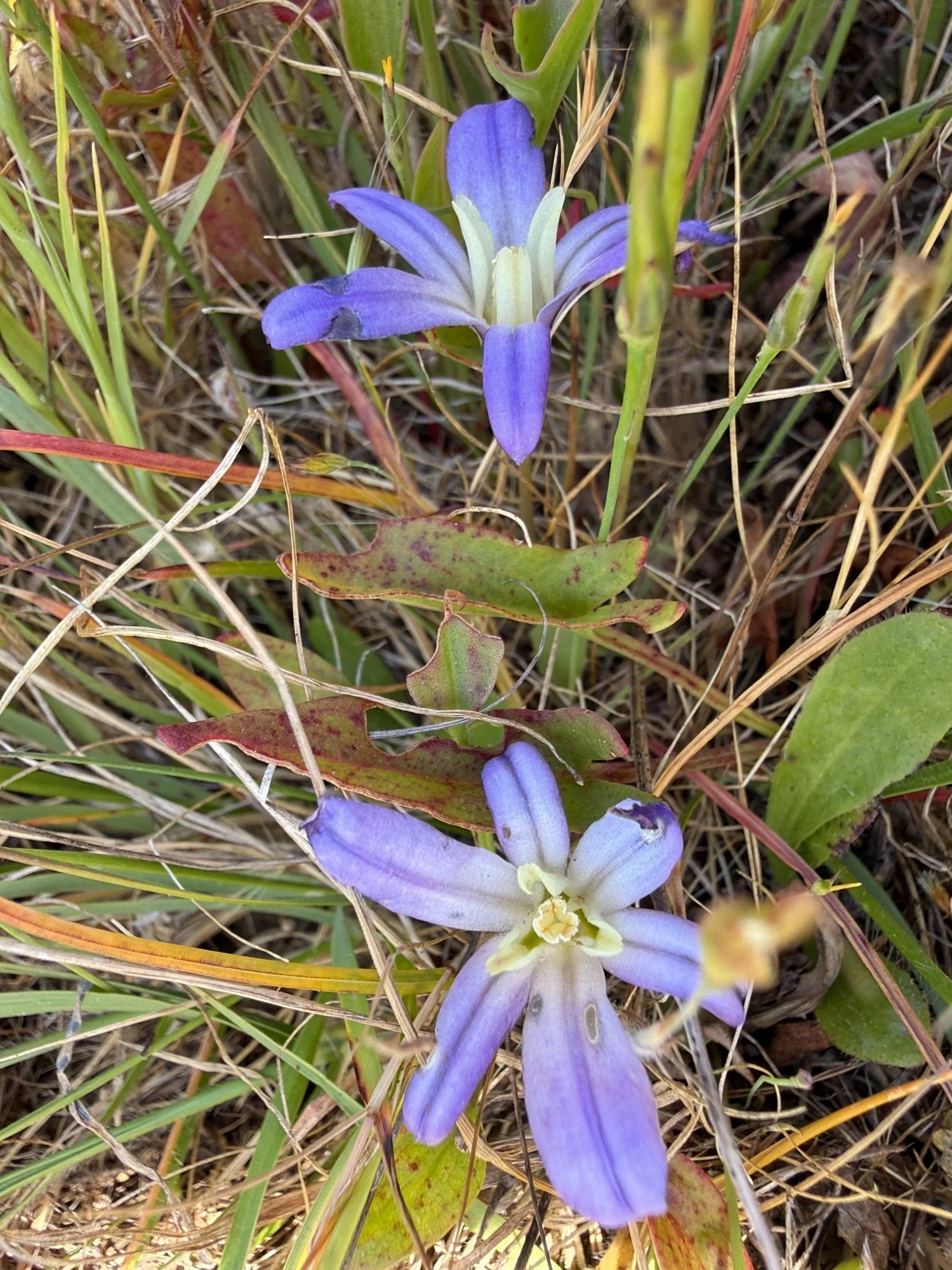
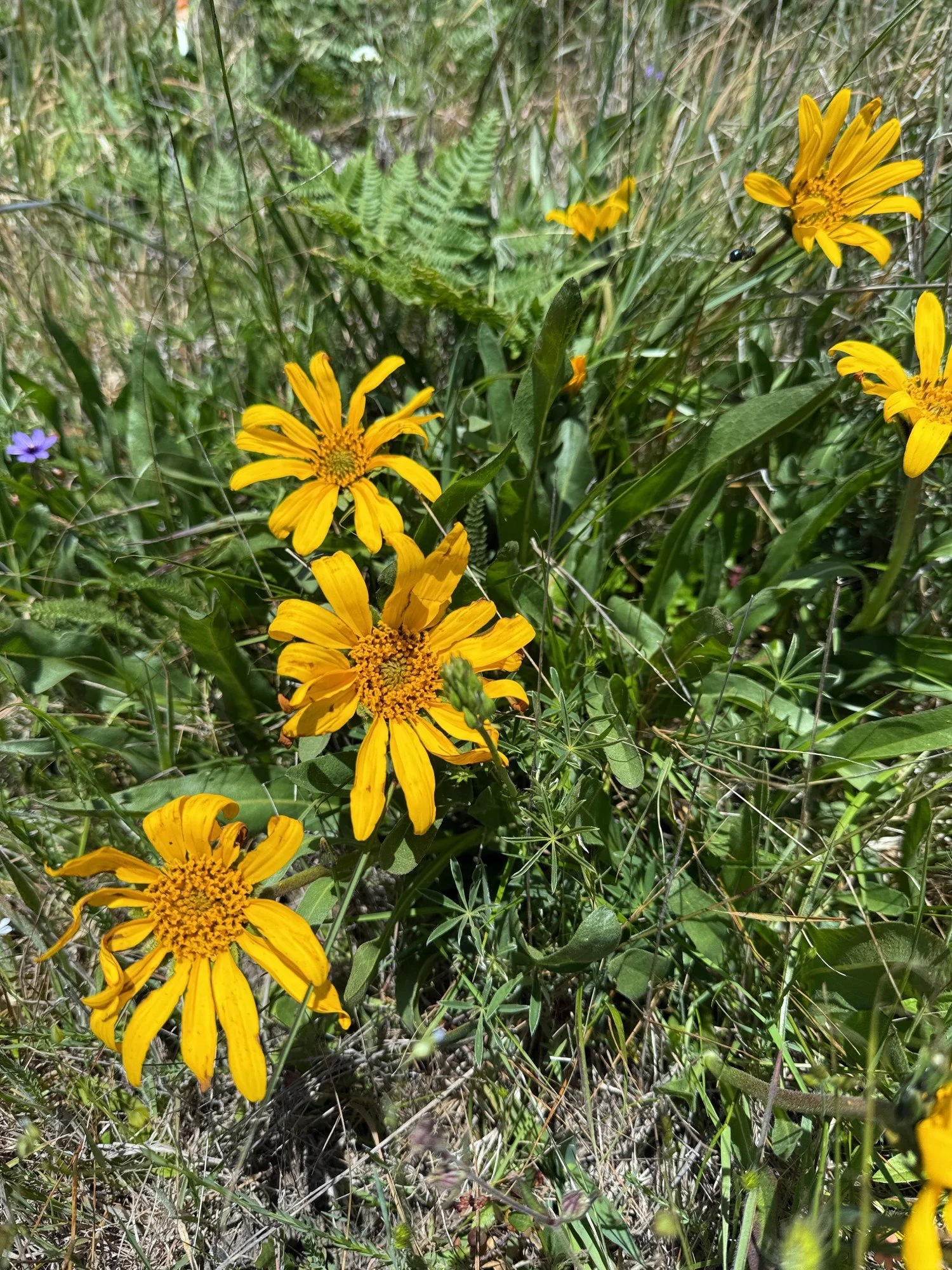
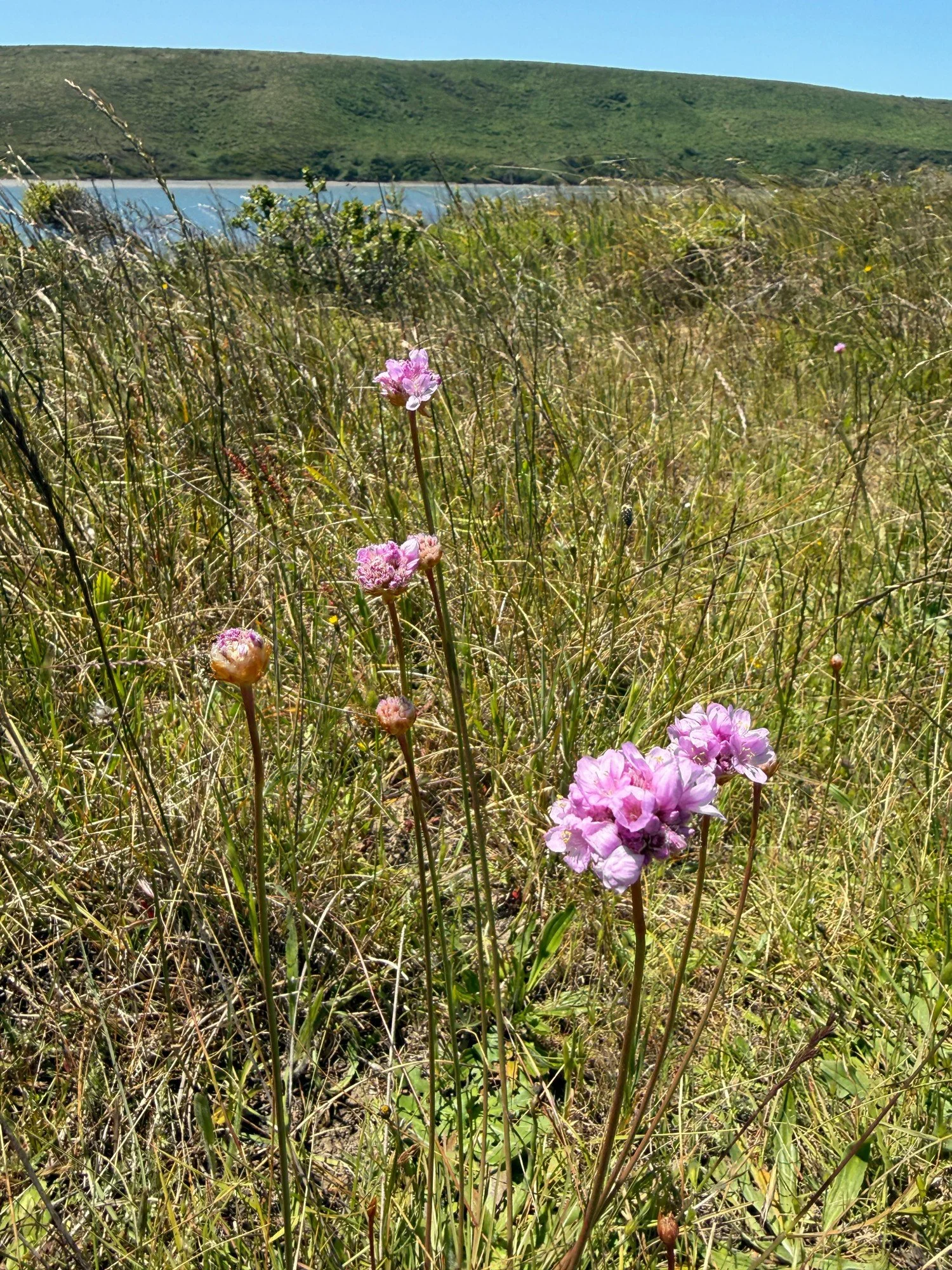
Cliffside wildflowers included pink balls of Sea Thrift waving in the wind, pale lavender Dwarf Brodiaea nestled close to the ground, bold Narrow-leaf Mule Ears, vibrant purple Selfheal, Hedgenettles, Davy’s Clarkia, Orange-bush Monkeyflower, Checkerbloom, Johnny-Nip, Variable Linanthus, several different Lupines, and lots of Cat’s-Ear and Yarrow to mention a few. I struggled to get good photos of plants flapping in the wind.
The Seashore is doing a mapping project to identify where violet is blooming in this area, so I was thrilled to discover several hardy patches of Hookedspur violet, the host plant of the Point Reyes Silverspot butterfly.
By the time I navigated my way back to the trailhead, I was exhausted from trailblazing and my boots were covered in smelly marsh mud, but the spectacular views and encounters with lovely flowers and brave butterflies (and a few sturdy bumble bees) made it worthwhile!
Next time, I am more determined than ever to find the actual trail.